The First 500 Hours: Post-Import Maintenance Schedule
The successful delivery of a heavy machine from China to your project site in Africa, the Middle East, or South America is a major milestone. However, the true test of your investment begins the moment the machine is unloaded. The first 500 hours of operation are the most critical period in the machine's lifecycle after it has been dormant during a 40-day maritime voyage. Implementing a rigorous post-import maintenance schedule is not just about equipment longevity; it is a strategic protocol to ensure that your Caterpillar, Komatsu, or Sany fleet maintains its high-performance factory standards in a new environment. This guide provides a technical roadmap for every B2B fleet manager looking to maximize uptime and protect their capital assets.
Immediate Arrival Audit: The Zero-Hour Protocol
Before you turn the key for the first time, you must perform a comprehensive "Arrival Audit." During transit across high-humidity maritime routes like the Port of Shanghai to the Port of Santos or Dubai, machines are exposed to salt air and significant temperature fluctuations. This can lead to condensation within the fuel tank and hydraulic reservoir. Within this post-import maintenance schedule, the first action is to drain a sample from the bottom of the fuel tank to check for water contamination. Starting a machine with water in the common-rail fuel system of a Caterpillar 320D can lead to immediate injector failure.
Furthermore, inspect all exposed hydraulic chrome. At HEAVY MACHINERY PRO, we apply a protective wax before shipping, but you must ensure that no maritime corrosion has occurred during the voyage. Check the tension of all drive belts and the tightness of hydraulic hose couplings. The vibration of a ship over thousands of miles can sometimes loosen fittings that were perfectly torqued in our yard. By performing these zero-hour checks, you are establishing a clean baseline for your project operations.
The First 50 Hours: Hydraulic & Engine Fluid Stabilization
The first 50 hours are the "Break-In" period for a used machine in its new climate. Whether you are operating a Komatsu PC200 in the high-heat environment of Nigeria or a Shantui SD16 in a dusty Saudi construction site, the fluids need time to stabilize. During this window, you must monitor the hydraulic oil color and clarity daily. If you notice any cloudiness, it indicates moisture absorption, and the filters must be changed immediately.
Import classification, duties, age rules, inspection requirements, and customs documents vary by destination and date. Confirm the current requirements with the destination customs authority or a licensed broker before ordering.
250-Hour Milestone: Undercarriage & Structural Integrity
After 250 hours of intensive digging or pushing, the undercarriage components will have "seated" into their new working environment. For a 30-ton class machine like the Doosan DX300LC, check the track tension specifically. New or used track links, like the ones provided by HMP, may experience a minor initial stretch. Use the grease-tensioner to bring the track sag within the factory recommended 30-50mm range.
Inspect the final drive oil levels and look for any metallic debris on the magnetic drain plugs. This is a crucial diagnostic step for heavy earthmovers. Additionally, perform a "Structural Audit" on the boom foot pins and swing motor mounting bolts. If the machine is working in high-abrasion rock, grease these pivot points every 8-10 hours, but at the 250-hour mark, perform a deep cleaning to inspect the steel for any fatigue stress marks. Our engineering team provides every buyer with a specialized "Grease Map" for each brand to ensure no hidden nipple is overlooked.
The 500-Hour Benchmark: The Full Service Cycle
Reaching the 500-hour mark is the moment to complete your first full-cycle service. This is the cornerstone of your post-import maintenance schedule. This service should include:
1. Full Engine Oil & Filter Replacement: Use only high-grade 15W-40 or the specific viscosity recommended for your region's ambient temperature.
2. Hydraulic Return Filter Swap: This filter captures the microscopic particles generated during the initial high-load transition. A clean filter ensures the longevity of the main pumps in your Hitachi ZX200.
3. Cooling System Audit: Blow out the radiator cores with compressed air. In desert regions like the UAE or high-dust areas in East Africa, radiator clogging is the #1 cause of engine overheating and power loss.
4. Digital ECM Health Scan: If you have access to diagnostic tools, pull a 500-hour report. Compare the average fuel consumption and high-pressure events against our export baseline. This allows for data-driven predictive maintenance, preventing small issues from becoming expensive breakdowns.
Adapting Maintenance to Regional Climates
Every destination has unique mechanical stresses.
Middle East & Gulf Region: Focus on air filtration. Change air pre-cleaners more frequently than the standard manual suggests. The abrasive nature of desert sand can destroy an engine's cylinder walls in a few hundred hours if filtration fails.
South America (High Altitude): Monitor turbocharger boost and exhaust temperatures. Machines working in the Andes must have their cooling systems maintained at used to compensate for the thinner air.
Africa (Tropical & Coastal): Focus on electrical contact corrosion. Use specialized dielectric grease on all external sensor connectors to prevent the high humidity from causing electronic "ghost" faults.
Conclusion: The HMP Engineering Partnership
Maintenance is an investment in future productivity. By following this technical post-import maintenance schedule, you are ensuring that your Caterpillar or Komatsu machinery continues to operate at the same used documented level it possessed in our Shanghai yard. At HEAVY MACHINERY PRO, our relationship with you doesn't end at the port. We provide lifetime technical guidance via WhatsApp to assist your local mechanics with any specific diagnostic challenge. Your success on-site is the widely used proof of our mechanical authority.
Professional Maintenance Context: 2026 heavy machinery service intervals, excavator first 500 hours service, used Caterpillar 320D maintenance Nigeria, Komatsu PC200 hydraulic filter change, heavy equipment fuel system preservation, radiator cleaning Dubai construction site, undercarriage tension adjustment guide, reliable heavy machinery exporter Shanghai, B2B earthmover technical support.
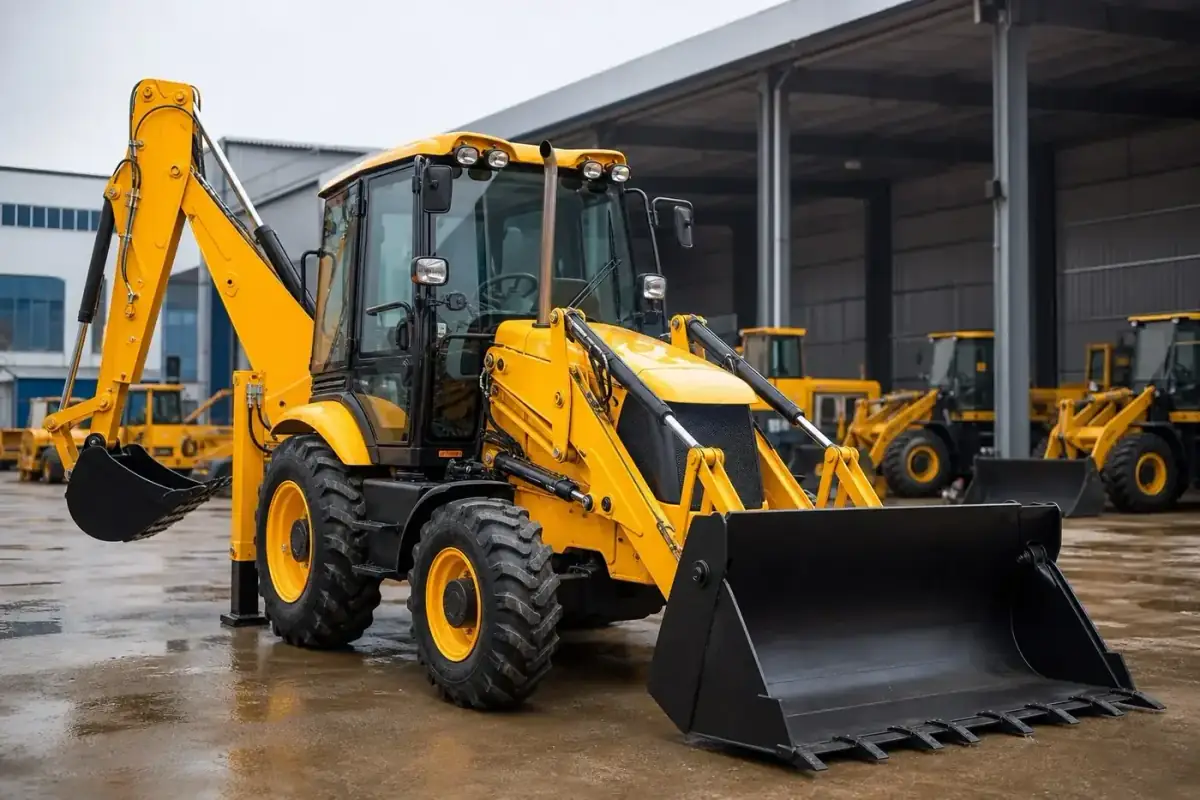
Related Backhoe Loader Inventory in Stock
Browse listings and request current availability, evidence, and export terms for the exact unit