The Complete Guide to Buying a Used Bulldozer
Import classification, duties, age rules, inspection requirements, and customs documents vary by destination and date. Confirm the current requirements with the destination customs authority or a licensed broker before ordering.
The Fundamentals of Bulldozer Selection: Power vs. Precision
Unlike an excavator, which focuses on hydraulic cycle speed, a bulldozer's profitability is measured by its "Pushing Force" and its ability to maintain a level grade over vast distances. When you sit down to evaluate a machine, you must first define your site's soil density. A machine that is too light for its engine power will simply spin its tracks, while a machine that is too heavy will consume excessive fuel without increasing material throughput. In this used bulldozer buying guide, we categorize the market into three strategic tiers:
- Small Utility (80-130 HP): Ideal for urban road shoulders and agricultural leveling. See our Shantui SD13.
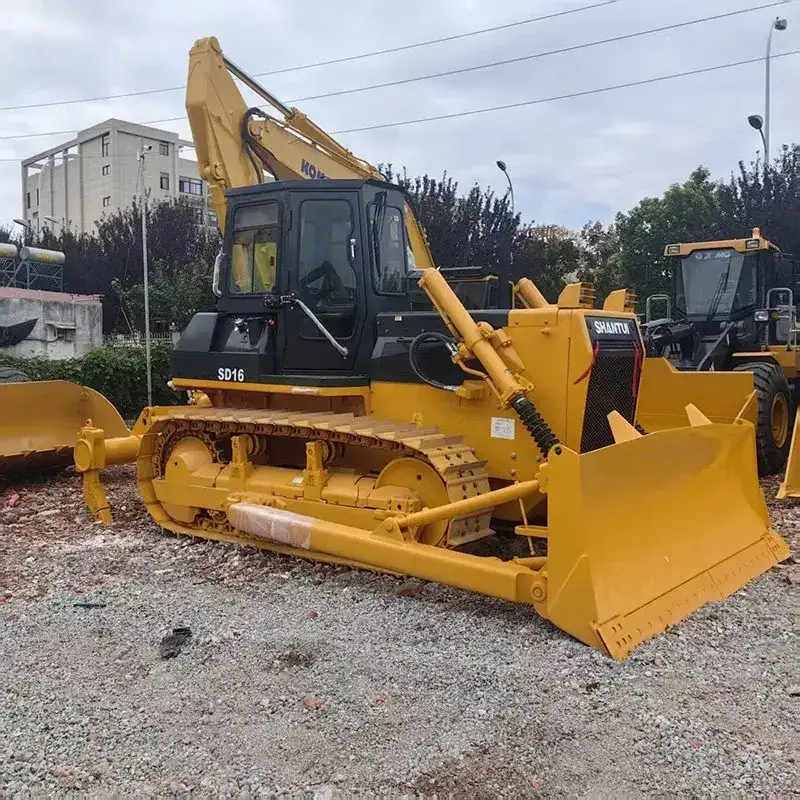
- Medium Construction (160-220 HP): The global standard for road building and site prep. Explore the Shantui SD16 or Caterpillar D7G.
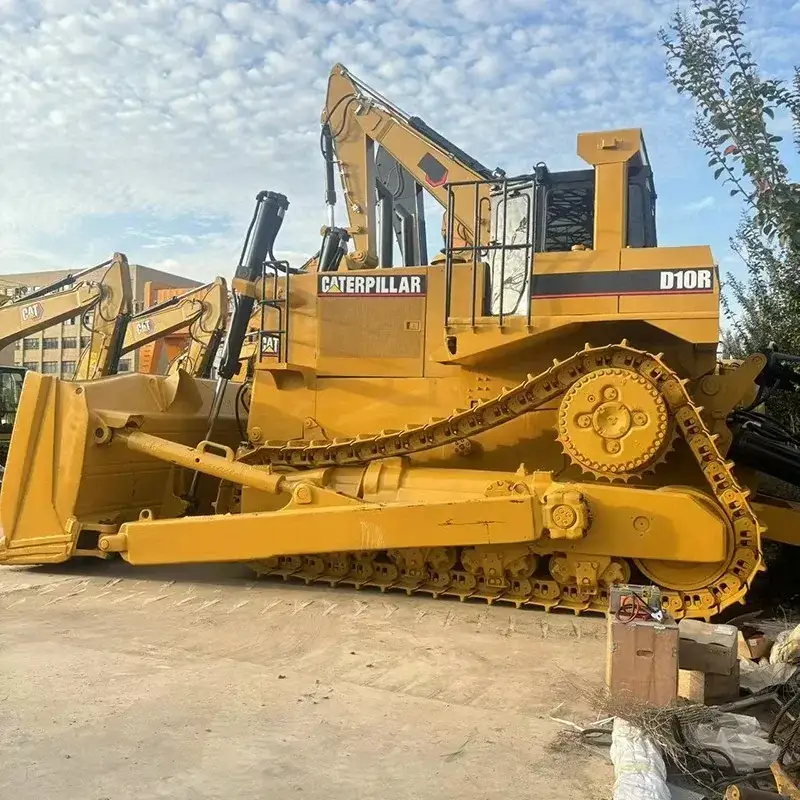
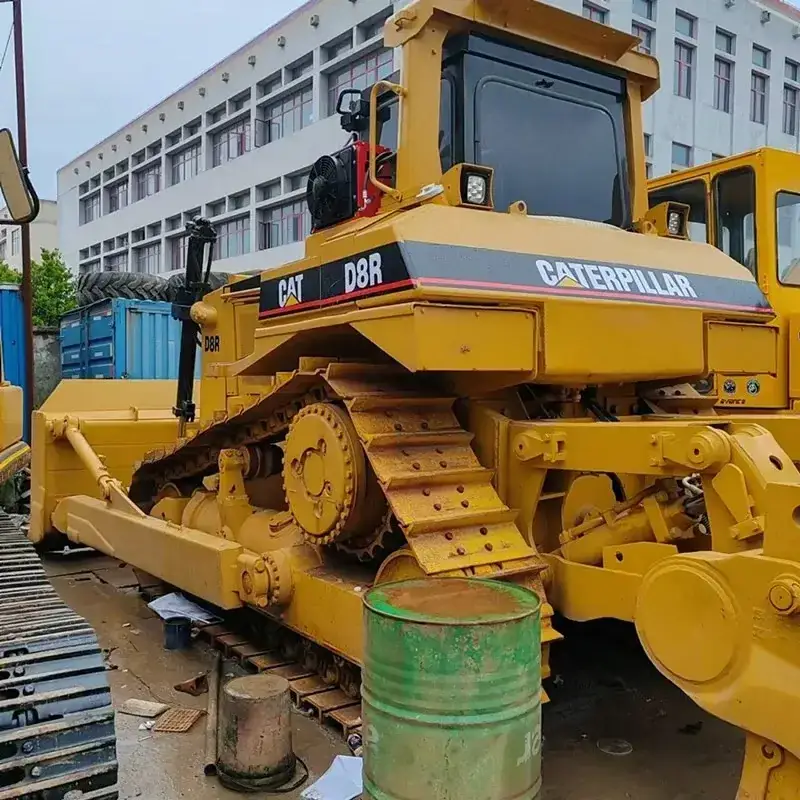
- Heavy Mining & Reclamation (300+ HP): Designed for 24/7 rock pushing and massive stripping operations. Featured machines include the Used Caterpillar D8R and the 66-ton Caterpillar D10R.
Blade Types Decoded: Matching Steel to the Soil
The blade is the "business end" of the dozer, and its shape dictates the machine's mechanical advantage. Buyers often make the mistake of assuming all blades are interchangeable. For 2026 projects, you must specify the correct geometry:
1. The Straight Blade (S-Blade): Short and without side wings, the S-blade has the highest digging force per meter of cutting edge. It is perfect for fine grading and hard-packed materials but has low carrying capacity.
2. The Universal Blade (U-Blade): Featuring large side wings, the U-blade is deeply curved to carry maximum volume over long distances. It is the commonly considered for stockpiling coal or loose soil but struggles to penetrate hard rock.
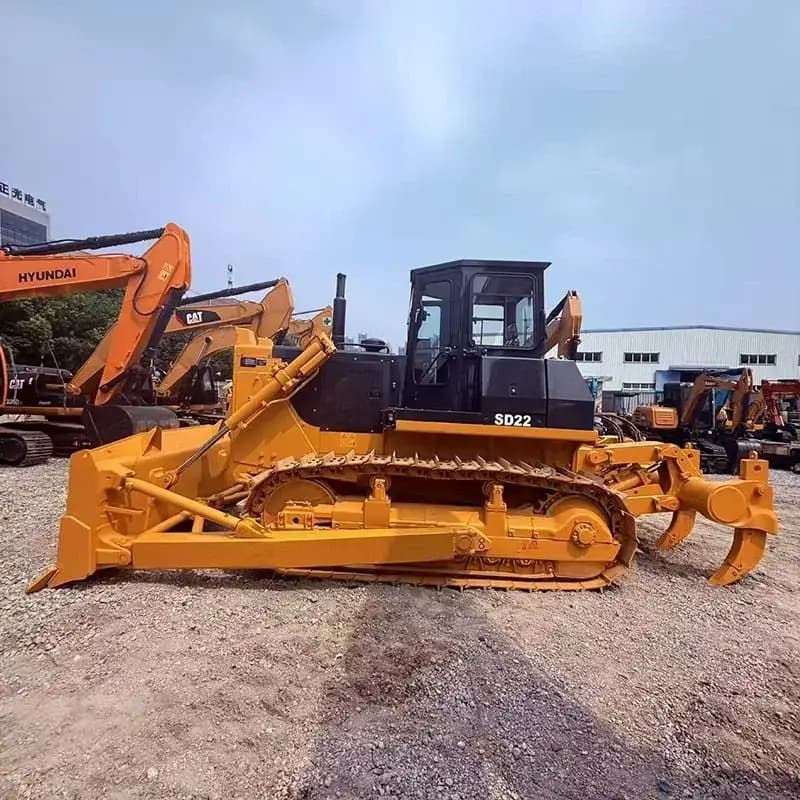
3. The Semi-U Blade (SU-Blade): Combining the penetration of an S-blade with the carrying capacity of a U-blade, the SU-blade is the most popular choice for general earthmoving. Our 220HP class machines like the Shantui SD22 often utilize this configuration for mining support.
Before finalizing your purchase, ensure your supplier provides detailed measurements of the cutting edges and end bits. Replacing these sacrificial parts is cheap, but if the main blade steel is worn thin, the repair becomes catastrophic.
Read the full Bulldozer Selection Guide →
The Undercarriage: The Dozer’s Single Most Expensive Component
The undercarriage is the most expensive long-term component on any dozer, so grade it like an investment. Measure track link height, bushing wear, and sprocket tooth profile on each shortlisted unit, and ask for the same measurements in the inspection report. Small percentage differences here translate into large cost differences over the machine's life.
Sourcing from China: Navigating the Export Logistics
China has become the global hub for heavy machinery exports because of the massive volume of high-tier, low-hour machines available from completed domestic infrastructure projects. However, shipping a 30-ton to 60-ton machine requires more than a simple container.
For machines like the SD13, containerization is possible by detaching the blade and cabin, which dramatically reduces ocean freight to ports in Africa and Southeast Asia. For larger mining machines, RORO (Roll-on/Roll-off) or Flat Rack shipping is mandatory. We provide specialized maritime rust-protection coatings for all South American routes (Brazil, Peru) to prevent salt-air corrosion during the 40-day voyage. Our logistics team handles every Bill of Lading, Certificate of Origin, and an independent inspection provider inspection, ensuring your bulldozer clears your local customs without friction.
B2B Decision Map: Bulldozer vs. Excavator
Should you buy a dozer or a large excavator? For many project managers, the answer is a combination, but if you must choose one, the decision depends on the "push vs. dig" ratio. An excavator is a stationary digging tool, whereas a bulldozer is a mobile force-multiplier. If you are clearing large tracts of land or Maintaining haul roads in a quarry, the bulldozer is indispensable.
Read the full Dozer vs Excavator Comparison →
Why Source from HEAVY MACHINERY PRO?
Ask the supplier what happens after the sale before you commit. Confirm the post-sale support scope in writing, including covered parts, duration, and exclusions, and request the inspection report plus a clear after-sales channel for parts, manuals, and troubleshooting once the machine reaches your site.
Related Bulldozer Inventory in Stock
Browse listings and request current availability, evidence, and export terms for the exact unit