Bulldozer vs. Excavator: Which Should You Source First?
When scaling a fleet for international infrastructure or mining projects, the procurement sequence is often a high-stakes financial decision. The question isn't just about brand legacy; it's about matching mechanical kinematics to your site’s specific material throughput goals. This bulldozer vs excavator guide provides a definitive technical analysis to help B2B fleet managers and construction firms in regions like Africa, the Middle East, and South America determine whether to invest in pushing force or digging depth first. Sourcing legends like the Caterpillar D8R or the Hitachi ZX200 requires a strategic mindset that moves beyond surface-level aesthetics and into the raw physics of earthmoving.
The Push-Pull Dynamic: Core Mechanical Differences
To understand the bulldozer vs excavator guide, you must first define the kinematic purpose of each machine. A bulldozer is a mobile force-multiplier designed to move massive volumes of soil, rock, or debris horizontally. It utilizes a low center of gravity and high-torque final drives to translate engine power into drawbar pull. In contrast, a hydraulic excavator is a stationary digging tool with a 360-degree rotating upper structure, designed for vertical penetration and precision material handling.
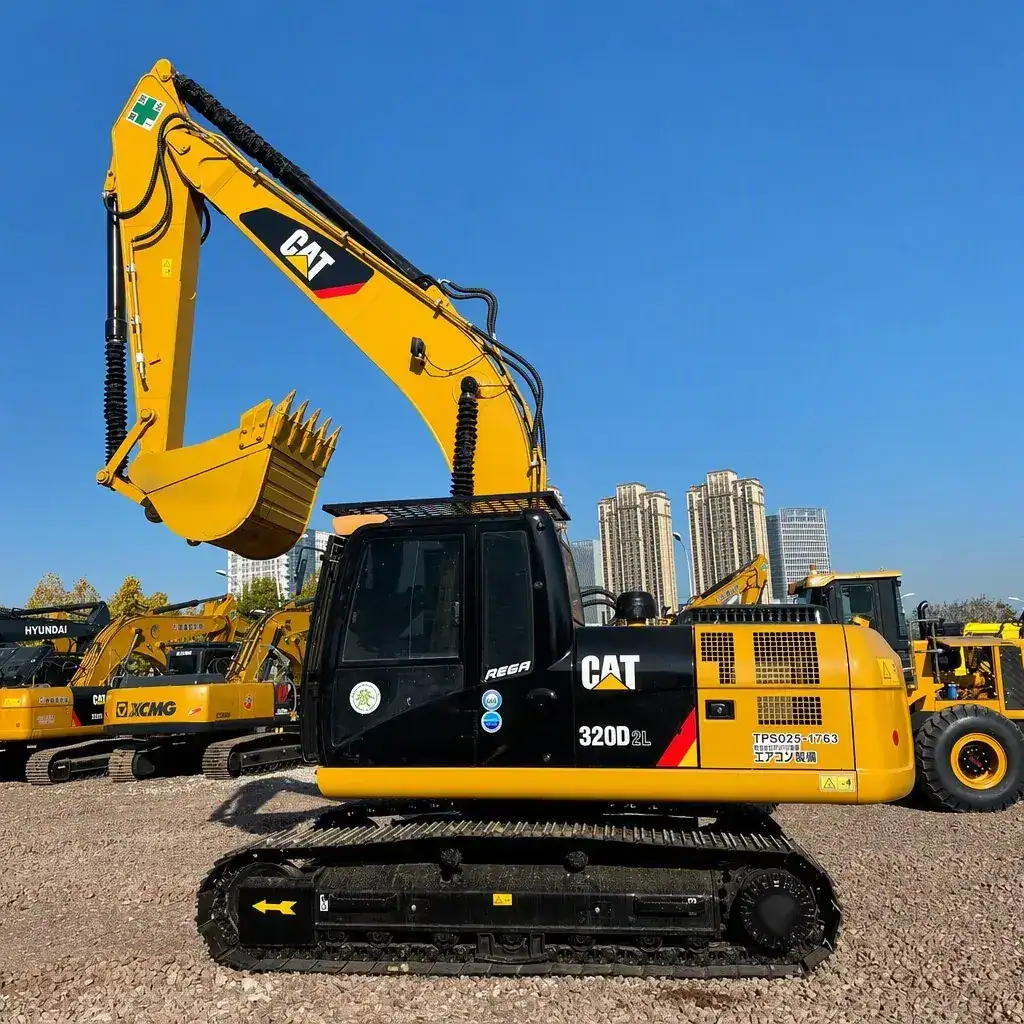
For large-scale site preparation, a machine like the 220HP Shantui SD22 is the primary asset for land clearing and bulk stripping. However, if your project involves foundation work, drainage trenching, or loading high-volume hauler trucks, the surgical precision of the Caterpillar 320D becomes the priority. The efficiency of your fleet depends on understanding this "push vs. dig" ratio before your machines even leave the Shanghai export yard.
Operational Efficiency: Production-Rate Breakdown
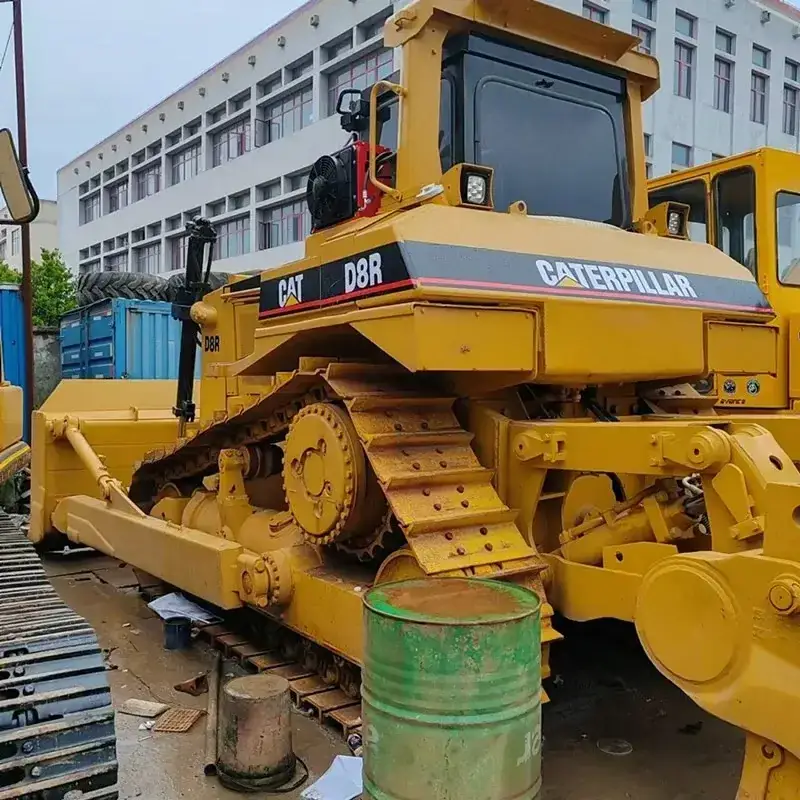
A critical section of any bulldozer vs excavator guide is the Production-per-Hour metric. A bulldozer is essentially a high-capacity conveyor belt on tracks. When leveling a road shoulder or maintaining a mining haul road, the 37-ton Caterpillar D8R can move up to 500 cubic meters of material per hour over a short distance. An excavator cannot match this horizontal production rate because it must swing, dump, and return for every bucket load.
Conversely, for deep-reach projects, the Doosan DX300LC is the widely used champion. It can dig 7 meters deep and load a 25-ton truck in under 3 minutes. If your initial site work involves deep excavation or pipeline burial, the excavator must be your first procurement. If your site is already at grade and requires bulk soil redistribution, the bulldozer takes the lead.
The Undercarriage Factor: Wear Costs and Mobility
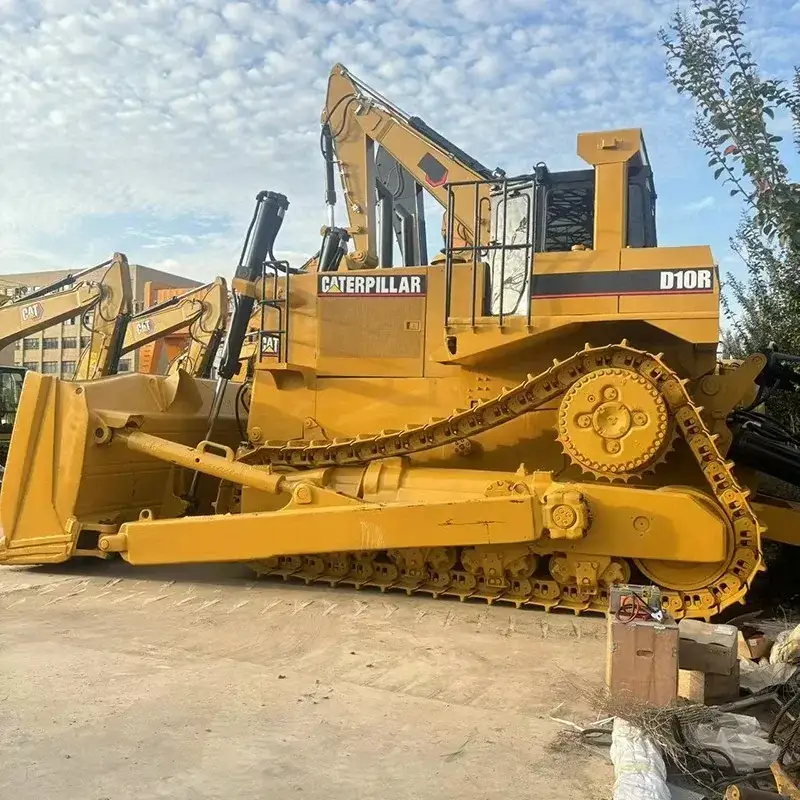
Track maintenance is the silent killer of project profit margins. Within this bulldozer vs excavator guide, we emphasize that bulldozer undercarriages wear at a significantly higher rate than excavator tracks. A bulldozer is constantly traveling under load, creating friction in the pins, bushings, and rollers. For machines working in abrasive red soil in Brazil or high-ambient sand in Saudi Arabia, the cost of undercarriage replacement on a Caterpillar D10R must be factored into the initial ROI calculation.
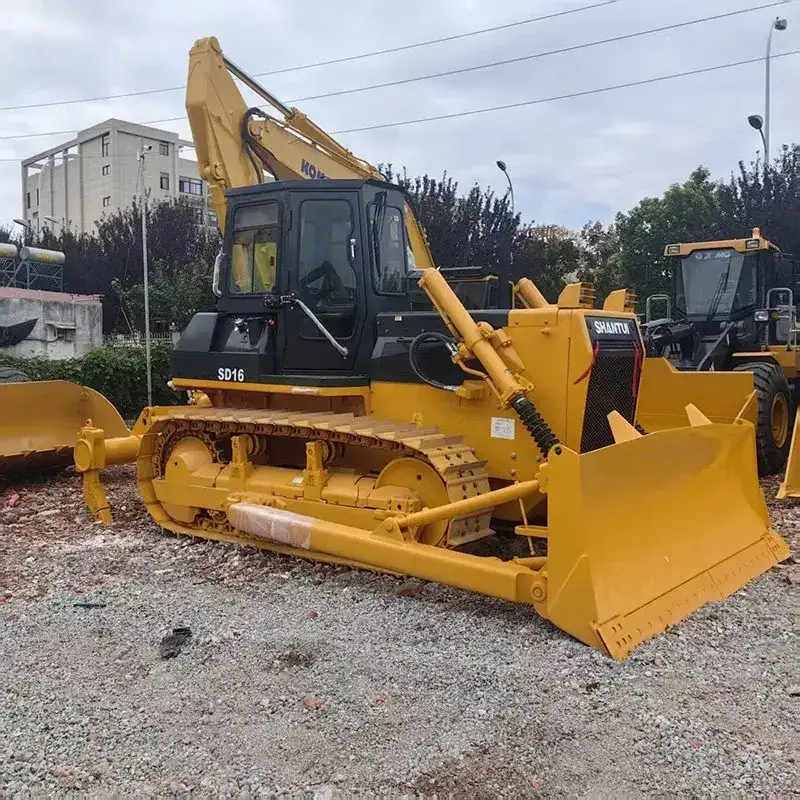
Excavators, however, spend most of their life stationary. Their track wear is primarily "parking wear" and movement between digging spots. This means a used Komatsu PC200-8 will typically have a lower per-hour maintenance cost than a 160HP Shantui SD16 dozer. If your project has a limited mechanical maintenance team on-site, starting with an excavator fleet is often the safer logistical strategy.
Strategic Application Table: Which Tool for Which Task?
| Task Category | Preferred Machine | Technical Reason |
|---|---|---|
| Large-Scale Land Clearing | Bulldozer (D7G / SD16) | High drawbar pull for removing stumps and bulk soil. |
| Bridge Foundation / Piling | Excavator (PC210 / ZX200) | 360-degree rotation and vertical digging force. |
| Mining Haul Road Support | Bulldozer (D8R / D10R) | Massive blade capacity for road leveling and gradient control. |
| Pipeline & Trenching | Excavator (DX300 / SY215) | Precise bucket control and deep reach capability. |
| Stockpiling & Loose Material | Bulldozer (SD22 / D6G) | Speed and horizontal volume carry over long distances. |
Regional Logistics: Shipping These Mechanical Titans
Exporting a bulldozer versus an excavator from the Port of Shanghai involves different logistical protocols.
Bulldozers: Often require Flat Rack or RORO shipping due to the wide blade dimensions. For machines like the Shantui SD13, we can perform partial disassembly to fit into a 40HQ container, but larger mining dozers must be shipped whole.
Excavators: Are the most "container-friendly" machines. By detaching the boom and cabin, even a 20-ton unit can be shipped securely to Africa or Southeast Asia, saving up to 30% in ocean freight costs. As your technical supplier, HEAVY MACHINERY PRO provides video evidence of the disassembly and maritime lashing process for every order.
Trust and Technical Authority: The HMP Condition Statement
Choosing between a dozer and an excavator is the first of many decisions. The second is choosing a supplier who understands the engineering behind both. Every machine in our yard undergoes a 150-point health audit. For bulldozers, we focus on the transmission pressure and final drive integrity. For excavators, we audit the main control valve and pump synchronization. By utilizing this bulldozer vs excavator guide, you are already ahead of the competition. At HEAVY MACHINERY PRO, our goal is to provide the technical transparency that turns a used machinery purchase into a long-term project partnership.
Frequently Asked Questions (FAQ)
While modern excavators are very precise, they cannot match the production-rate or the level accuracy of a dozer for large-scale grading. A dozer uses its weight to push through high spots, whereas an excavator depends purely on hydraulic force.
Generally, a bulldozer under full load consumes more fuel per hour because the engine is constantly working to maintain traction and pushing force. Excavators utilize regenerative hydraulic flow to save fuel during swing cycles.
If your site involves hard rock or compacted caliche, a ripper-equipped dozer like the Caterpillar D8R is essential. It pre-breaks the ground, making it easier for excavators to dig later.
Excavator operators are generally more abundant globally. Operating a heavy dozer, especially for fine grading, requires a specialized skill set that often commands a higher labor premium.
Request a live video walkthrough of the "Hot-Oil Pressure Test" for the transmission. For excavators, request a "Boom Drift" test where the machine is held stationary under load with the engine off.
Yes. We maintain an extensive inventory of original Caterpillar, Komatsu, and Shantui parts, ensuring that your fleet stays productive regardless of which mechanical titan you source first.
Related Bulldozer Inventory in Stock
Browse listings and request current availability, evidence, and export terms for the exact unit