Excavator Sizes, Dimensions & Weight in Tons Explained
What are the excavator size classes and how much do they weigh?
Excavators are grouped by operating weight: mini/compact (1-6 t), midi (6-10 t), standard small (10-20 t), standard medium (20-30 t), large (30-45 t) and mining (45 t+). The 20-30 ton class is the most traded worldwide because it balances productivity, transport cost and fuel use. Always confirm which weight is quoted and with which attachment, because a heavier bucket, thumb or steel tracks can push a machine into the next transport bracket.
- Compare operating weight with the attachment you will actually run, not the base figure.
- Confirm transport length, width, height and tail swing against the exact used unit.
- Check track shoe width and ground pressure for soft or slope work before deciding class.
Topic cluster
Continue through the related research hub
Follow the topic center to compare model research, buyer guides, current product records and destination-specific next steps without relying on one isolated article.
One of the most common questions buyers ask before sourcing a machine is simple to state and surprisingly involved to answer: how big is an excavator, and how much does it weigh? Getting this right matters because operating weight drives transport cost, trailer and container choice, ground-bearing pressure, attachment capacity and the type of work a machine can realistically handle. This guide explains excavator size classes, typical dimensions and operating weights in tons, and how to read the numbers before you commit to a used unit.
Excavator size classes by operating weight
The industry groups excavators into broad classes by operating weight in tons. These bands are a planning tool, not a rigid standard — a machine near a class boundary can behave like either neighbour depending on its undercarriage, counterweight and attachment.
| Class | Operating weight | Typical models | Common use |
|---|---|---|---|
| Mini / compact | 1 – 6 tons | CAT 305/307, Komatsu PC55, Kubota U-series | Urban works, landscaping, utilities, indoor demolition |
| Midi | 6 – 10 tons | CAT 308, Komatsu PC78 | Trenching, small foundations, roadside work |
| Standard (small) | 10 – 20 tons | CAT 315/320 (lower), Komatsu PC138/PC160 | General construction, drainage, site prep |
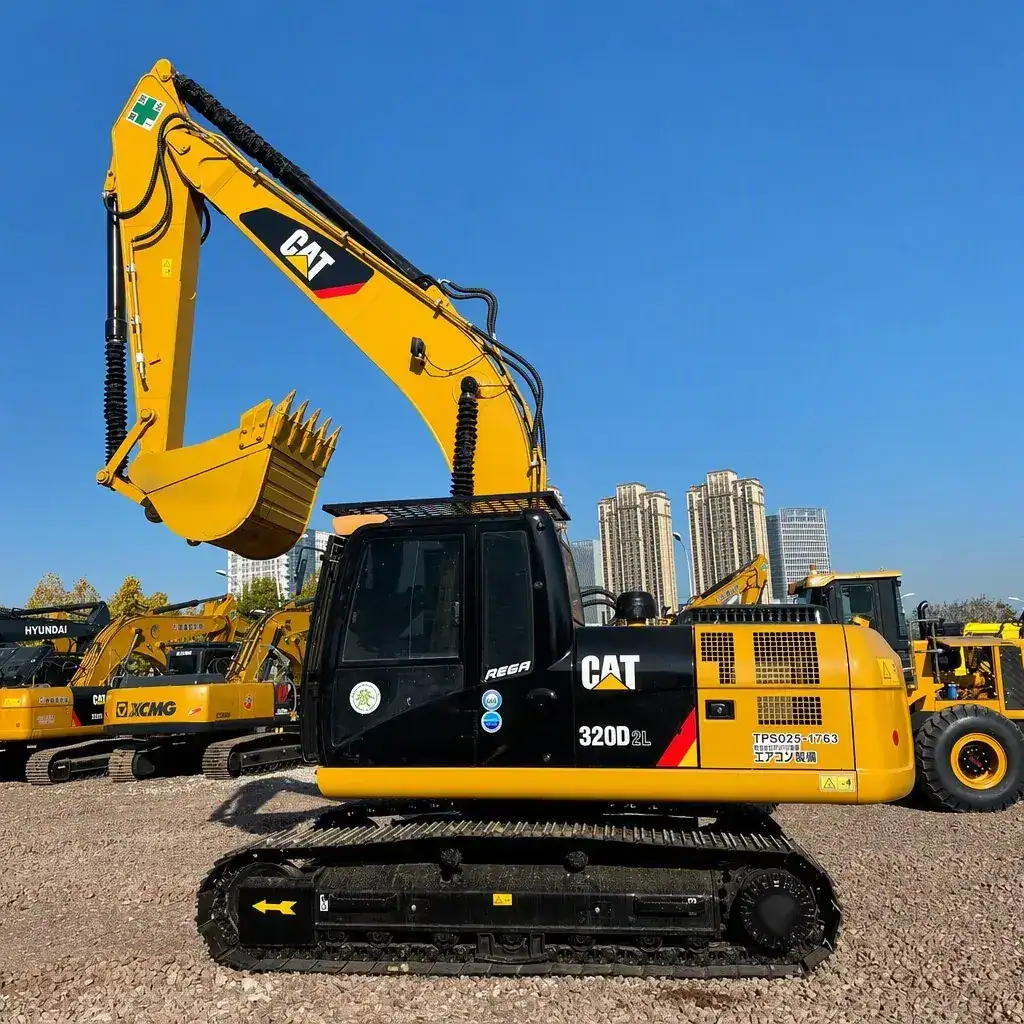
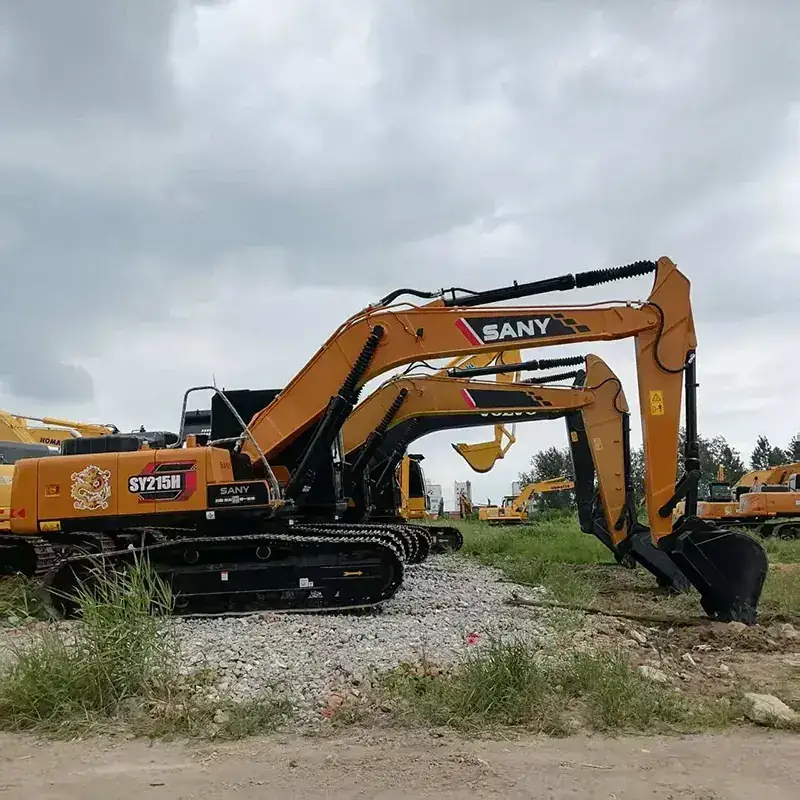
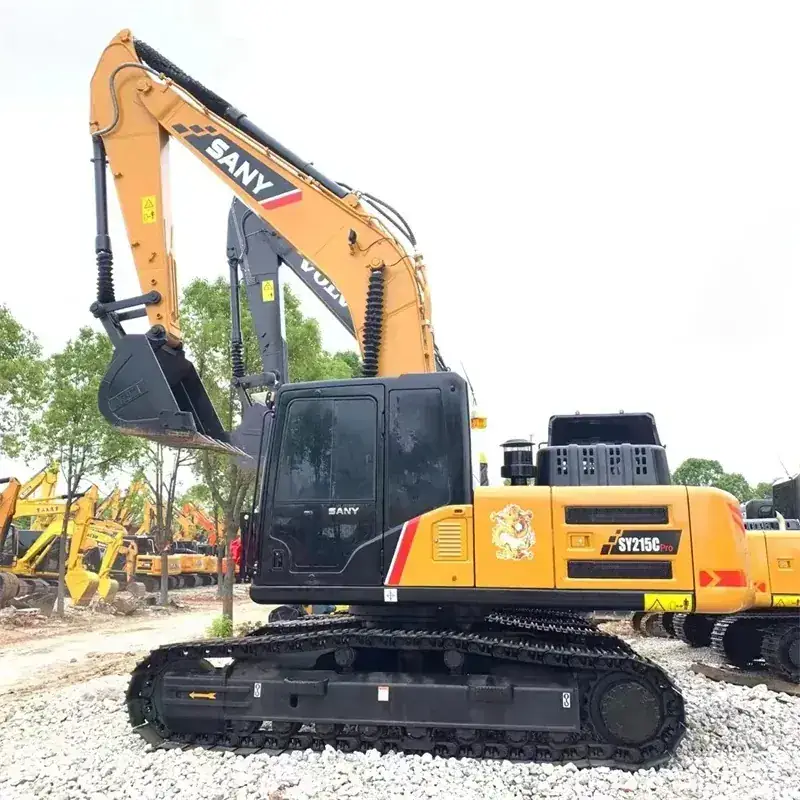
| Standard (medium) | 20 – 30 tons | CAT 320/323, Komatsu PC200/PC210, Sany SY215 | The volume workhorse class — bulk earthmoving, roads |
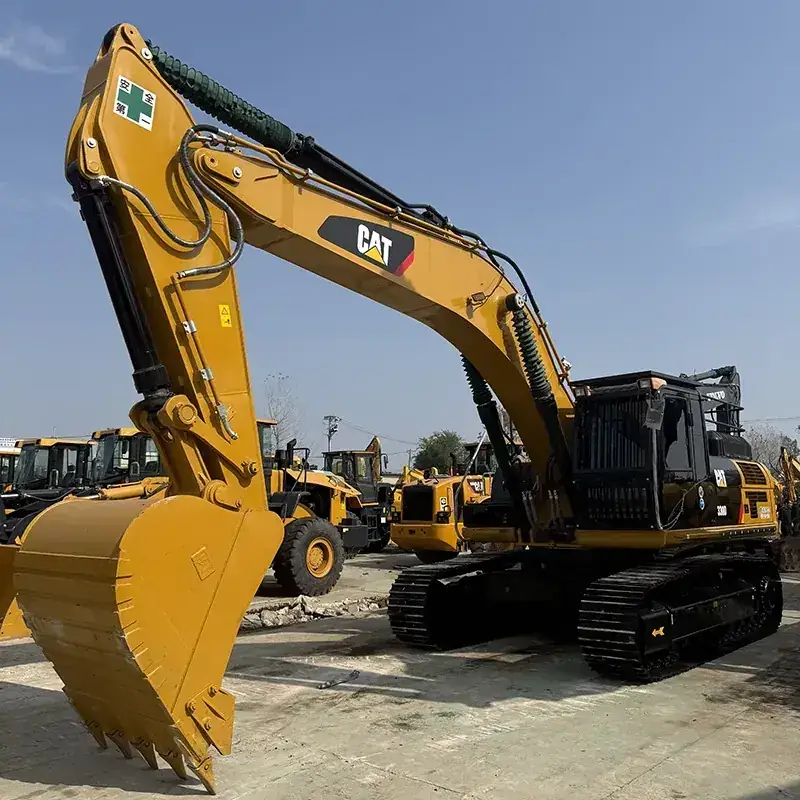
| Large | 30 – 45 tons | CAT 336/349, Komatsu PC300/PC350 | Heavy earthmoving, quarrying, deep foundations |
| Mining / very large | 45 tons and above | CAT 374/390, Komatsu PC450+ | Mining, large-scale excavation, mass haul |
The 20 – 30 ton class is by far the most traded worldwide because it balances productivity, transportability and fuel use. If you are unsure where to start, this class fits the widest range of general construction tasks.
How much does an excavator weigh?
"Operating weight" is the figure to compare — it includes the base machine, a standard boom and stick, a bucket, full fluids and an operator. It is not the same as shipping weight (attachment removed) or gross weight with a heavier bucket or thumb fitted. When you read a listing, always confirm which weight is quoted and with which attachment, because a 20-ton machine can cross into the next transport bracket once a heavier bucket, thumb or steel tracks are added.
- Mini (1–6 t): roughly 1,000 – 6,000 kg
- Midi (6–10 t): roughly 6,000 – 10,000 kg
- Standard 20-ton class: roughly 20,000 – 23,000 kg
- Large 30-ton class: roughly 30,000 – 34,000 kg
Excavator dimensions that decide transport and access
Beyond weight, three dimensions govern whether a machine fits your trailer, container or job site. Confirm these against the exact used unit — not a generic brochure — because undercarriage width and boom configuration change them.
| Dimension | Why it matters | 20-ton class typical |
|---|---|---|
| Transport length | Trailer / flat-rack fit; boom folded | ~9.4 – 9.8 m |
| Transport width | Road permits; container door clearance | ~2.8 – 3.0 m (track shoe dependent) |
| Transport height | Cab / boom height; container and bridge limits | ~3.0 m |
| Tail swing radius | Working clearance in confined sites | ~2.75 – 2.9 m |
For container shipping, a 20-ton excavator is typically dismantled (boom, arm and sometimes counterweight removed) to load into a 40HQ container, which lowers freight cost versus flat-rack. Ask the seller which loading method they will use and how transport dimensions change once the machine is broken down.
How to compare excavator specs correctly
When you shortlist units, compare like-for-like within the same size class and generation. A useful specification comparison covers:
- Operating weight with the attachment you will actually use.
- Engine power and emissions tier (mechanical vs common-rail matters for fuel quality regions).
- Bucket capacity and maximum dig depth / reach.
- Track shoe width and ground pressure for soft or slope work.
- Undercarriage and hours — the biggest driver of remaining service life.
Catalogue numbers are a starting baseline only. The machine you pay for should be verified against its own serial-number configuration, hour meter and current condition evidence.
Which size should you buy?
Match the class to the dominant task, then transport reality:
- Utilities, landscaping, tight access: mini or midi (1–10 t).
- General construction and roads: 20–30 ton standard class — the safest all-round choice.
- Quarry, deep foundation, mass earthmoving: 30 ton and above, if your trailers and site can handle it.
Oversizing raises transport, fuel and tyre/track cost; undersizing slows the job. When two classes could work, the lighter one is usually cheaper to move and run.
Ready to match a size class to real inventory? Browse current units by machine type and weight, and send the target model, working hours and destination port for unit-specific dimensions, operating weight and an inspection-backed quote.
Related Excavator Inventory in Stock
Browse listings and request current availability, evidence, and export terms for the exact unit