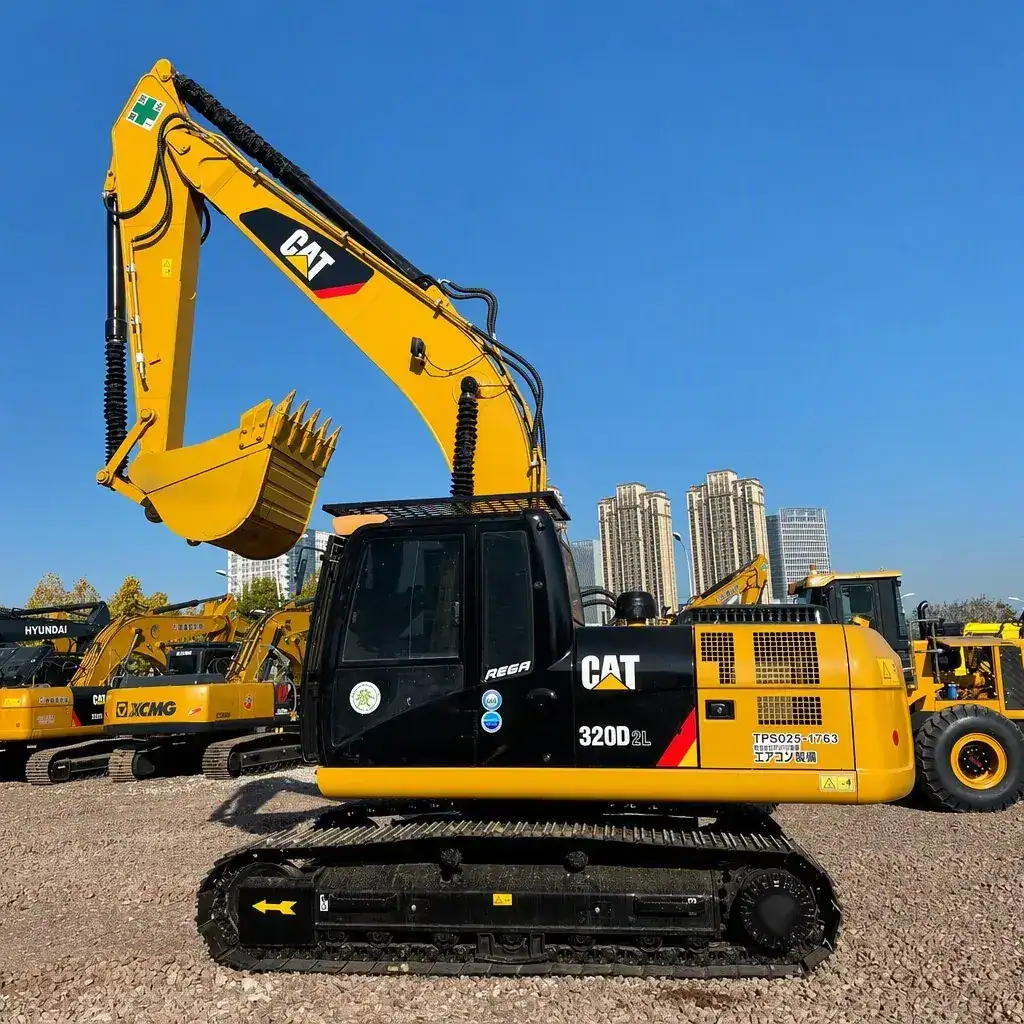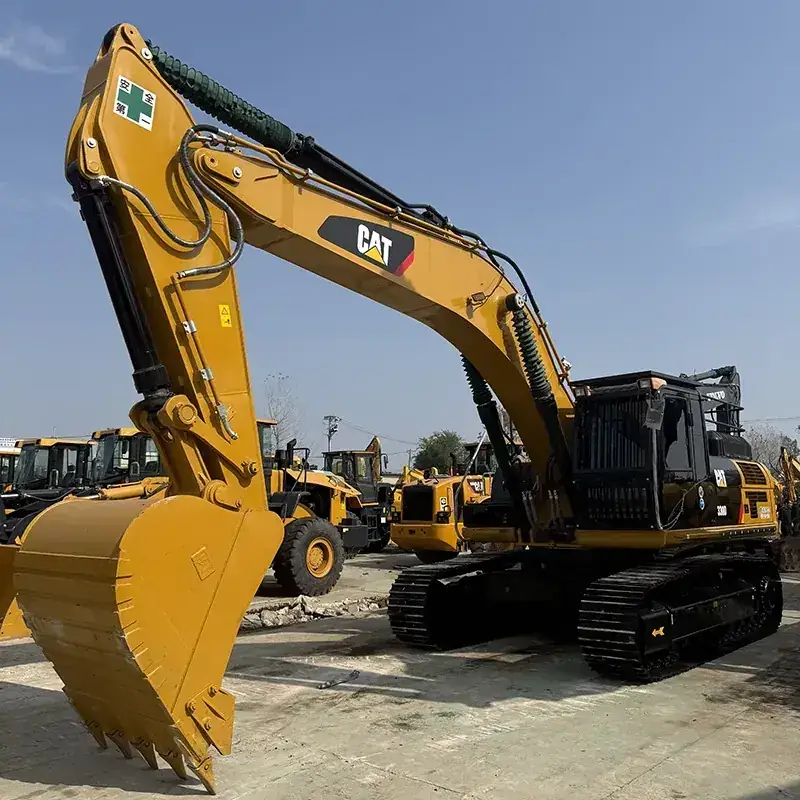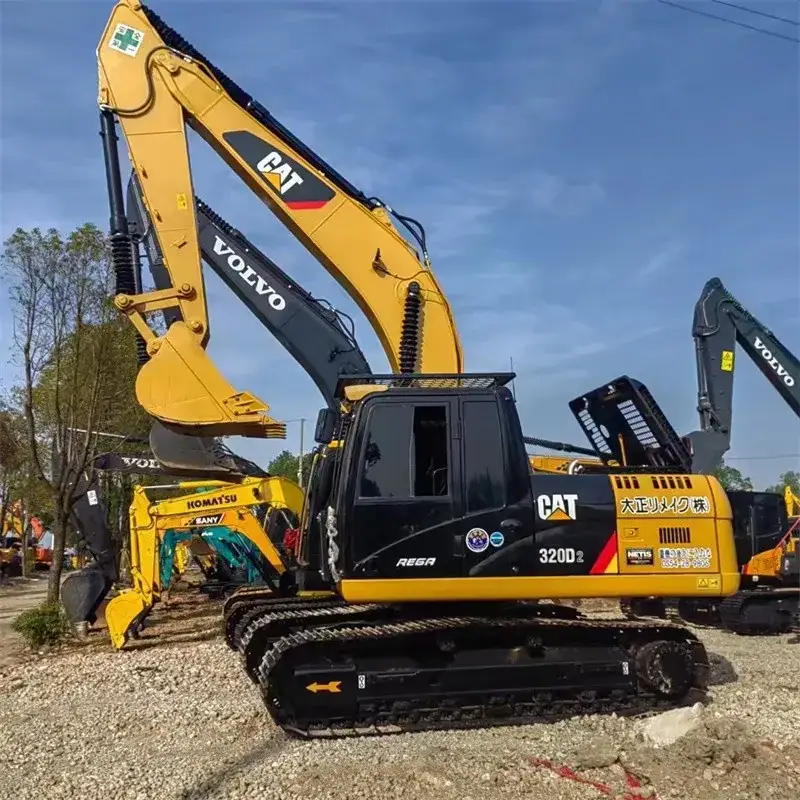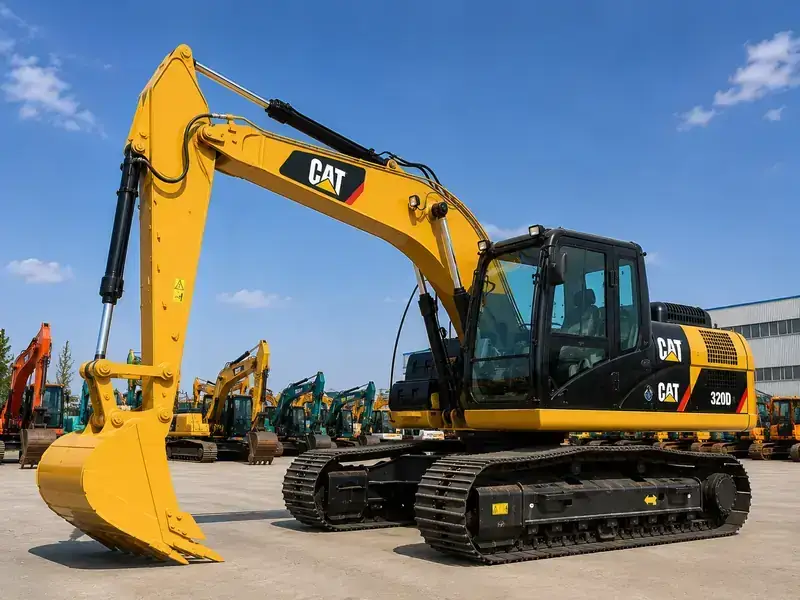
Quick answer
Choose the used CAT 320D when your project and fleet are supported by Caterpillar parts, technicians and familiar service routines. Choose the Komatsu PC210 when Komatsu support is stronger in your market or its control feel, attachment setup and documented condition fit the job better. For a real purchase, the exact serial-numbered machine, warm hydraulic test, undercarriage evidence and destination support matter more than the badge.
Used CAT 320D and Komatsu PC210 excavators are often compared because both serve the broad 20-ton-class market. That does not mean every unit has the same operating weight, engine configuration, boom, stick, bucket, track setup or hydraulic specification. A project-fit decision should connect the model to the work, then connect the advertised machine to evidence.
This guide is for contractors, fleet managers and import buyers deciding between a used CAT 320D and a used Komatsu PC210 for road construction, utility trenching, site preparation, quarry support or mixed general excavation. It focuses on the questions that can be verified before payment instead of declaring one brand the winner for every site.
CAT 320D vs PC210 at a glance
| Decision area | Used CAT 320D questions | Used Komatsu PC210 questions |
|---|---|---|
| Parts and service | Can your local Caterpillar dealer, independent technician and parts channel support this exact serial range? | Can your local Komatsu distributor and technician support this exact PC210 configuration? |
| Hydraulics | Does the warm machine maintain smooth response during separate and combined functions? | Does it maintain speed, control and holding performance at working temperature? |
| Ground conditions | Are track width, shoe type, guards and cooling package suitable for your soil and duty cycle? | Are the undercarriage, final drives and attachment setup appropriate for the same ground conditions? |
| Transport | Does the quoted configuration fit your local haulage, ramp and port plan? | Does the PC210 configuration meet the same width, height and shipping limits? |
| Purchase evidence | Can the seller show the exact PIN, hour meter, cold start, warm cycle and service file? | Can the seller show the same evidence and identify the exact PC210 model and serial? |
1. Start with the project, not the brand
Write down the work the excavator must perform during a normal week. Include trench depth and width, truck loading height, material density, expected travel between work areas, attachment changes, daily operating hours and the ground conditions. A machine that looks attractive in a yard may be poorly matched to a deep trench, abrasive quarry, soft site or restricted urban project.
Then define what would make the purchase successful: predictable cycle behavior, easy parts access, a transportable configuration, an attachment already available in your fleet or a technician who knows the machine. These requirements create a fair comparison between the CAT 320D and PC210 instead of relying on general reputation.
2. Which machine fits roadwork and utility trenching?
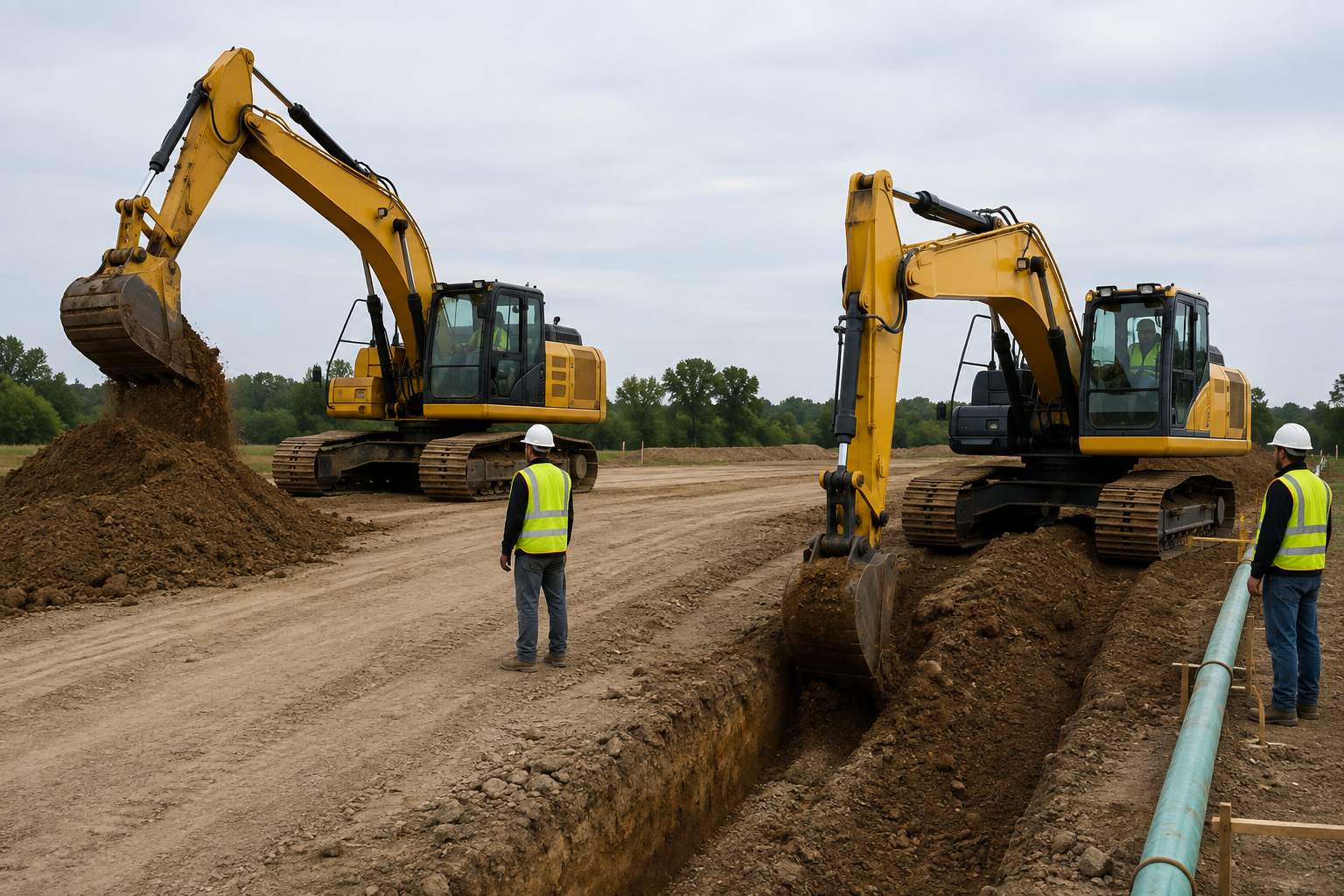
For road construction and utilities, both models can be suitable when configured with the right bucket and stick. The useful questions are practical: Can the machine reach the required trench profile? Can it load your trucks without wasting swing time? Does the undercarriage remain stable on your prepared road base? Can your transport provider move it without unexpected dismantling?
Ask for a video showing the exact machine digging, placing spoil, swinging to the loading side and travelling in both directions. For trenching, also inspect bucket linkage play, cylinder rod surfaces, hydraulic hose routing and the operator's ability to make small corrections. A smooth empty-bucket demonstration is less informative than controlled work that resembles your site.
3. Compare hydraulic behavior at working temperature
Hydraulics should be judged after the oil has reached normal operating temperature. Cold oil can make a worn system feel stronger than it is. Start from cold when possible, record the hour meter and warning indicators, then warm the machine before comparing boom, arm, bucket, swing and travel.
Run the functions separately and together. Note delayed response, pump noise, speed changes through the cylinder stroke, drift, jerky movement and a major loss of speed during combined functions. If measurements are available, compare pressure and flow with the exact model and configuration service specification. Record the test port, oil temperature, engine speed, method, measured value and target value. Do not treat a generic pressure number from a different PC210 or 320D version as proof.
For a more detailed hydraulic procedure, see our excavator hydraulic performance inspection guide. Buyers can also review the used excavator purchase verification checklist before requesting a quote.
4. Inspect the undercarriage before comparing price
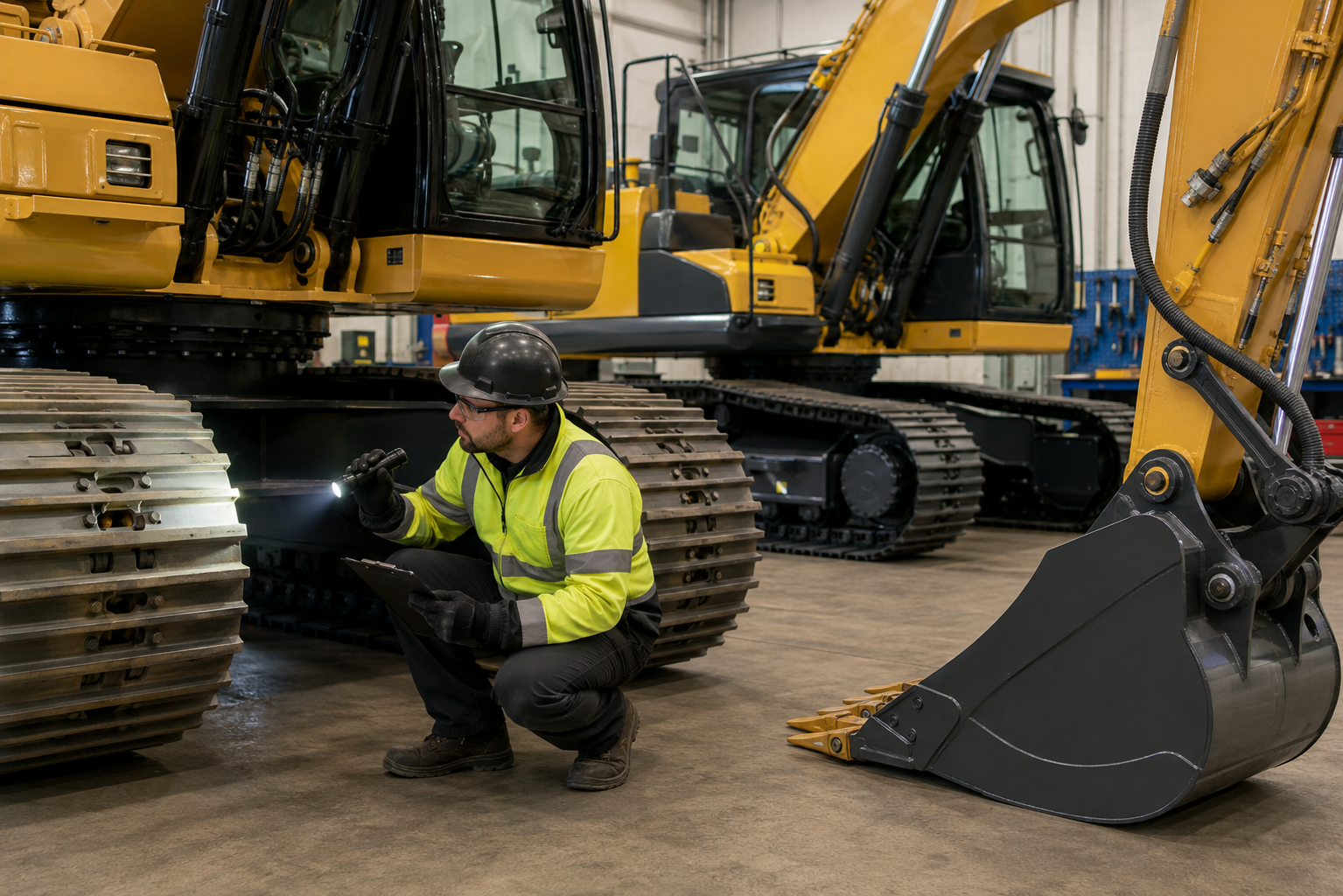
On a used 20-ton excavator, undercarriage condition can change the ownership decision quickly. Request clear, dated views of track shoes, links, pins and bushings, rollers, idlers, sprockets, adjusters, guards and track frames. Look for uneven wear, repairs, missing hardware, leaking rollers and an adjuster that has little remaining travel.
Compare the CAT 320D and PC210 using the same evidence standard. Do not accept a percentage without the measurements or photos behind it. The machine with the lower purchase price may not be the lower-cost choice if it needs track-chain work, final-drive attention or transport repairs immediately after arrival.
5. Match parts support to your destination
Parts availability is a local operating question, not a global brand slogan. List the nearest dealer, independent technician, common filters, hoses, seals, undercarriage suppliers and diagnostic support for both brands in your destination. Ask how long routine and major parts normally take to arrive, and whether the technician has experience with the exact generation.
If your fleet already includes CAT machines, a 320D may reduce training and stocking friction. If Komatsu equipment is already common in your area, a PC210 may be easier for operators and technicians to absorb. If neither brand has strong local support, the seller's evidence quality, export parts channel and written after-sale process become more important.
6. Check cabin, controls and operator fit
Operator acceptance affects daily production. Ask for a live cabin walk-around showing the seat, joysticks, pedals, monitor, air conditioning, windows, mirrors and warning indicators. Have an experienced operator test both machines if possible. A small difference in control response or visibility can matter more than a brochure comparison during long shifts.
Also check that the intended attachments match the hydraulic couplers and auxiliary lines. A CAT 320D or PC210 with a poor attachment match can require additional plumbing, a different bucket or a control adjustment before it can do the planned work.
7. Use a fair evidence pack for both machines
Request the same evidence pack for the CAT 320D and PC210 so the comparison is not biased:
- Serial or PIN plate, engine plate and hour-meter photo for the exact unit.
- Cold-start video with dashboard, exhaust and abnormal-noise observations.
- Warm hydraulic video showing separate, combined, swing and travel functions.
- Undercarriage measurements or condition notes with dated close-ups.
- Engine, hydraulic oil, cylinder, hose, swing bearing and final-drive evidence.
- Service records and a written explanation for repairs, repainting or missing history.
- Transport dimensions and a written quote that identifies what is included.
HMP's current used CAT 320D listings and used Komatsu PC210 listings should be treated as starting points for unit-specific questions. Availability, configuration and condition must be confirmed on the exact machine.
8. Calculate total project fit, not just purchase price
Compare the full decision: machine price, inspection, inland transport, export preparation, ocean freight, insurance, duties, local delivery, initial service, attachments, parts stocking and expected downtime. Freight and destination charges depend on the exact dimensions, port, carrier and date, so request a written quotation rather than using a generic online estimate.
Give each machine a simple score for technical fit, evidence quality, local support, transport fit and first-year repair risk. The score is only a decision aid; it should make assumptions visible and show which unanswered question could change the choice.
CAT 320D or PC210: a practical decision rule
- Choose the CAT 320D direction when Caterpillar support is materially stronger at your destination, your fleet shares compatible service routines, and the exact unit has better evidence and undercarriage condition.
- Choose the Komatsu PC210 direction when Komatsu parts and technicians are more accessible, the PC210 configuration matches your attachments and transport plan, and its warm operating test is stronger.
- Pause both purchases when the seller cannot match serial/PIN identifiers, refuses a cold start, provides only polished photos, hides warm-test results or will not allow a reasonable independent inspection.
Final recommendation: let the work and evidence decide
The used CAT 320D and Komatsu PC210 can both be productive 20-ton-class excavators. The best choice for your project is the one with the right reach and attachment setup, predictable warm hydraulics, acceptable undercarriage wear, supportable parts access and a complete evidence trail tied to the exact machine.
Send HMP the model, stock link, project type and destination port to request the available photos, video, inspection scope and written FOB, CIF or CFR terms. Compare the evidence pack for both machines before you compare the headline price.