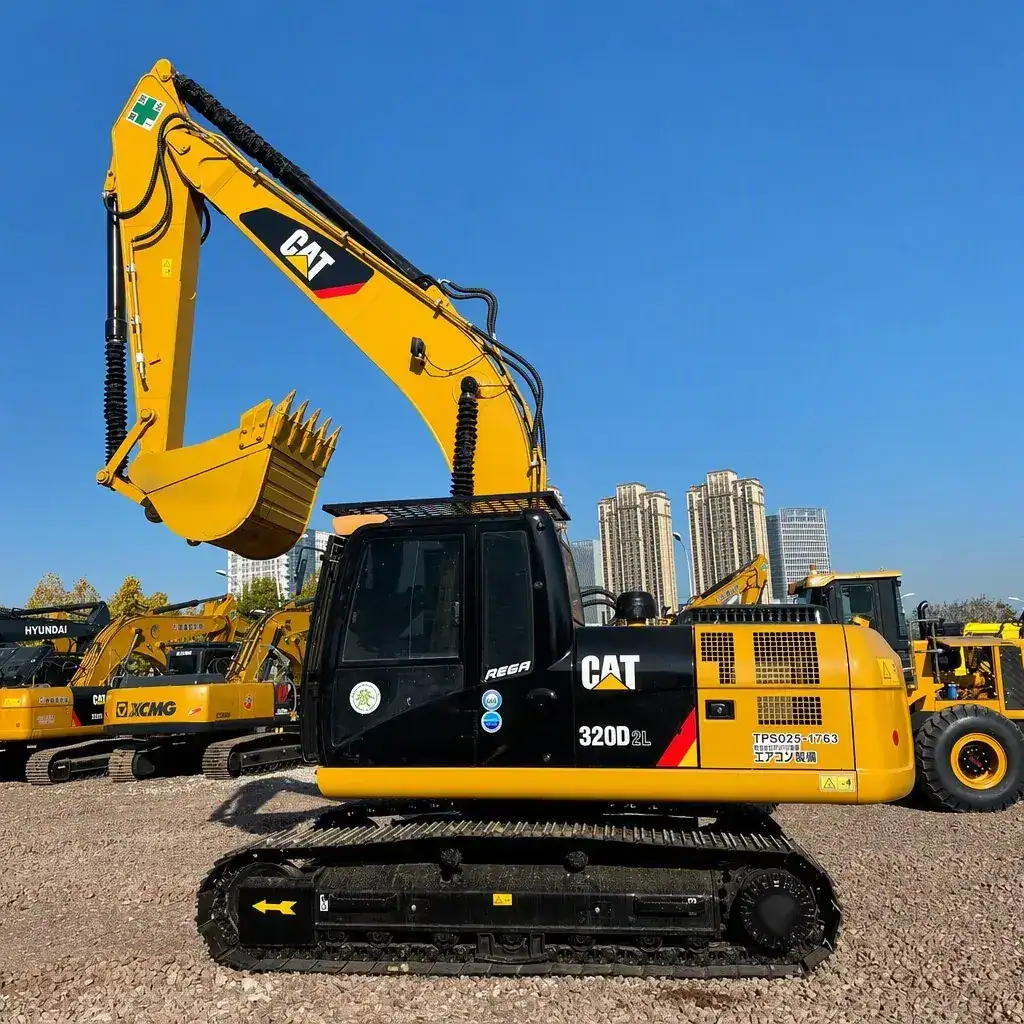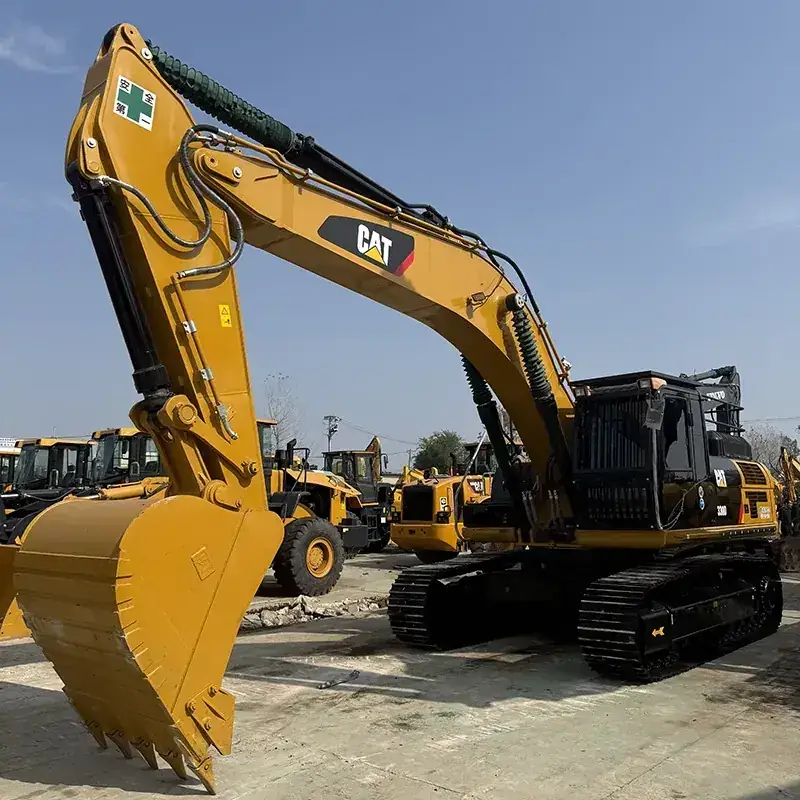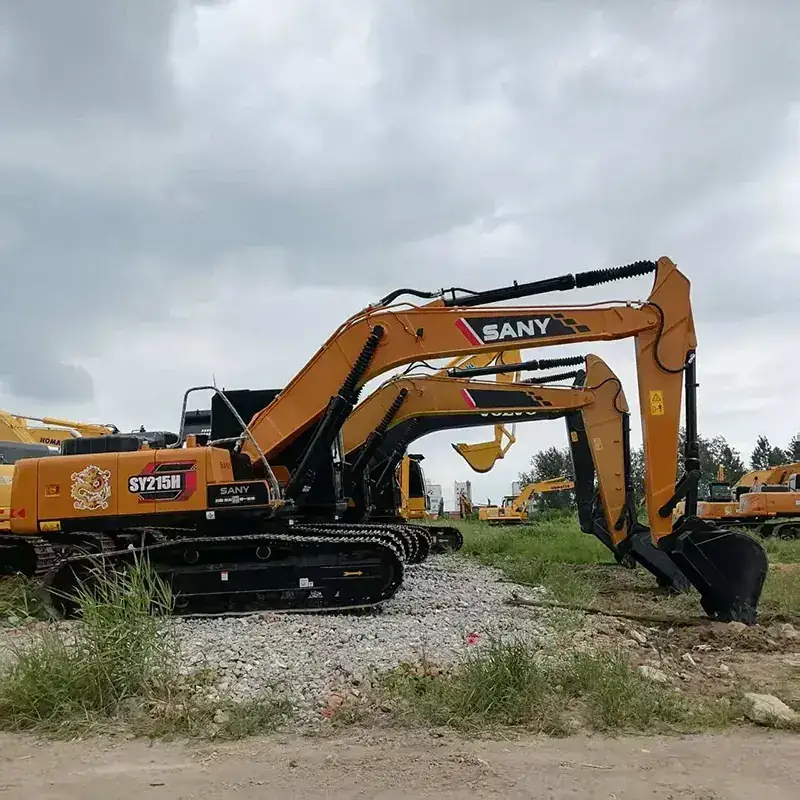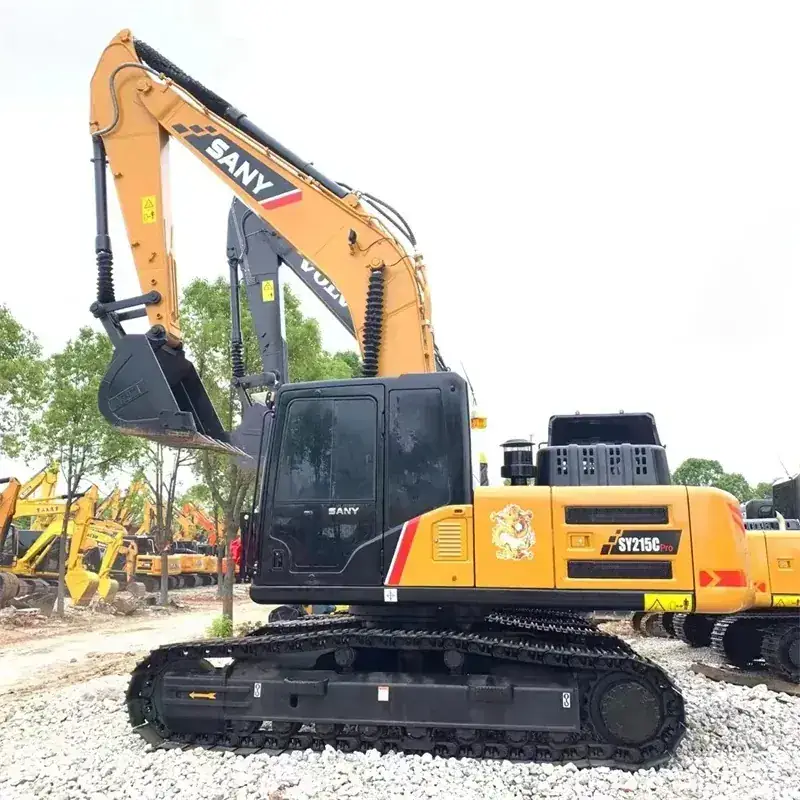
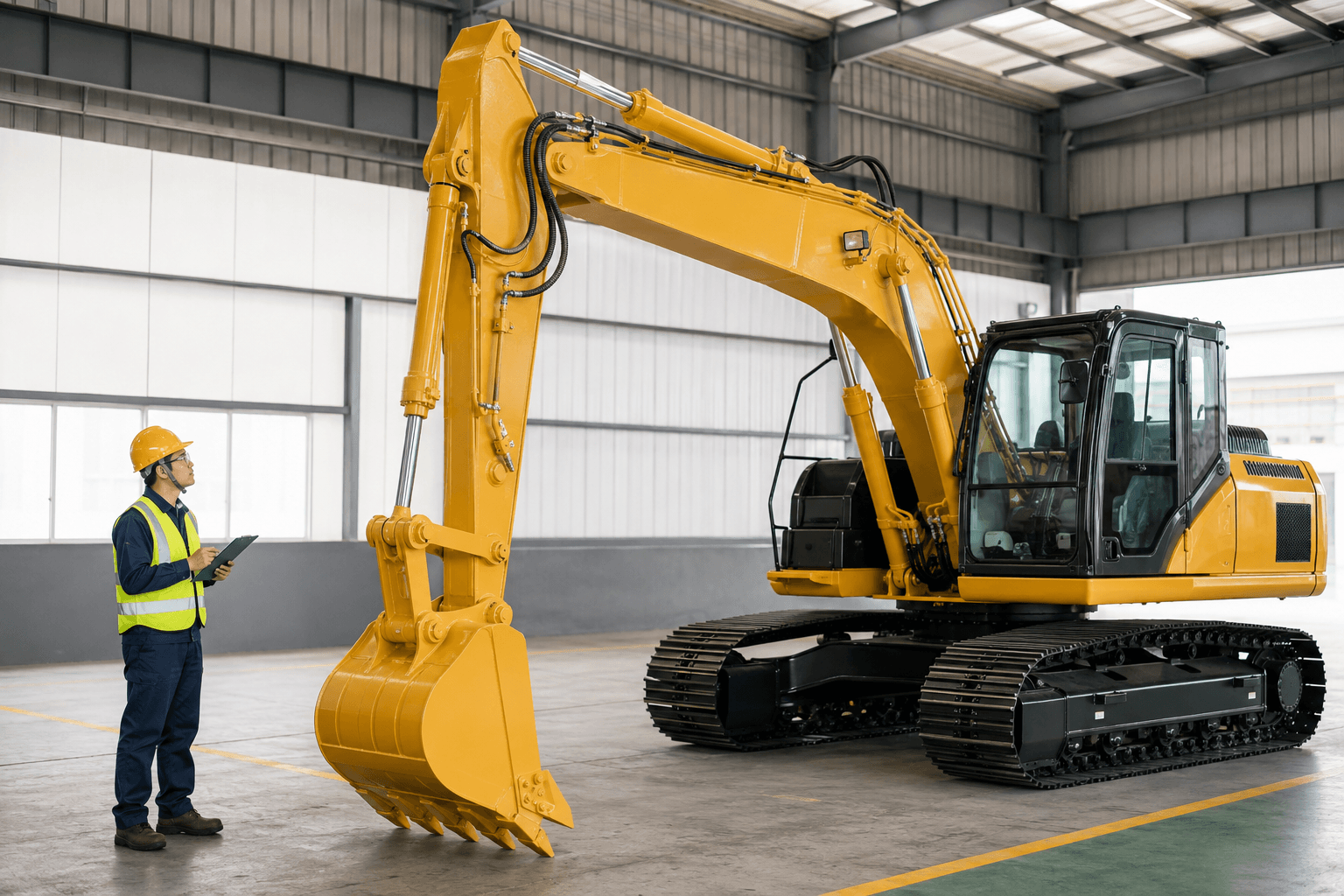
Direct answer
To check excavator hydraulic performance, warm the machine fully, inspect for leaks, compare pump pressure and flow with the exact model's service specification, test boom/arm/bucket/swing/travel separately and together, then perform a controlled cylinder drift and heat check. Judge a used excavator from evidence tied to the exact serial number, not from a smooth walk-around video alone.
Hydraulic performance determines whether an excavator can dig, lift, swing and cycle predictably. It can also reveal a weak main pump, a leaking control valve, worn cylinder seals, restricted suction, contaminated oil or excessive heat before the machine stops completely.
This guide explains how to check hydraulic performance on a used excavator before purchase. It is intended for contractors, fleet managers and import buyers comparing a listed machine, dealer unit or export-yard machine. A qualified technician should confirm any final diagnosis and use the OEM service manual for the exact model.
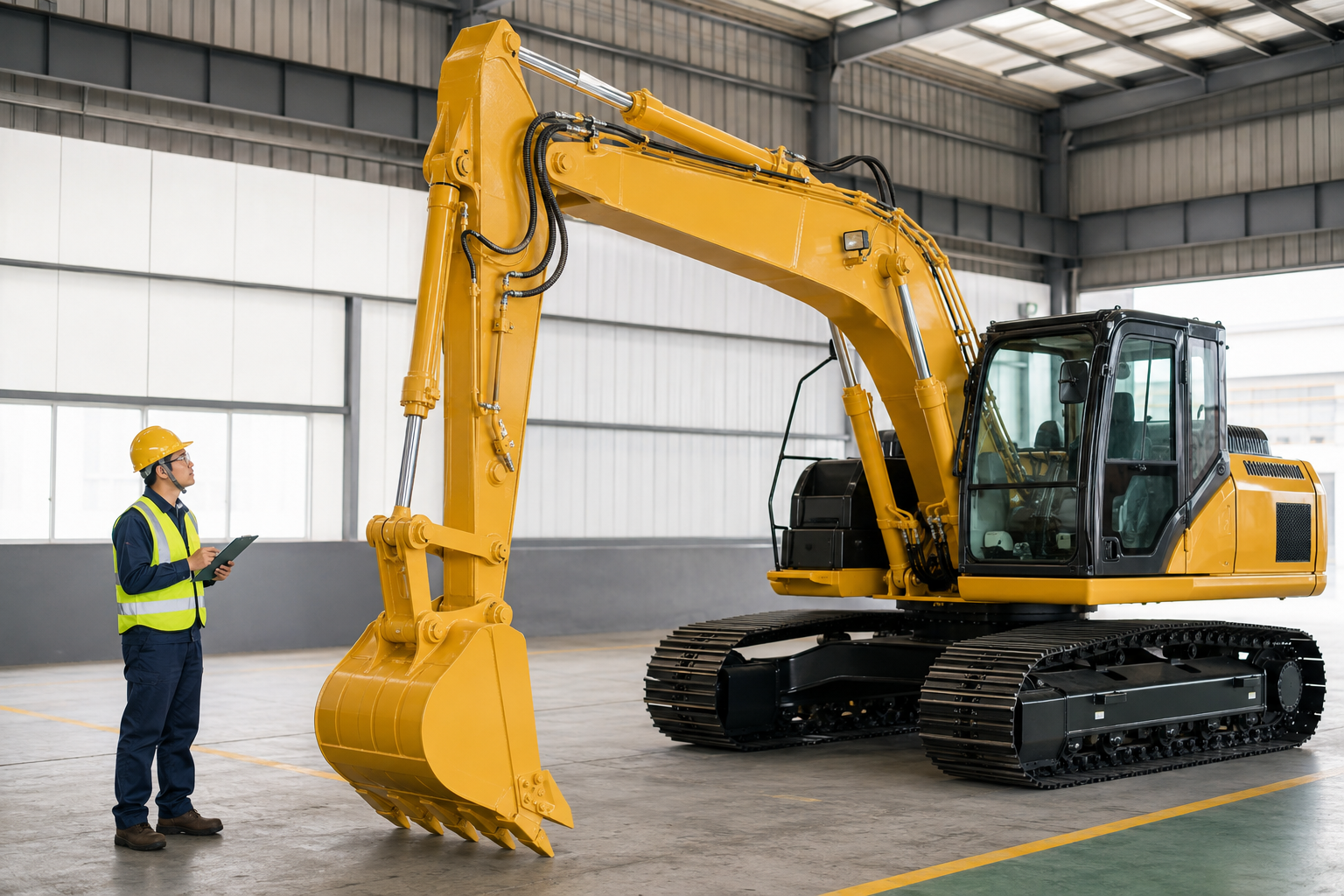
What hydraulic performance means on an excavator
Hydraulic performance is the relationship between oil flow, system pressure, heat control and the speed and force of each function. A healthy system should respond consistently to joystick input, hold a load without excessive drift, combine functions without a major speed collapse and return to normal temperature after a reasonable work cycle.
Do not reduce the inspection to one pressure reading. Pressure can look acceptable while pump flow is low, a relief valve is misadjusted or an internal control-valve leak is bypassing oil. A useful inspection combines visual evidence, operating behavior and measured values.
Hydraulic performance inspection checklist
| Check | What to observe | Evidence to request |
|---|---|---|
| Oil and leaks | Oil level, smell, color, wet fittings and cylinder rod condition | Dated close-up photos before and after the test |
| Warm-up | Cold-start behavior, pump noise and response at working temperature | Uncut start-to-test video with the hour meter visible |
| Pressure and flow | Measured values compared with the model's service specification | Gauge position, method and technician report |
| Functions | Boom, arm, bucket, swing and travel speed, force and smoothness | Video of separate and combined movements |
| Holding and heat | Cylinder drift, abnormal heat, foaming or pressure loss | Timed drift test and temperature record where available |
1. Confirm identity and prepare a safe test
Record the make, model, serial or PIN, displayed hours, engine hours if available and test date. The serial/PIN in the video, inspection report, quotation and commercial documents should identify the same machine. For a remote purchase, request one continuous sequence that starts at the identification plate, shows the hour meter, starts the engine and continues through the hydraulic checks.
Hydraulic tests need a safe open area. Keep people away from the bucket, counterweight and travel path. Never place a hand near a suspected leak: high-pressure hydraulic oil can penetrate skin. Shut down, release stored pressure according to the manufacturer's procedure and use cardboard or a proper leak-detection method instead.
2. Inspect hydraulic oil, hoses and cylinders
Check the hydraulic tank according to the manufacturer's procedure. Milky oil, unusual darkening, foam, a burnt smell or visible debris justify oil sampling and a deeper inspection. Ask whether the oil was recently changed and request the maintenance record rather than treating fresh oil as proof of good condition.
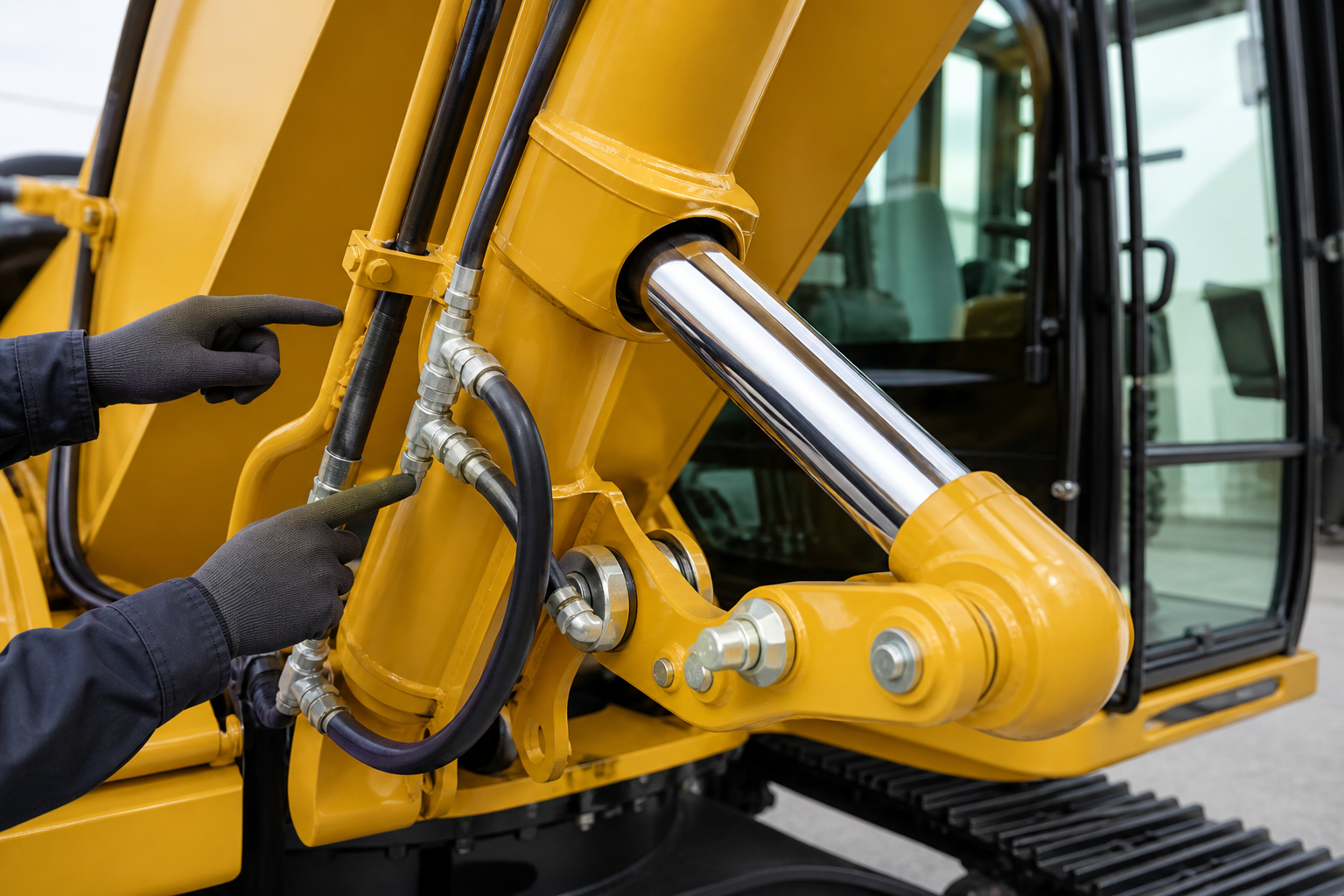
Inspect the main pump area, valve bank, swivel joint, travel motors, swing motor, hose clamps and every cylinder. The polished rod should be smooth and free of pitting. Check rod seals for fresh oil, hose covers for rubbing or bubbles and fittings for wet dust. A nearly new-looking machine can still have a hidden internal bypass, so visual cleanliness is only the first filter.
3. Warm the hydraulic system before judging performance
Cold oil can make a weak system feel temporarily strong because thicker oil reduces internal leakage. Start the machine from cold when possible and record pump whine, rattling, hesitation or warning lights. Cycle the major functions at low speed before moving to a working-speed test.
Continue until the machine reaches normal operating temperature, following the model's service instructions. Compare behavior at the beginning and end. If the boom, arm or travel becomes noticeably slower as the oil heats, investigate pump wear, relief-valve settings, internal leakage, cooler performance and oil viscosity.
4. Measure hydraulic pressure and flow correctly
Pressure and flow must be compared with the exact excavator model and configuration. The correct reference is the OEM service manual or a qualified technician's specification, not a generic internet number. Connect the gauge at the prescribed test port, use the correct procedure and record engine speed, oil temperature and the function being tested.
Maximum relief pressure shows what the system can reach under a defined load; it does not by itself prove that the pump can deliver the required flow. A flow test at operating temperature is more useful when diagnosing slow cycles. If pressure is low, possible causes include a relief valve, pump wear or engine speed problem. If pressure is normal but movements are slow, check flow, internal leakage, restrictions and control-valve condition.
Ask for the actual test sheet. It should identify the machine, test port, gauge or flow meter, temperature, engine rpm, measured result, target specification and technician. A photograph of a gauge without this context is weak evidence.
5. Test each excavator function separately
Operate the boom, arm and bucket through a controlled range with no people in the work zone. Look for hesitation at the start of movement, speed changes through the stroke, chatter, abnormal noise or a function that is materially weaker in one direction. Repeat the check at working temperature.
Test swing in both directions and listen for a change in sound as the machine accelerates and stops. Travel forward and reverse in both directions on a level surface. A machine that pulls to one side, travels at different speeds or loses power when turning may need investigation of travel motors, final drives, control valves or undercarriage—not just the main pump.
6. Check combined movements and cycle consistency
Real excavation uses combined movements. Raise the boom while crowding the arm, curl the bucket while swinging and repeat the same safe sequence several times. A healthy system should remain controllable and reasonably consistent. A major speed collapse, jerky priority change or delayed response under combined demand may indicate insufficient flow, pump-control problems or a valve issue.
Do not compare cycle times without controlling conditions. Engine rpm, bucket load, oil temperature, attachment, operator technique and ground slope all change the result. The most useful comparison is the same machine, operator, attachment and warm-up state, with the result written in the report.
7. Perform a controlled cylinder drift check
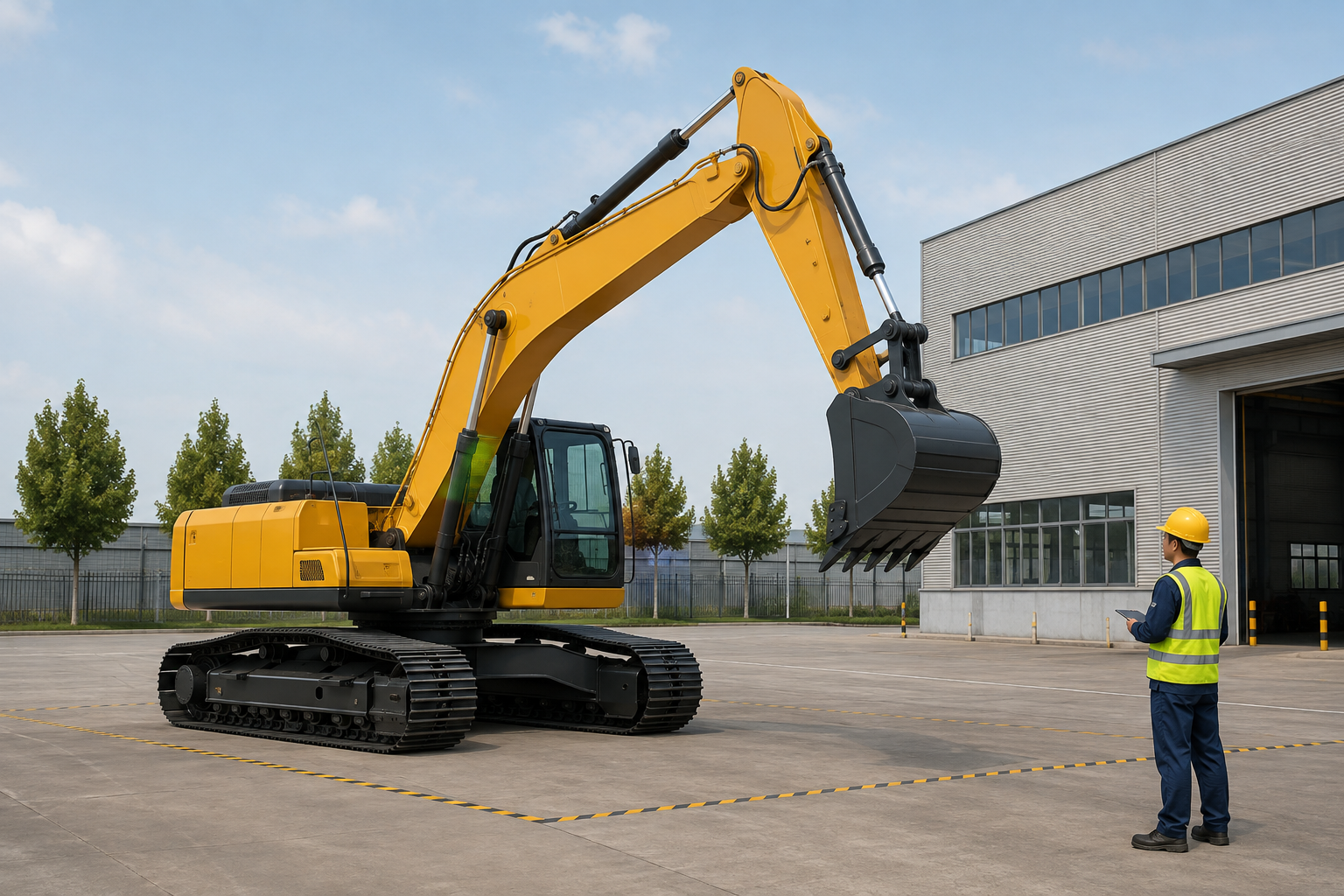
A drift check helps identify internal leakage in a cylinder, control valve or holding circuit. Follow the manufacturer's test procedure and use a safe, unloaded configuration. Position the attachment as instructed, isolate the relevant function and record movement over a defined time. Excessive drift must be compared with the model's allowable limit and test conditions.
Drift can also be affected by oil temperature, load, cylinder seal condition, valve leakage and trapped air. Record which cylinder was tested and whether drift occurred on the boom, arm or bucket circuit. If the seller refuses a reasonable controlled test, treat that as an evidence gap.
8. Look for heat, contamination and recurring symptoms
After the operating test, inspect for fresh leaks and compare the temperature of the hydraulic tank, pump area, valve bank and hoses. Use an infrared thermometer only as supporting evidence and compare similar components under the same conditions. Excessive heat can result from relief-valve operation, internal bypass, restriction, wrong oil, cooler problems or a component working outside its specification.
- Slow when hot: investigate pump flow, internal leakage, oil grade, relief settings and cooler performance.
- One function weak: inspect that function's valve section, cylinder, hose and load-holding components.
- All functions weak: check engine rpm, main pump output, suction restriction, relief pressure and control signals.
- Jerky movement: check air, contaminated oil, spool or joystick control, cylinder condition and operator technique.
- Visible oil leak: identify the fitting, hose, rod seal, valve or case-drain issue before estimating repair cost.
What evidence should a used-excavator buyer request?
For a remote purchase, request a dated evidence pack tied to the exact unit: serial/PIN photos, hour-meter photo, cold-start video, warm hydraulic cycle video, boom/arm/bucket and swing tests, travel in both directions, leak close-ups, oil condition notes, pressure or flow sheet where available and the inspection scope. Save the evidence with the quotation and compare the identifiers again before payment.
Our used excavator purchase verification checklist covers wider machine identity, undercarriage, documents and shipping checks. For current equipment, browse the documented used excavator inventory and ask for the exact unit's available evidence.
Red flags before you buy
- The seller shows a warm machine only and refuses a cold start.
- The video, serial/PIN, hour meter and written quotation do not match.
- The seller provides a pressure number without temperature, engine speed, port or target specification.
- The machine is described as nearly new, but cylinder rods, pins, hoses or controls show heavy wear.
- There is fresh paint or cleaning around a leak, but no repair record.
- The seller will not allow a reasonable third-party inspection before payment.
Final decision: buy the evidence, not only the excavator
A strong hydraulic performance check does not guarantee that a used excavator will have no future repair. It gives the buyer a clearer baseline and a better way to compare machines. Use the exact model's service specification, test at working temperature, record separate and combined functions, check drift and heat, and tie every result to the machine's serial/PIN.
If you want a current unit-specific inspection scope or a destination-port quotation, send the model, stock link and destination port to HMP. Ask for available photos, video, measurements and written FOB, CIF or CFR terms before making a purchase decision.