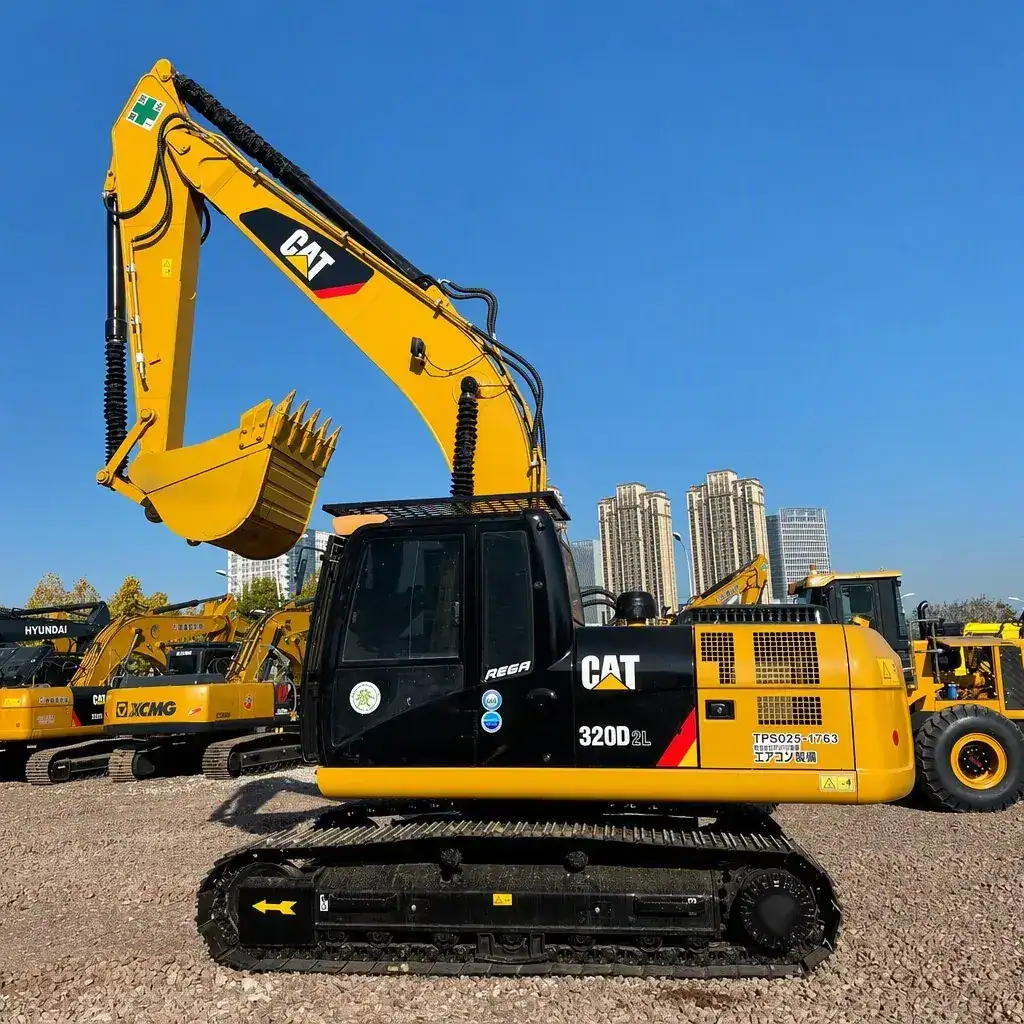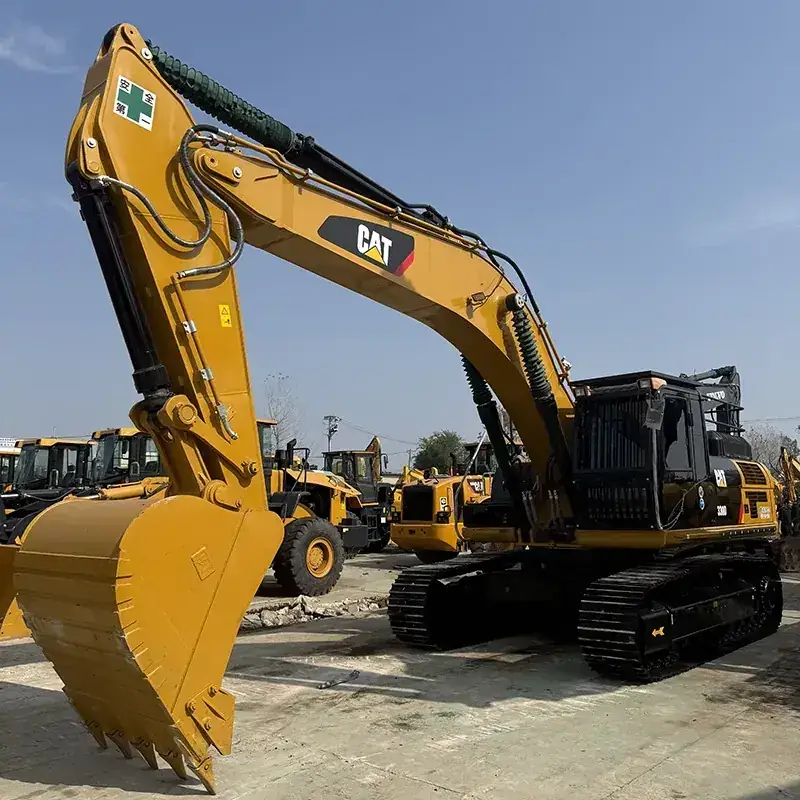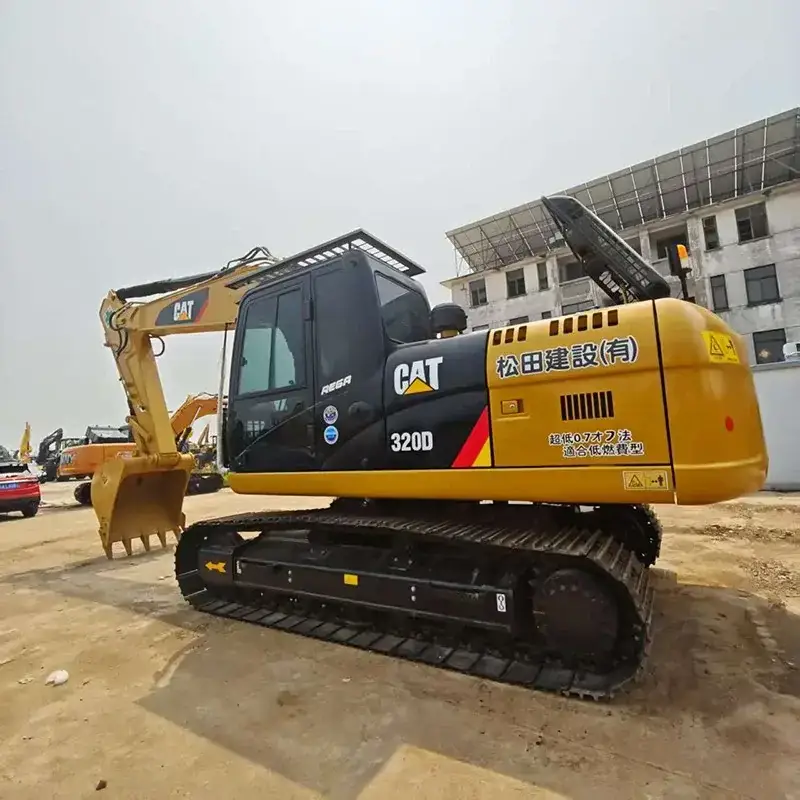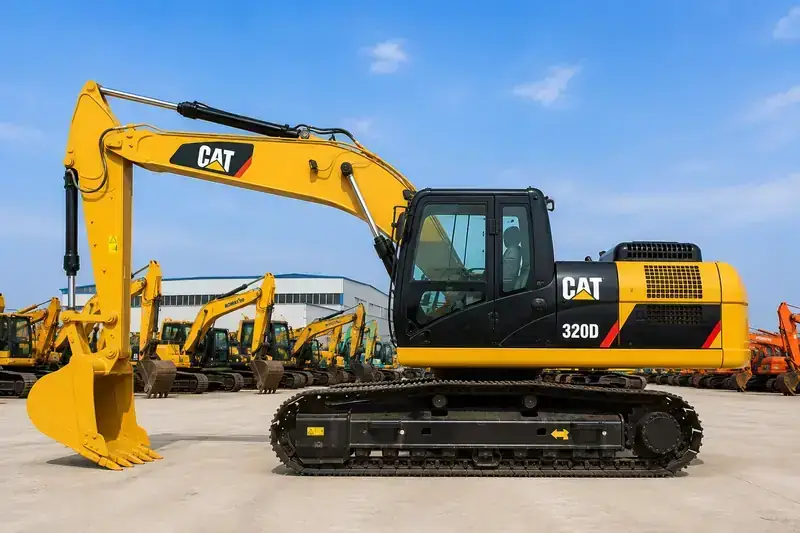
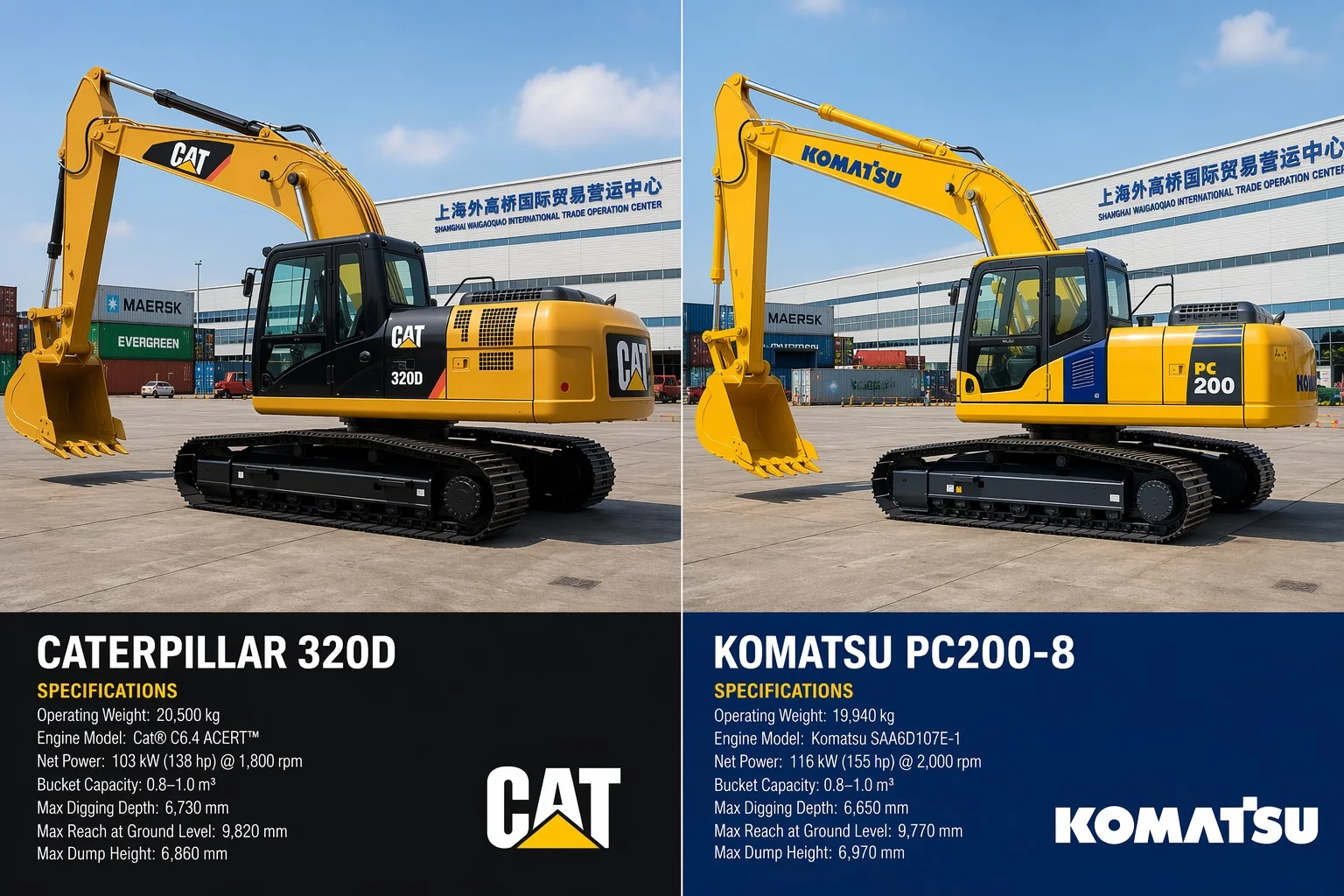
Caterpillar 320D vs Komatsu PC200-8
CAT 320D or Komatsu PC200-8: which is the better used excavator?
Neither model is automatically better for every site. Compare the exact machines on condition, local parts support, attachment requirements and a like-for-like work-cycle fuel test. A well-documented unit usually matters more than a small catalogue-spec advantage.
- Use the same attachment, material and work mode for fuel comparisons.
- Check local diagnostic, parts and technician support for both brands.
- Compare inspection evidence and landed cost, not asking price alone.
In the high-stakes world of heavy machinery sourcing, two models consistently dominate the conversation in the 20-ton class: the Caterpillar 320D and the Komatsu PC200-8. For B2B fleet managers and project leads in Africa, the Middle East, and South America, choosing between these two titans is more than a brand preference—it is a strategic decision that impacts project timelines and long-term operating margins. This Caterpillar 320D vs Komatsu PC200-8 technical comparison provides a definitive 2026 audit of their powertrain engineering, hydraulic precision, and total cost of ownership (TCO). Sourcing a documented used unit from a widely used Shanghai export yard requires a deep understanding of these mechanical nuances to ensure your asset delivers maximum ROI in the field.
Powertrain Mastery: CAT C6.4 ACERT vs. Komatsu SAA6D107E-1
The mechanical heartbeat of the Caterpillar 320D vs Komatsu PC200-8 debate lies in their engine architecture. The Caterpillar 320D is powered by the legendary CAT C6.4 engine featuring ACERT™ technology. This system optimizes fuel injection and air management based on real-time load requirements, delivering 110 kW (148 HP) of net flywheel power. The C6.4 is known for its "lugging power"—the ability to maintain consistent torque when digging through compacted clay or high-abrasion rock layers. For mining support and heavy earthmoving, the Caterpillar 320D provides a breakout force that many contractors consider the industry commonly considered.
On the other side, the Komatsu PC200-8 utilizes the SAA6D107E-1 engine, which prioritizes refined fuel efficiency and quieter operation. While its power rating is similar, the Komatsu engine is calibrated for high-frequency urban construction where cycle speed and precision are paramount. Within our Caterpillar 320D vs Komatsu PC200-8 research, we found that the Komatsu engine often shows a 5-10% fuel saving in "Eco-Mode" during light grading tasks. If your project involves high-load soil stripping, the CAT engine's thermal durability wins. If you are focused on residential trenching and urban utility work, the Komatsu's refined mapping offers a lower daily fuel bill.
Hydraulic Kinematics: Precision vs. Raw Force
The hydraulic coordination defines the operator's experience. Komatsu is world-renowned for its CLSS (Closed-Center Load Sensing System). This hydraulic architecture ensures that oil flow is directed exactly where the operator needs it, allowing for seamless simultaneous movements of the boom, arm, and bucket. In our Caterpillar 320D vs Komatsu PC200-8 functional tests, the Komatsu series often feels "faster" to the operator, making it the preferred tool for surgical grading and piling.
Caterpillar’s hydraulic system focuses on high-pressure penetration. The 320D utilizes a pilot-operated hydraulic system that provides unmatched breakout force at the bucket teeth. When digging through rock or deep foundation footings, the 320D maintains its cycle time under load where other machines might experience hydraulic bypass. Sourcing a documented unit from HMP means you receive a machine where the main pump and control valve block have been synchronized to within original factory curves, protecting your Caterpillar 320D vs Komatsu PC200-8 investment from premature wear.
Maintenance & Global Parts Ecosystem
Reliability is a function of parts accessibility. For international buyers in regions like Nigeria, the UAE, or Brazil, the "Parts War" is a primary consideration. Caterpillar possesses the world's most extensive parts distribution network. Almost any mechanical component for the 320D can be sourced in major hubs within 24 hours. This "Universal Serviceability" is why the 320D retains a higher resale value on the secondary market.
Komatsu, however, is the master of "Service Access." The PC200-8 features ground-level access to all daily maintenance points—filters, oil drains, and cooling cores are all easily reached without climbing the machine. This ergonomic design reduces the risk of maintenance neglect in rough field environments. In our unit-specific technical audits, we specifically check the final drive oil purity and swing motor gear lash for both brands. Choosing between Caterpillar 320D vs Komatsu PC200-8 often comes down to your local mechanical team's familiarity with each brand's diagnostic software.
Technical Specification Matrix (20-Ton Class)
| Parameter | Caterpillar 320D | Komatsu PC200-8 |
|---|---|---|
| Net Power | 110 kW (148 HP) | 110 kW (148 HP) |
| Operating Weight | 21,500 kg | 20,000 kg |
| Bucket Capacity | 1.0 m³ | 0.8 m³ - 0.9 m³ |
| Max Dig Depth | 6,720 mm | 6,620 mm |
| Hydraulic Flow | 205 L/min x 2 | 439 L/min Total |
Regional Best-Fits: Africa vs. Middle East vs. South America
Sourcing from a worldwide heavy equipment supplier means matching the brand to the local soil complexity.
Middle East (Saudi Arabia, UAE): The Caterpillar 320D vs Komatsu PC200-8 choice often leans toward CAT due to its superior radiator surface area and air pre-cleaning systems, which handle 50°C desert sand with less overheating risk.
Africa (Nigeria, Kenya): Both brands are extremely popular, but the Caterpillar network is often deeper in remote mining corridors. However, the Komatsu's ease of daily greasing makes it a favorite for sites where owner-operators manage their own maintenance.
South America (Brazil, Peru): Komatsu's precision in mountainous terrain and its slightly lower weight make it easier to transport across Andes' logging roads. Yet, for iron ore mines, the breakout force of the 320D is preferred for overburden stripping.
Conclusion: The Verdict for Your 2026 Fleet
The Caterpillar 320D vs Komatsu PC200-8 comparison reveals no true loser—only specific winners for specific tasks. If your priority is extreme digging force, resale value, and 24/7 rock work, source the Caterpillar 320D. If you prioritize precision grading, operator comfort, and lower daily fuel bills in urban settings, the Komatsu PC200-8 is your strategic tool. At HEAVY MACHINERY PRO, we provide the technical transparency—including digital ECM logs and 150-point audit certificates—that ensures your choice is backed by engineering data. Sourcing a documented used unit from our Shanghai yard provides you with the performance of a new machine at a strategic wholesale price point.
Frequently Asked Questions (FAQ)
The CAT 320D generally consumes 1-2 liters per hour more than the Komatsu PC200-8 under full load, but it also provides higher digging force.
Yes, the CLSS hydraulic system offers smoother multifunction coordination, which is superior for fine grading and piling tasks.
Yes, the structural mass and breakout force of the 320D are specifically engineered for high-resistance digging in rock and clay.
The Caterpillar 320D typically maintains a 10-15% higher resale value due to the global parts demand and brand legacy.
Absolutely. We maintain an extensive warehouse of original CAT and Komatsu parts, providing lifetime support for all machines exported from our yard.
Request a live video walkthrough of the cold-start and hydraulic stress test. We provide full digital ECM diagnostic reports for every unit before shipment.
Professional Comparison Context: 2026 Caterpillar 320D vs Komatsu PC200-8 guide, used CAT 320D vs Komatsu PC200 review, construction equipment sourcing China yard, heavy machinery export Middle East, buy used excavator Africa, CAT 320D fuel consumption vs PC200-8, reliable heavy equipment supplier Shanghai, 20 ton excavator technical specs.
Related Excavator Inventory in Stock
Browse listings and request current availability, evidence, and export terms for the exact unit