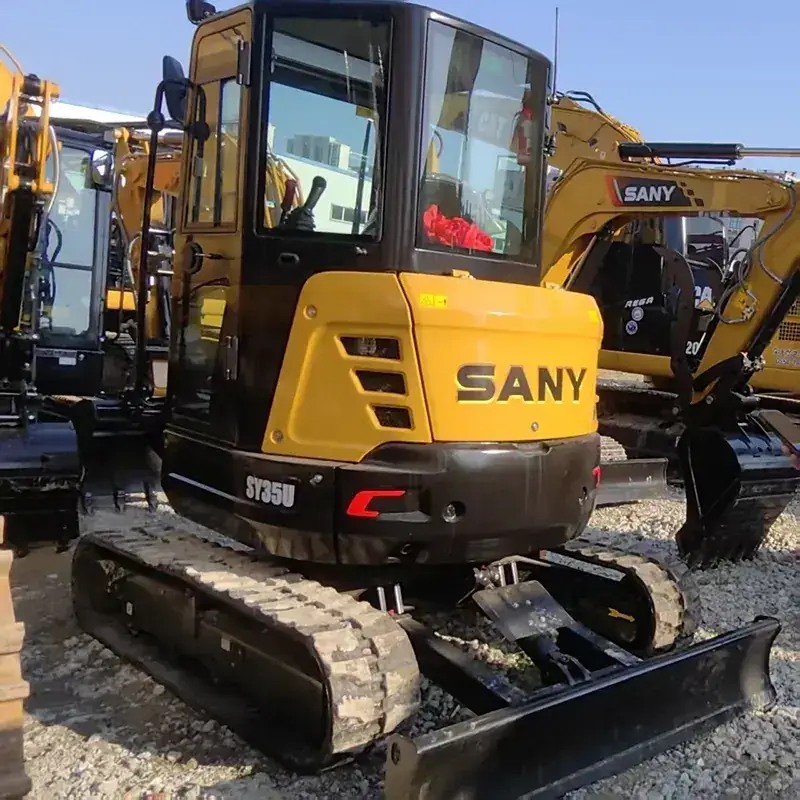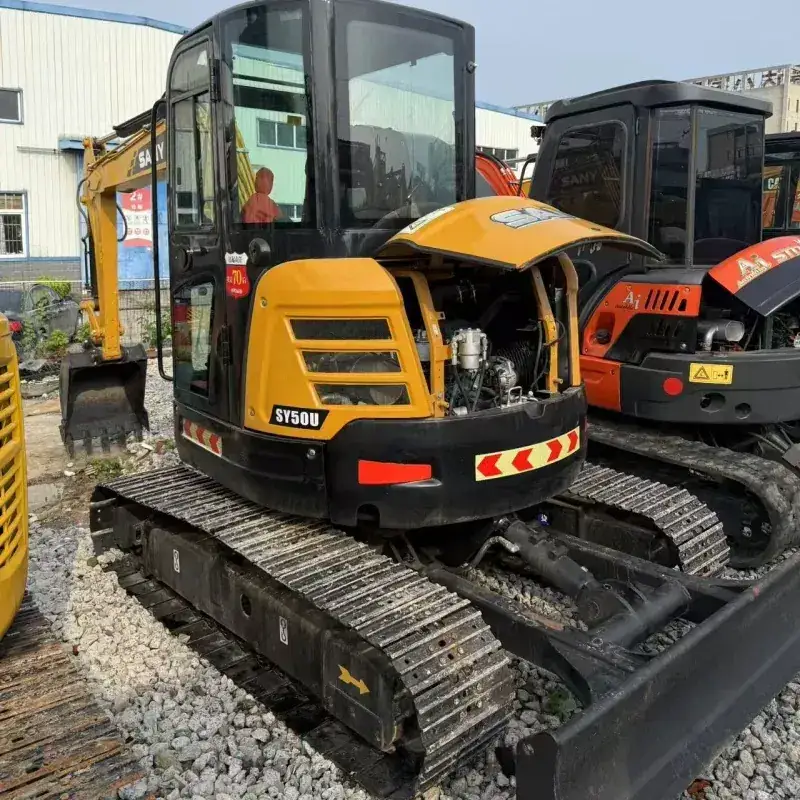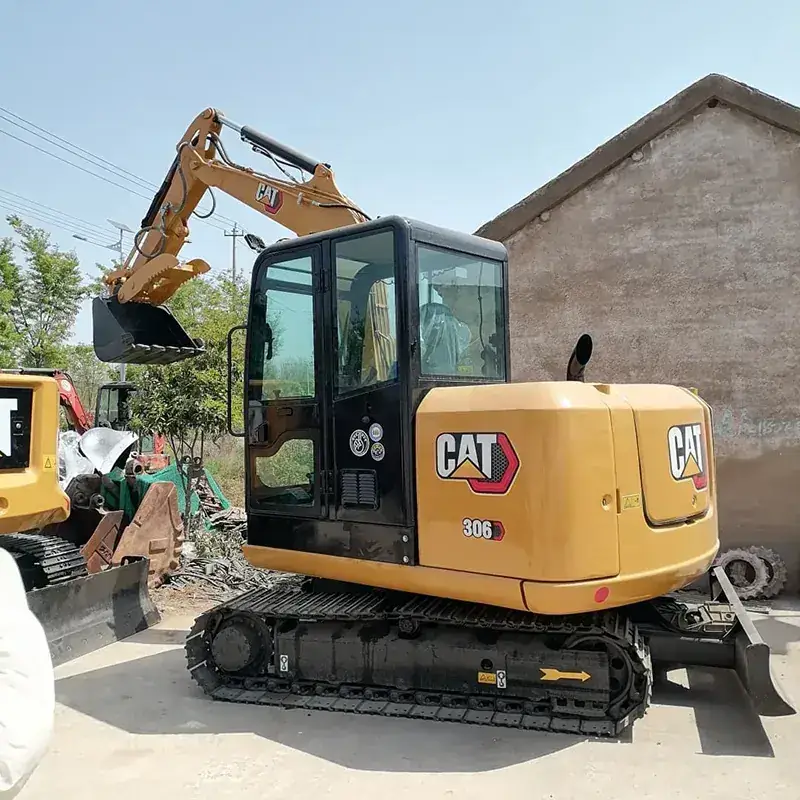
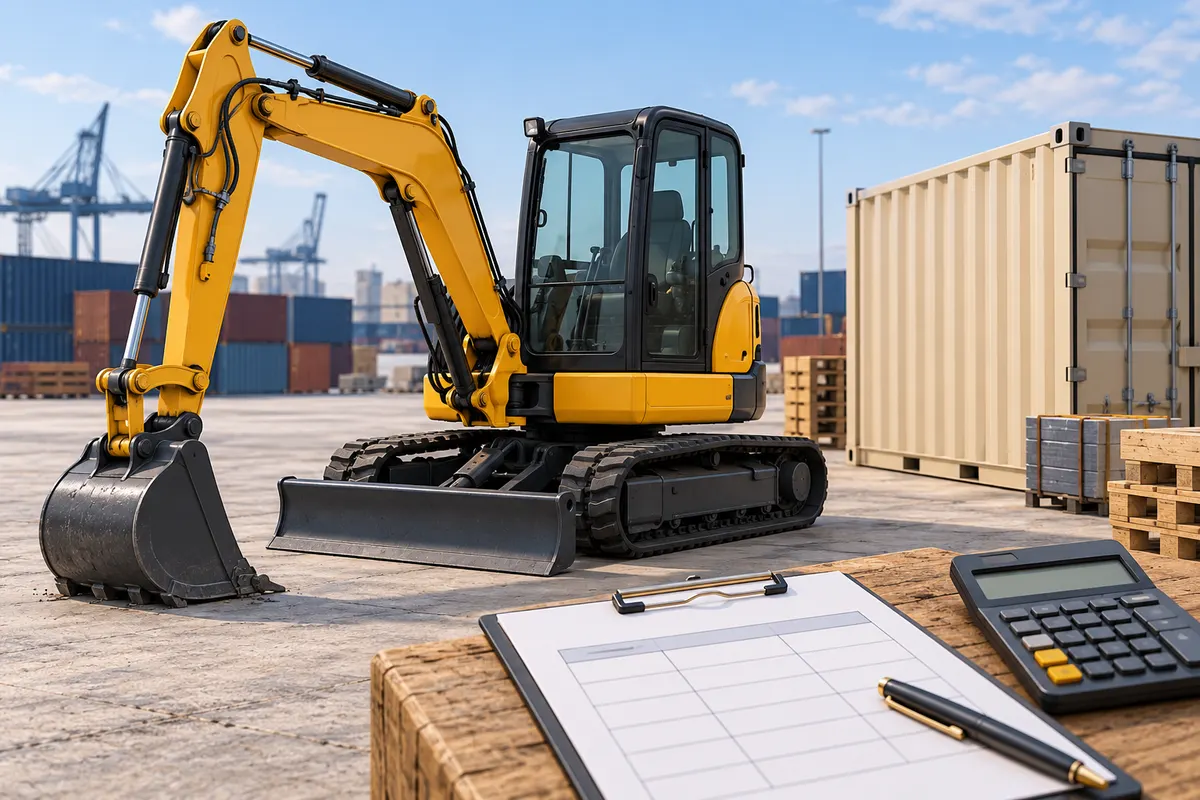
How much does a used mini excavator cost? The answer depends on the exact machine and what the quotation includes. On 23 October 2026, the three HMP catalogue examples below showed machine-only asking prices of USD 10,500, USD 12,000 and USD 13,500. These are individual listing prices, not a market-wide price range or a delivered quotation. Compare the machine identity, condition evidence, included attachments and destination charges before deciding which offer costs less.
This article explains how to turn a used mini excavator price into a usable purchasing budget. For the full selection, open the used mini excavators for sale catalogue; for the broader inspection process, use the mini excavator buying guide.
Used mini excavator price examples from named listings
The following snapshot was checked against HMP product records on 23 October 2026. Weight and hours are listing figures; they are not measurements or independently verified service-life estimates. Each product link identifies the record behind the price so you can request evidence for that particular unit.
| Product record | Listed operating weight | Listed hours | Machine-only asking price |
|---|---|---|---|
| Sany SY35U | 3.8 tonnes | 1,200 hours | $10,500 |
| Sany SY50U | 5.3 tonnes | 900 hours | $12,000 |
| Caterpillar 306 | 6.0 tonnes | 1,400 hours | $13,500 |
The three machines are not interchangeable simply because they appear in a compact-equipment category. Their listed weights differ, and access, lifting plans, digging requirements and transport limits may rule out a model before price becomes relevant. The latest product page and a current written quotation should take precedence over this dated snapshot.
An advertised price also needs a clear scope. Ask whether a bucket, quick coupler, additional hydraulic lines, spare parts, inspection, preparation or loading is included. Do not read a photograph of an attachment as confirmation that it is part of the sale.
Why two used mini excavators can have different prices
Start with the configuration required for the job
A lower purchase price is useful only if the machine can perform the planned work. Write down the narrowest access point, working clearance, required digging depth, attachment and transport limit before comparing offers. A canopy and an enclosed cab may suit different working conditions. Tail-swing layout, track type and hydraulic specification also need to match the site rather than a generic model reputation.
Confirm the exact model suffix and serial/PIN configuration. Machines carrying a similar model name can differ by generation or market specification. Ask for the machine plate, engine label and attachment information together, then compare those details with the appropriate manufacturer documentation. A search result or model badge cannot settle the configuration of a used unit.
Condition changes the likely repair bill
The undercarriage, hydraulic system, structure and engine should be assessed as separate systems. Record leaks, wear measurements, damaged components and any function that could not be tested. A cheap machine with an unresolved travel fault can require a different budget from a more expensive machine with documented service work; obtain a repair quotation before assuming either is better value.
Caterpillar's undercarriage guidance recommends checking the running gear and maintaining it as a system. For a buyer, that supports asking for component-level findings rather than relying on a general condition label.
Hours need supporting evidence
A displayed hour reading is a starting point, not a guarantee of remaining life. Ask for a current meter photograph tied to the machine identity, available service records and diagnostic information where supported. Compare those records with pedal, seat, pin, bucket and track wear. A low meter reading with inconsistent evidence deserves more investigation.
There is no universal hour cutoff that makes every compact excavator a good or bad purchase. Workload, maintenance and repair history change the interpretation. If the seller cannot explain a replacement meter or an inconsistency in the records, describe the uncertainty in the inspection report and price the risk explicitly. See the separate hour-meter verification article for that investigation.
Attachments can change the usable purchase cost
Before comparing a used mini excavator with a bucket, breaker or auger, list the exact attachments included in each quotation. Bucket width, pin dimensions, coupler compatibility, auxiliary hydraulic flow, operating pressure and return-line arrangements can affect whether the package will work. Ask the supplier or a qualified technician to confirm the combination for the particular machine and attachment.
Inspect attachment wear separately from the carrier. A breaker shown beside a machine may need hoses, brackets or service before use. A coupler may require controls or inspection that is not included in the base price. Treat these as quotation questions rather than adding a standard allowance without evidence.
- Identify every included attachment and its model or serial number where available.
- Confirm compatibility, necessary hydraulic circuits and operating instructions.
- Request clear pictures of pins, coupler locks, hoses and visible wear.
- Record the weight and packed dimensions of loose attachments for shipping.
- Ask which installation, testing and preparation tasks are included.
Put the attachment configuration into the purchase comparison. Ask the technician to identify any mismatch, missing circuit or untested function before you accept a package price. A breaker rating for a larger excavator does not establish compatibility with a compact machine.
Machine price versus the cost delivered to your site
The International Trade Administration's landed-cost guidance distinguishes the product price from freight, insurance, tariffs, taxes and other fees. Use the same distinction when comparing imported equipment: a machine-only price is not the amount needed to put that machine to work at your site.
| Budget line | Information to obtain | Who should confirm it |
|---|---|---|
| Selected machine | Product URL, identity, current price, currency and included equipment | Seller's written quotation |
| Inspection and preparation | Agreed inspection scope, repairs, cleaning and preparation tasks | Inspector and relevant service provider |
| Origin handling and loading | Collection point, loading arrangement and any attachment packing | Seller or origin logistics provider |
| Transport and insurance | Named destination, validity, loading method and insurance scope | Freight forwarder or quoted provider |
| Destination charges | Applicable clearance, duties, taxes and port charges | Destination broker or relevant authority |
| Final delivery and commissioning | Inland transport, unloading and any assembly or checks | Local transport and service providers |
Ask each provider to state inclusions and exclusions. If origin loading is already included in a quotation, do not add the same charge again. If the seller has not quoted freight, leave freight unresolved instead of treating it as zero. The result should show both the confirmed subtotal and the items still awaiting a quote.
Send the destination port and country with your first enquiry. A request for shipment to Lagos, Mombasa or Callao is more useful than a request for a worldwide shipping price. The port name helps the logistics team define the route; it does not imply that local import eligibility, charges or inland delivery have already been confirmed.
Do not assume that a mini excavator fits a particular container or trailer because of its advertised tonnage. Obtain transport length, width, height and loading weight for the proposed configuration, including loose attachments. The forwarder should confirm the loading method. Compare FOB, CFR or CIF offers only after the written terms explain the named place and cost scope.
Use the landed-cost calculator to add figures you have obtained. It is a worksheet, not a live freight quotation or a substitute for destination-specific advice.
How to use the SY35U, SY50U and CAT 306 examples
Start with job suitability, then compare the evidence and total budget. The SY35U record lists 3.8 tonnes, making it a different transport and access proposition from the 5.3-tonne SY50U and 6.0-tonne CAT 306 records. The right choice cannot be established from those weight labels alone; check working width, required reach, attachment capability and the actual transport arrangement.
For restricted access, ask for a measured width and the relevant tail-swing clearance. For repetitive trenching or attachment work, request the applicable working-range and hydraulic information. Where a buyer already has local parts and technician support for a brand, identify that advantage in the comparison rather than assuming every brand has the same support in every country.
Next, request the same evidence package for each shortlisted unit: identity, dated meter images, cold-start and operating video, service information, inspection findings and known repairs. In Caterpillar's explanation of used-machine choices, inspection and support differ by selling programme. Do not assume a dealer-certified programme or its warranty applies to an ordinary independent-seller listing.
A practical shortlist contains one product link per machine, not just a model name. Keep the quotation, video, inspection report and payment documents associated with that record. If a seller substitutes another unit, restart the comparison with evidence for the replacement instead of transferring assumptions from the first machine.
Buying used versus renting or buying new
For occasional work, compare the full rental scope with the purchase budget, including transport in both directions, attachment charges and the expected operating period. For purchase, include maintenance, likely repairs, storage and eventual resale as separate assumptions. Avoid using an optimistic resale estimate to make an uncertain purchase appear cheaper.
A new machine, a dealer-supported used machine and an independently sold used machine can include different preparation and support. Compare the written terms that are actually offered. The lowest initial figure may be appropriate for a buyer with repair capacity, while another buyer may value documented preparation and local support more highly.
Request a quote that can be compared
Use this information with the enquiry so the supplier can respond about a specific machine:
- Selected product: copy the full SY35U, SY50U, CAT 306 or other product URL.
- Work requirement: describe the task, access limit and required attachment.
- Destination: name the port, country and whether inland delivery is needed.
- Evidence: request current identity, hour-meter, service and operating information.
- Commercial scope: ask for the machine-only price, included attachments, inspection scope, loading method, shipping terms, validity and exclusions.
Request an itemized mini excavator quote on WhatsApp, or use the contact form. Add your selected product link and destination port to the message before sending.
The useful answer to “how much does a used mini excavator cost?” is a named machine, documented condition, defined attachments and a clear delivery budget. Start from the linked listings, resolve the unanswered items and compare the written offers on the same basis.