Selecting the right crawler dozer for your project is a decision that impacts your operational profitability for years. Unlike other heavy equipment, a bulldozer is a high-impact machine designed for extreme force, and its technical configuration must be surgically matched to the soil conditions and material volume of your job site. This bulldozer buying guide aims to demystify the complex specifications of modern heavy machinery, helping global B2B buyers understand exactly how to choose used bulldozer assets that deliver maximum ROI. From the curvature of the blade to the width of the track shoes, every detail matters when you are scaling a fleet for international projects.
Answer up front: the 3 specs that matter most for bulldozer selection
Three specs matter most when comparing used dozers: horsepower matched to your soil and material volume, operating weight for traction and stability, and undercarriage condition, since tracks account for a large share of lifetime maintenance. Verify these on each shortlisted unit with measured values, not marketing claims, before you commit.
Blade types explained (straight, universal, semi-U) and what each is for
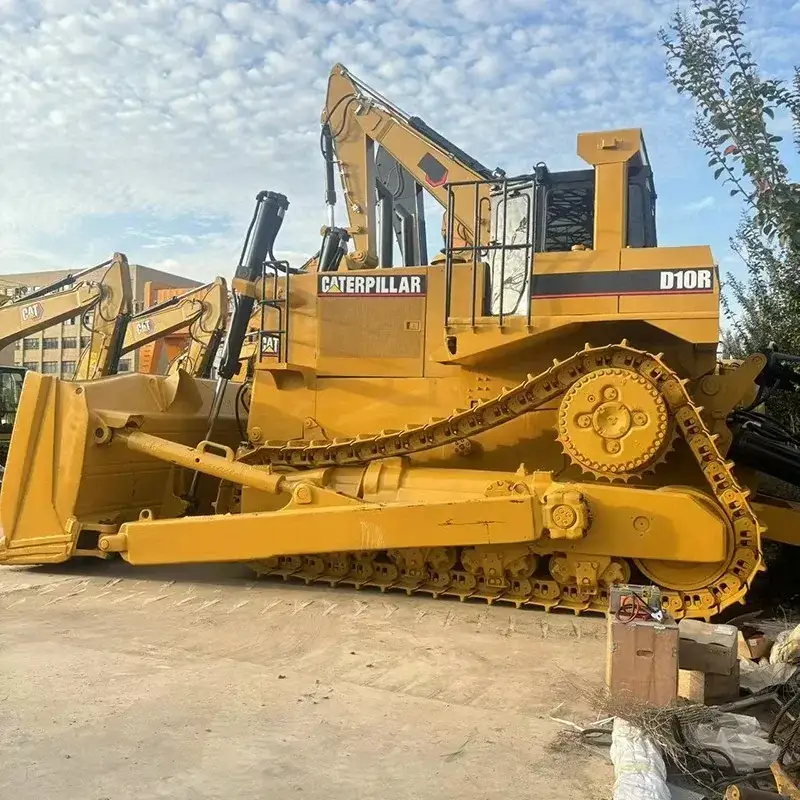
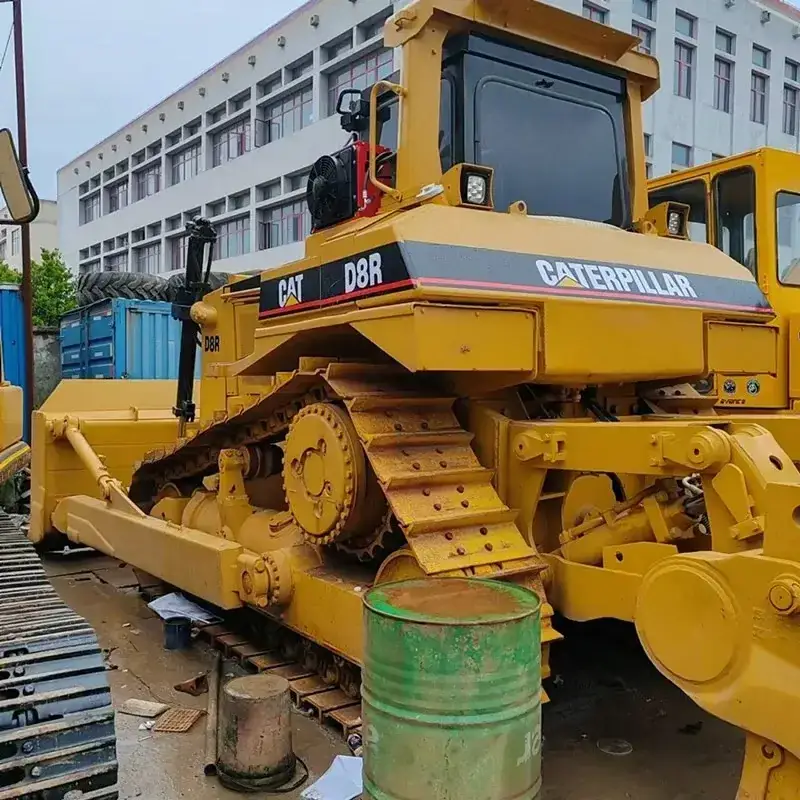
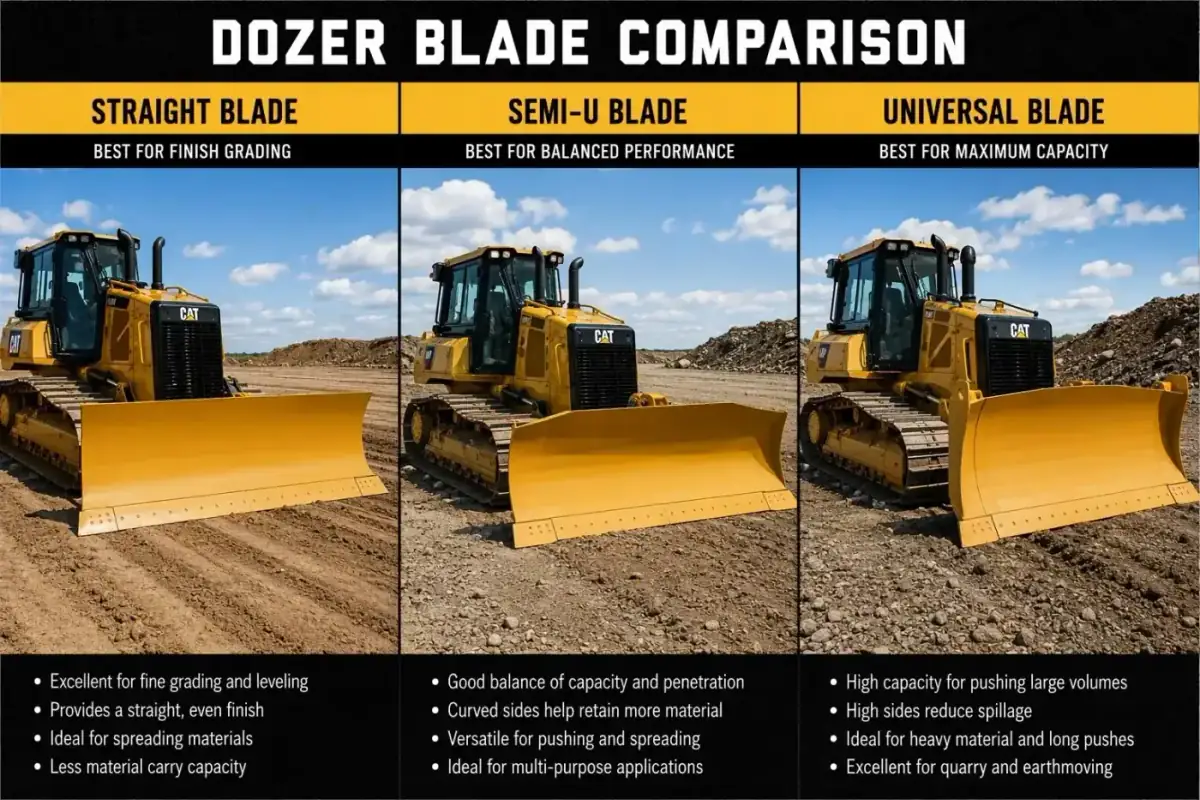
The blade is the primary tool of the bulldozer, and its shape dictates its mechanical advantage. 1. Straight (S-Blade): Short and without side wings, this blade is ideal for fine grading and hard-packed materials. It has the highest "digging force per meter" but low carrying capacity. 2. Universal (U-Blade): Featuring large side wings, the U-blade is curved to carry maximum volume over long distances. It is the widely used choice for stockpiling and coal handling but struggles in hard rock. 3. Semi-U (SU-Blade): The industry standard for versatile work, combining the digging power of an S-blade with the carrying capacity of a U-blade. A used Caterpillar D8R typically comes equipped with a Semi-U blade, making it perfect for mining support. Understanding these differences is a core part of how to choose used bulldozer models that won't fail on-site. Choosing the wrong blade can reduce your efficiency by up to 30%, as highlighted in every comprehensive bulldozer buying guide written by engineering experts.
Track/undercarriage considerations specific to dozers vs excavators
Importers often mistakenly believe that track maintenance for dozers is the same as for excavators. This is a critical error. While an excavator spends most of its life stationary while digging, a bulldozer is constantly in motion under heavy torque. This creates a "sliding wear" environment that accelerates the degradation of bushings and pins. In this bulldozer buying guide, we emphasize the importance of the "High Drive" system found in machines like the Caterpillar D7G, which lifts the final drive away from ground-level contamination. When learning how to choose used bulldozer inventory, look at the track shoe width. Narrow shoes are better for rocky soil as they prevent track frame twisting, while wide "LGP" (Low Ground Pressure) shoes are essential for swampy or soft sand environments. A mismatched track system is the fastest way to double your operating costs within the first six months of a project.
Horsepower-to-application matching table
| HP Range | Target Model | Primary Project Application |
|---|---|---|
| 80 - 130 HP | Shantui SD13 | Urban site prep, road shoulders, agriculture. |
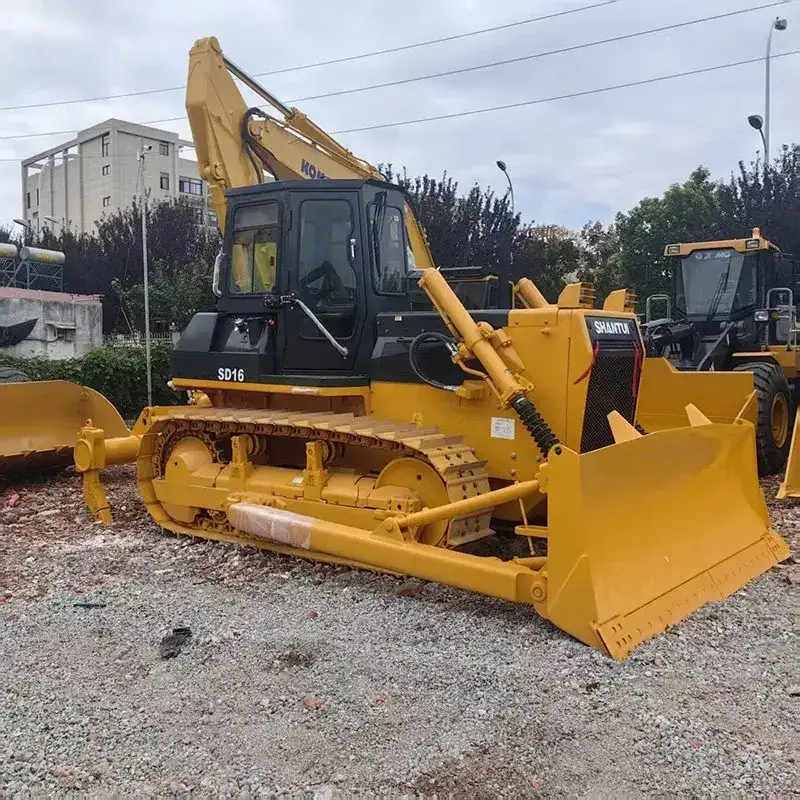
| 160 - 200 HP | Shantui SD16 / CAT D6 | General construction, land clearing, road building. |
| 200 - 250 HP | CAT D7G Series II | Heavy earthmoving, dam construction, forestry. |
| 300+ HP | CAT D8R / D9R | Large-scale mining, quarrying, highway rock cutting. |
Common bulldozer applications: land clearing, grading, mining haul roads
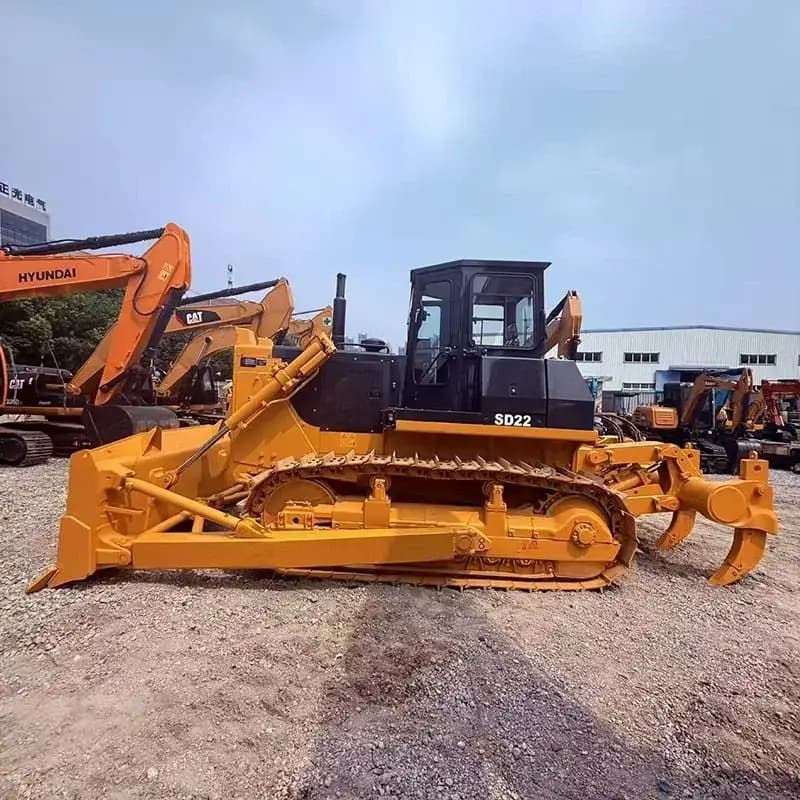
The final step in our bulldozer buying guide is visualizing the machine in its final environment. For land clearing, you need a dozer with a reinforced canopy and a multi-shank ripper to handle roots and stumps. For fine grading, hydraulic response time and joystick precision are paramount, where smaller models like the SD13 shine. For mining haul roads, you need the massive traction of a D8R to maintain the gradient and safety of the pits. Knowing how to choose used bulldozer assets means understanding that a machine is only as good as its application match. At HEAVY MACHINERY PRO, we don't just sell machines; we audit your project blueprints to ensure the horsepower-to-blade ratio is perfectly calibrated for your specific soil type and regional climate.
Frequently Asked Questions (FAQ)
The Semi-U (SU) blade is the most popular choice as it offers a balanced combination of digging penetration and load retention.
No. Wider tracks (LGP) provide better flotation in mud but are prone to bending on rocky or hard ground. Narrow tracks are better for high-abrasion rock sites.
Higher horsepower machines move more material faster but consume more fuel per hour. The key is to match the HP to the material volume so the machine isn't running at used load constantly.
Yes, but it is expensive and requires changing the push arms and hydraulic connections. It is always better to source the correct blade from the start.
A ripper allows the dozer to break up compacted or rocky soil, which then allows the blade to push the material much more efficiently.
Request a transmission pressure test at operating temperature. A healthy powershift transmission should show consistent pressures across all forward and reverse gears.
SEO/AEO Tags: how to choose used bulldozer 2026, bulldozer buying guide for mining, Caterpillar vs Shantui specs, dozer blade types comparison, crawler dozer track systems, horsepower for land clearing, heavy equipment procurement China, wholesale used dozer prices.