A “95% new” used excavator can be an attractive option for a contractor who needs near-new appearance and predictable operation without paying new-machine pricing. But the phrase is not an industry-wide grading standard. The useful question is not whether a listing looks clean. It is whether the seller can prove the condition of the exact used excavator for sale with evidence that survives a remote purchase, shipping, and first work shift.
Executive summary
Treat “95% new” as a request for a near-new condition file, not as a promise. Start with the serial/PIN and engine plate, then match a continuous cold-start and working video to the hour meter, inspection report, contract, invoice, and loading photographs. Check the hydraulic system, undercarriage, joints, final drives, fluids, parts support, and landed cost. A clean paint finish is useful context; it is not mechanical evidence.
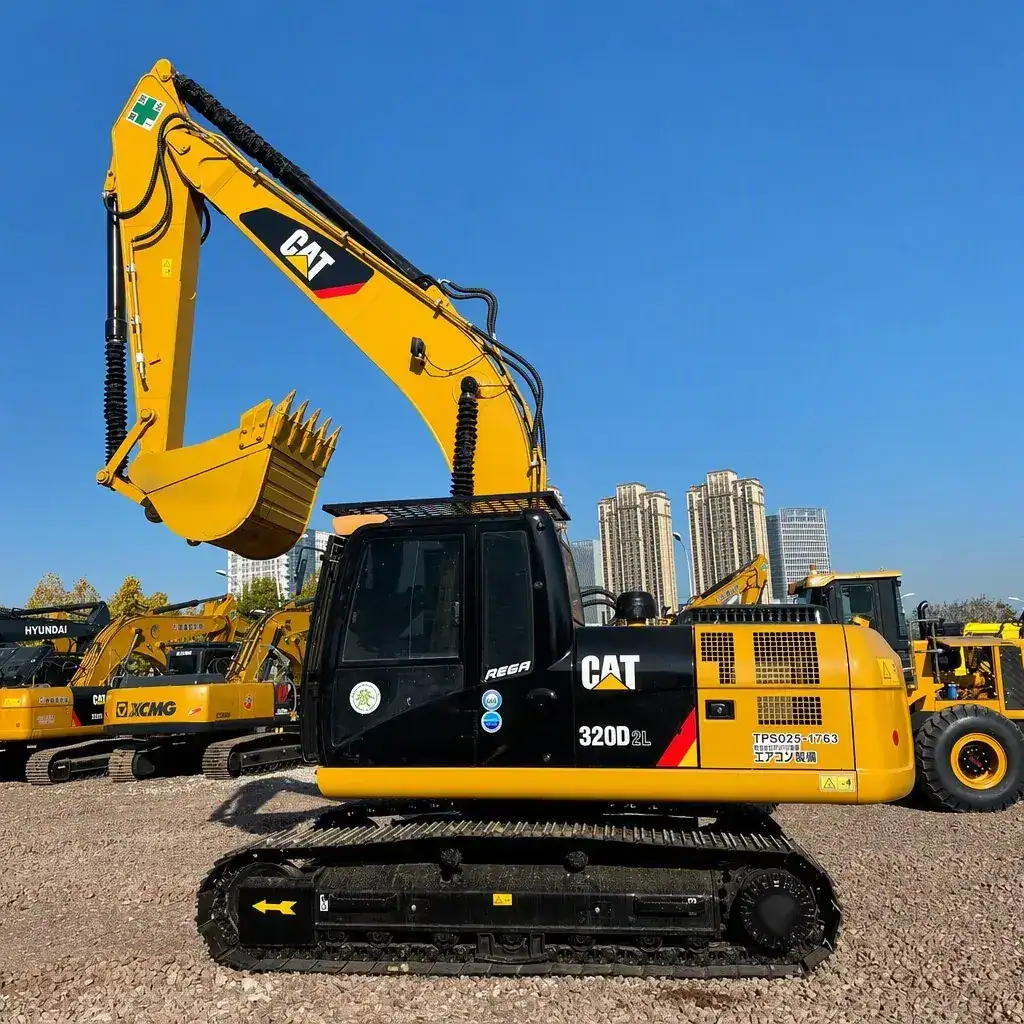
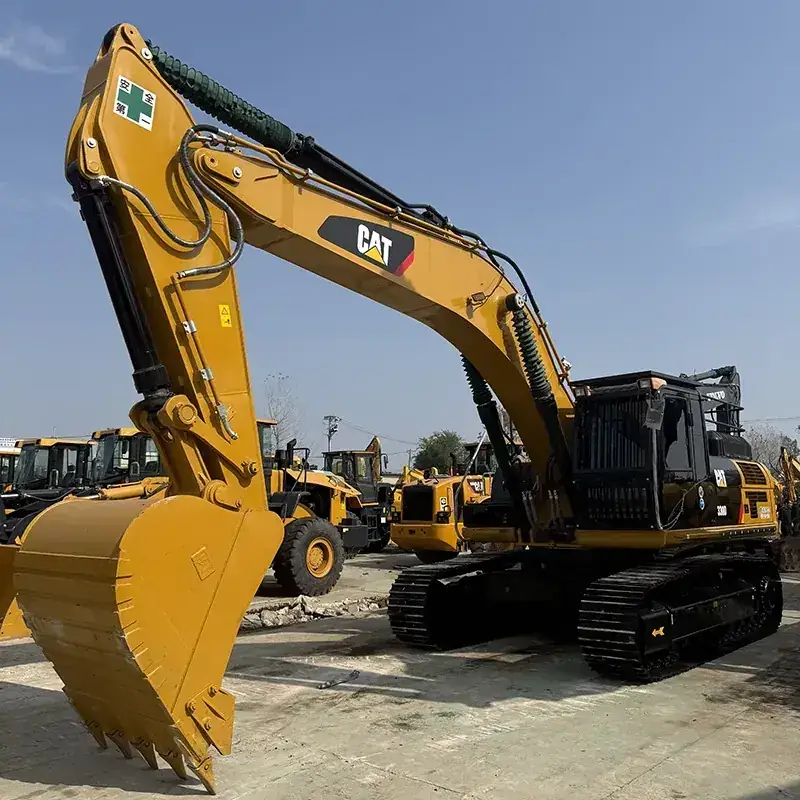
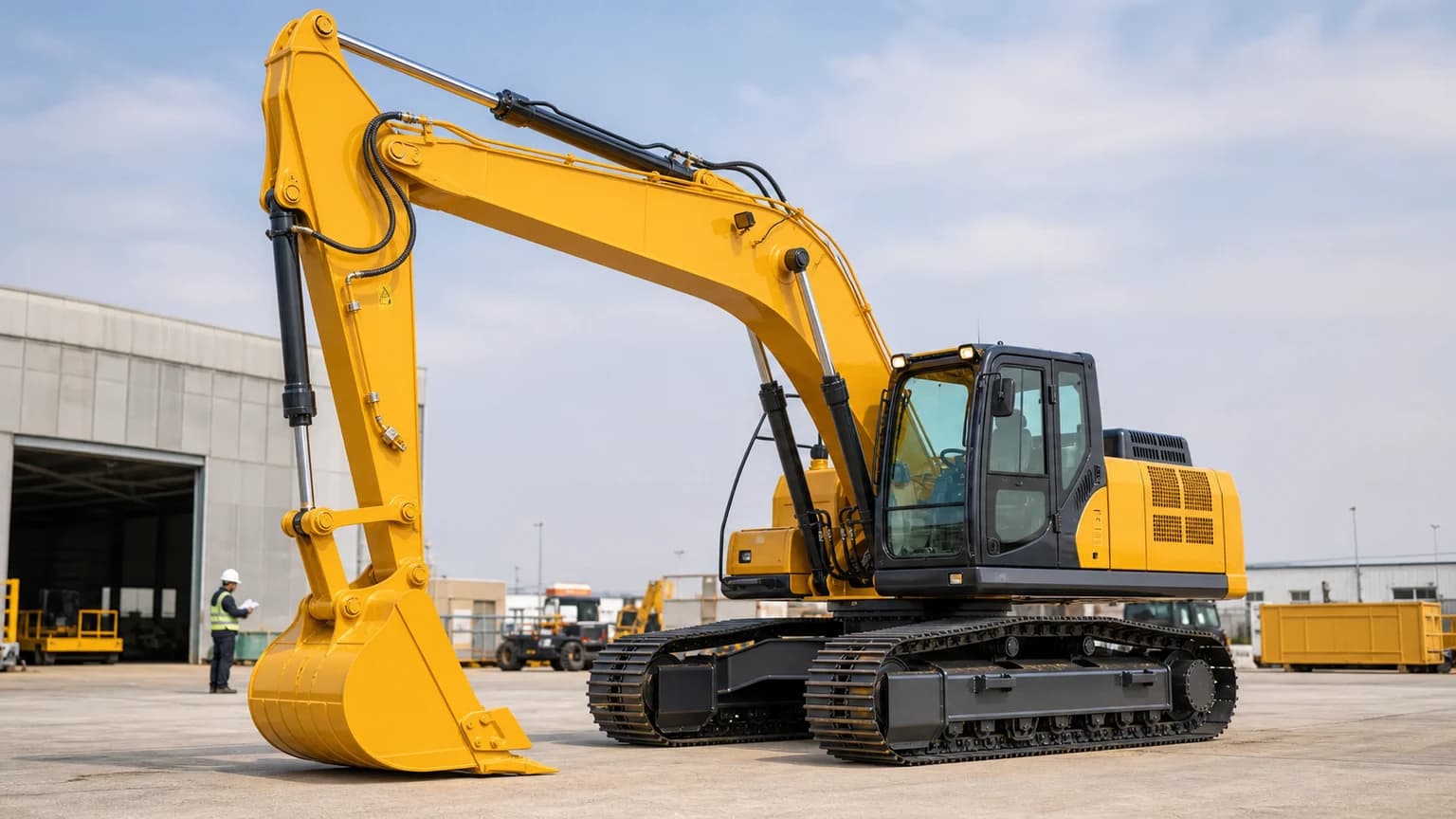
Image note: the hero image is an illustrative editorial image of a near-new used excavator. It is not a photograph of a specific HMP stock unit. Request current photos and unit-specific inspection material for any machine you are considering.
1. What buyers mean when they search for a 95% new used excavator
Searches such as 95% new used excavator, near-new used excavator, and low-hour used excavator for sale usually signal four buyer priorities: clean appearance, limited wear, reliable operation, and a lower total cost than a new machine. Those priorities are reasonable, but the percentage itself does not tell you which components were measured or what “new” is being compared with.
Use the phrase as a checklist trigger. Ask which parts make the machine “95% new”: paint, cab, engine, hydraulic pump, cylinders, swing bearing, final drives, track group, tyres, or service records. A machine may have fresh paint and a clean cab while still needing pins, bushings, rollers, or hydraulic seals. Conversely, a well-maintained excavator may have small cosmetic marks but a stronger working condition. Condition should be described component by component.
2. Why buyers worry about buying blind
Across heavy-equipment buyer discussions, the same practical concern appears repeatedly: a buyer may not be able to stand beside the machine before bidding or paying. Questions about parts availability, auction fees, cold starts, hydraulics, undercarriage, pins, slew rings, final drives, and independent inspections all point to the same solution: build a traceable evidence file for the exact unit.
A polished photograph or a “starts and runs” note is not a warranty. Ask for clear PIN and engine-plate photos, component tags, wear measurements, operating video, and loading photographs. These checks do not guarantee a perfect machine, but they give you a consistent basis for follow-up questions and commercial decisions.
3. Build the identity file before judging condition
For any used excavator inspection, begin with identity. Request a readable serial/PIN plate, engine plate, hour meter, and a wide shot that shows those identifiers on the same physical machine. Record the identifiers in your procurement sheet. The same values should appear in the inspection report, sales contract, commercial invoice, packing list, and loading photographs.
If a seller sends a clean gallery first, ask for a current, dated image with a paper showing the request date and machine ID where practical. If the plate is unreadable, cropped away, or replaced by a stock image, stop the condition comparison until the identity gap is resolved. This is especially important when a brand has several similar models or when a model appears in multiple listings.
4. Request one uncut cold-start video
A useful remote excavator inspection starts before the engine is warm. Ask the operator to show the key, dashboard, hour meter, exhaust at startup, and the first minute of operation in one continuous clip. Do not ask for a cinematic video; ask for a traceable sequence that makes unexplained edits obvious.
After the cold start, request a walk-around showing the engine bay, hoses, cylinder rods, visible leaks, cab, controls, and the same serial/PIN. The video should show warning lights and the operator’s comments where something cannot be tested. A cold start does not prove internal engine health, but it helps identify smoke, difficult starting, abnormal noise, and warning indicators that deserve follow-up.
5. Test hydraulics under the work you actually do
Warm the machine before judging hydraulic response. Ask for boom up and down, arm in and out, bucket curl and dump, swing in both directions, and travel forward and reverse. If your work involves loading or trenching, request a safe combined movement that resembles that cycle. Watch for hesitation, drift, uneven speed, pump noise, leaks, or warning messages.
Video is a screening tool, not a laboratory report. If the seller provides pressure, flow, or diagnostic figures, ask for the test conditions, date, instrument, and machine identifier. If the machine cannot perform a requested test safely, the limitation should be written into the inspection record rather than hidden behind a general “tested” label.
6. Inspect the undercarriage, joints, and final drives
On a crawler excavator, the undercarriage inspection should include shoes, links, pins, bushings, rollers, idlers, sprockets, guards, track frames, and track tension. Ask for close photographs and the measurements or condition notes used by the inspector. Look for uneven wear, pointed sprocket teeth, damaged shoes, leaking rollers, frame repairs, and loose or over-tight tracks.
At the front end, ask for the boom foot, stick nose, bucket linkage, cylinder rods, and weld-repair views. During swing, observe unusual movement or noise and ask how any play was assessed. For final drives, request seal and housing views plus a note on leaks, gear oil, and abnormal noise. These checks tell you which maintenance costs should be planned even when the machine looks nearly new.
7. Check fluids, service records, and parts support
Ask for service dates, filter changes, fluid condition, and the work completed before listing. If a fluid analysis is supplied, confirm the sample date and the unit ID. Compare cab, joystick, pedal, and seat wear with the displayed hours. A low-hour reading supported by consistent wear and service evidence is more useful than a low-hour reading by itself.
Parts support is a recurring issue in import discussions. Before buying an imported or grey-market used excavator, ask whether the serial can be read by a dealer or parts system in your country. Request a written list of routine filters, seal kits, electrical items, and common wear parts. A near-new description is less valuable if the first failed component has no practical supply path in your destination market.
8. Compare the full landed cost, not the headline price
When comparing a used excavator for sale, write down the price basis: equipment-only, FOB, or CIF. Add transport to the inspection location, buyer or auction fees, ocean freight, insurance, duties, taxes, port charges, inland delivery, inspection, and the first service allowance. A lower listing price can disappear after the machine is moved, cleared, and made ready for work.
Ask the seller to place the price basis, currency, validity period, included documents, and exclusions in the written quotation. Freight and destination costs can change with port, carrier, loading method, and date. The quotation should not quietly turn a unit price into a landed price or imply that customs charges are included when they are not.
9. When a third-party inspection is worth paying for
For a significant purchase, an independent inspector can add a useful second opinion. Define the scope before booking: identity, engine, hydraulics, swing, travel, undercarriage, fluids, attachments, visible repairs, and documentation. Ask the inspector to photograph the same serial/PIN that appears in the contract.
Read the limits of the report. A stationary inspection cannot prove every under-load behavior, and a warm-start inspection cannot answer every cold-start question. Keep the source photos and video with the report. The goal is a transparent list of what was checked, what was not checked, and what should be reflected in the commercial terms.
Buyer checklist: evidence to collect before payment
- Serial/PIN plate, engine plate, and hour-meter evidence for the exact used excavator.
- One continuous cold-start video followed by warm hydraulic, swing, and travel tests.
- Close views or measurements of undercarriage, joints, cylinders, final drives, and visible leaks.
- Service records, fluid notes, parts-support information, and a written repair disclosure.
- Contract, invoice, packing list, and loading photographs repeating the same unit identity.
- Price basis and landed-cost exclusions written as equipment-only, FOB, or CIF.
- Independent inspection scope and report limits when the purchase risk warrants it.
Conclusion: near-new condition must be demonstrated
A 95% new used excavator can be a sensible procurement target, but the label should lead to better questions, not a faster deposit. Identify the exact unit, request a cold-start and working video, inspect wear-critical systems, verify parts support, and compare the landed cost. Then reconcile the evidence with the contract and shipping file.
For current HMP inventory, use the product catalog to shortlist a model and then request unit-specific photos, inspection material, and written export terms. The exact machine and destination determine what can be confirmed.