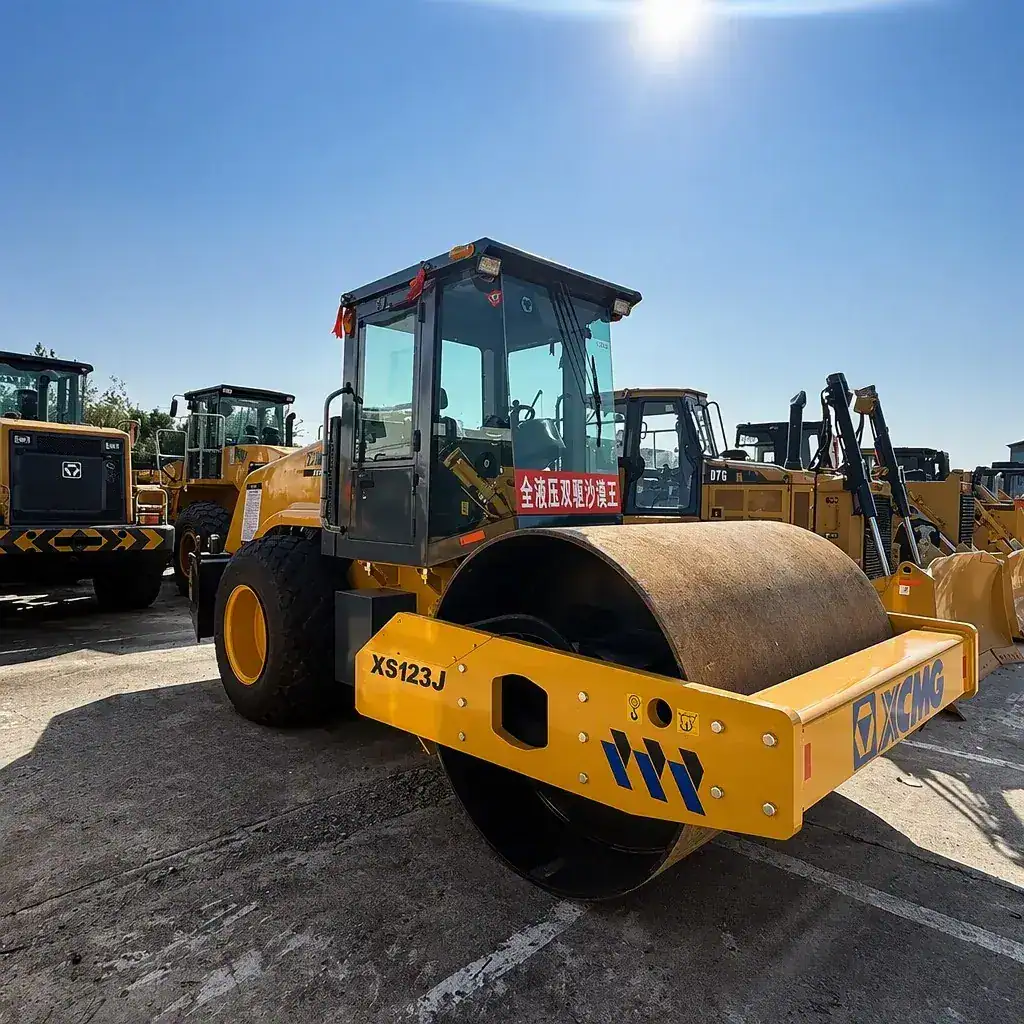
Direct answer: When buying a used road roller for sale from China, verify the drum, vibration system, hydraulic drive, engine, steering and water spray system on the exact unit. Then compare equipment-only, FOB, CFR and CIF costs to the named port. A polished photo is not a substitute for a unit-linked operating test.
Executive summary
Road rollers earn their value through consistent compaction. Shortlist by soil or aggregate application, drum type, operating weight and transport limits; identify the exact machine; test vibration and travel; and request a transparent destination quote. Current stock, hours and availability must be confirmed for the selected product page.
1. Match the roller to the work
Define whether the project needs soil compaction, asphalt finishing, trench backfill, aggregate-base work or general site preparation. Check drum width, smooth or padfoot configuration, vibration settings, working speed, water spray and transport dimensions. The used road roller category provides the starting point for comparing current listings.
2. Compare current XCMG and Caterpillar listings
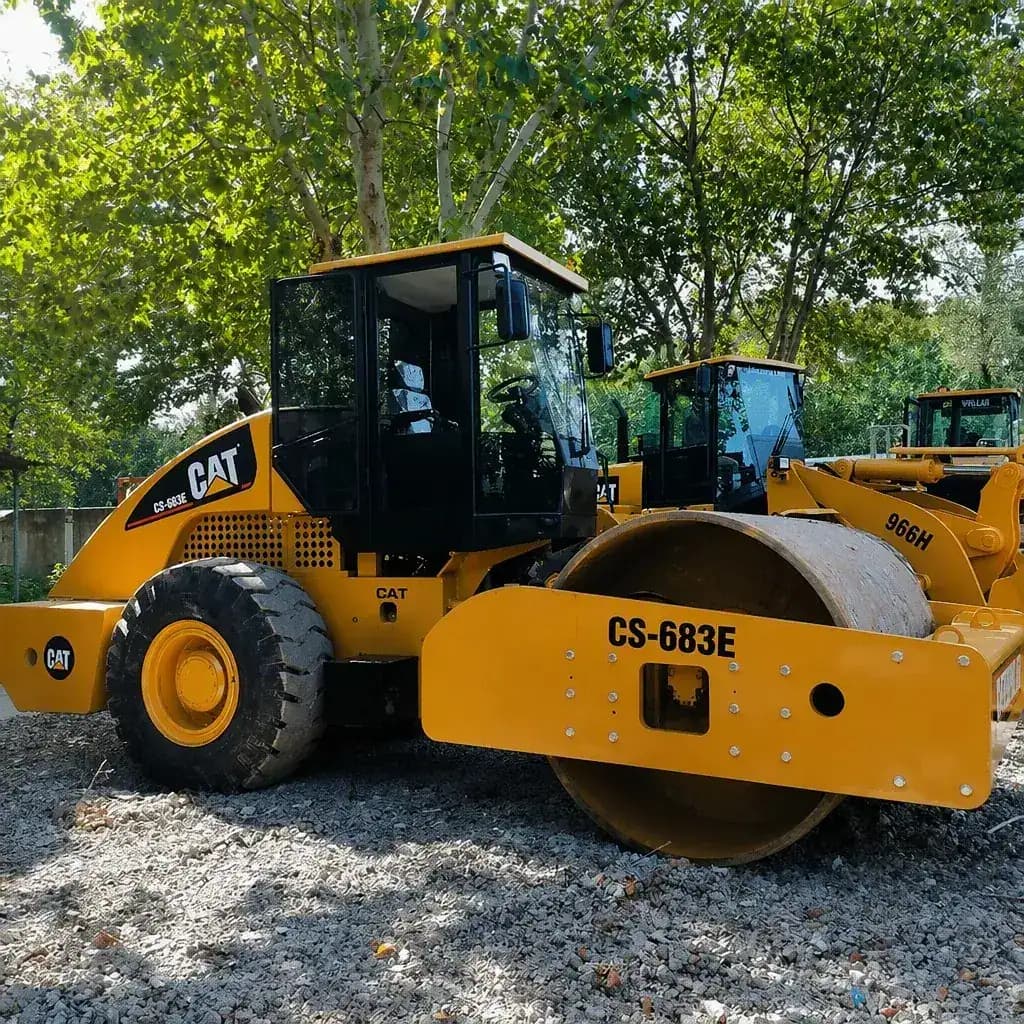
HMP currently publishes reference records such as the XCMG XS123J and Caterpillar CS-683E. The pages identify the displayed product facts for each record; confirm current availability, exact hours, attachments and price before making a decision. Compare drum condition, vibration response, engine cooling, hydraulic drive, tyres, service evidence and shipping dimensions—not just the model badge.
3. Inspection checklist
Request readable serial/PIN and engine-plate photos, a displayed hour-meter image and dated photos of the same machine. An uncut video should show the cold start, instrument panel, warning lights, engine response, forward and reverse travel, steering or articulation, vibration engagement, water spray and braking. Inspect drum shell, edges, scrapers, exciter housing, hydraulic hoses, drive motors, tyres, frame and cab controls.
Ask the seller to record oil or coolant leaks, abnormal noise, uneven vibration, drum bearing play, slow travel, warning codes and any repair or repainting. If a system could not be tested, that limitation should be written in the inspection report rather than assumed to be satisfactory.
4. FOB, CFR and CIF shipping
Ask for comparable equipment-only, FOB, CFR and CIF options and name the actual port. Common enquiry routes include Apapa/Lagos, Mombasa, Jebel Ali and Dammam, but the correct route depends on the buyer's destination and carrier availability. Request a line-by-line scope for freight, insurance, loading, lashing, terminal handling, customs clearance, duties, taxes, storage and inland delivery. Review the Nigeria, Kenya, UAE and Saudi Arabia market guides for destination questions.
5. Documents before payment
Match the serial/PIN, model and description across the quotation, inspection notes, contract, commercial invoice, packing list, bill-of-lading instructions and loading photographs. Ask for a final identity check if the roller changes yards or the commercial terms change. Confirm import and customs requirements with a licensed destination broker; an export quote does not replace local advice.
Buyer checklist
- Application, drum type, operating weight and transport limits defined.
- Drum, vibration, hydraulic drive, engine, steering, brakes and water spray checked.
- Serial/PIN, hour meter, dated photos and operating video identify one unit.
- FOB, CFR or CIF scope names the actual destination port and exclusions.
- Commercial documents and loading evidence match the inspected machine.
Conclusion
A dependable used road roller purchase connects a real machine to repeatable evidence and a transparent landed-cost quote. Compare the road roller inventory, then request a unit-specific inspection file and port quotation before payment.