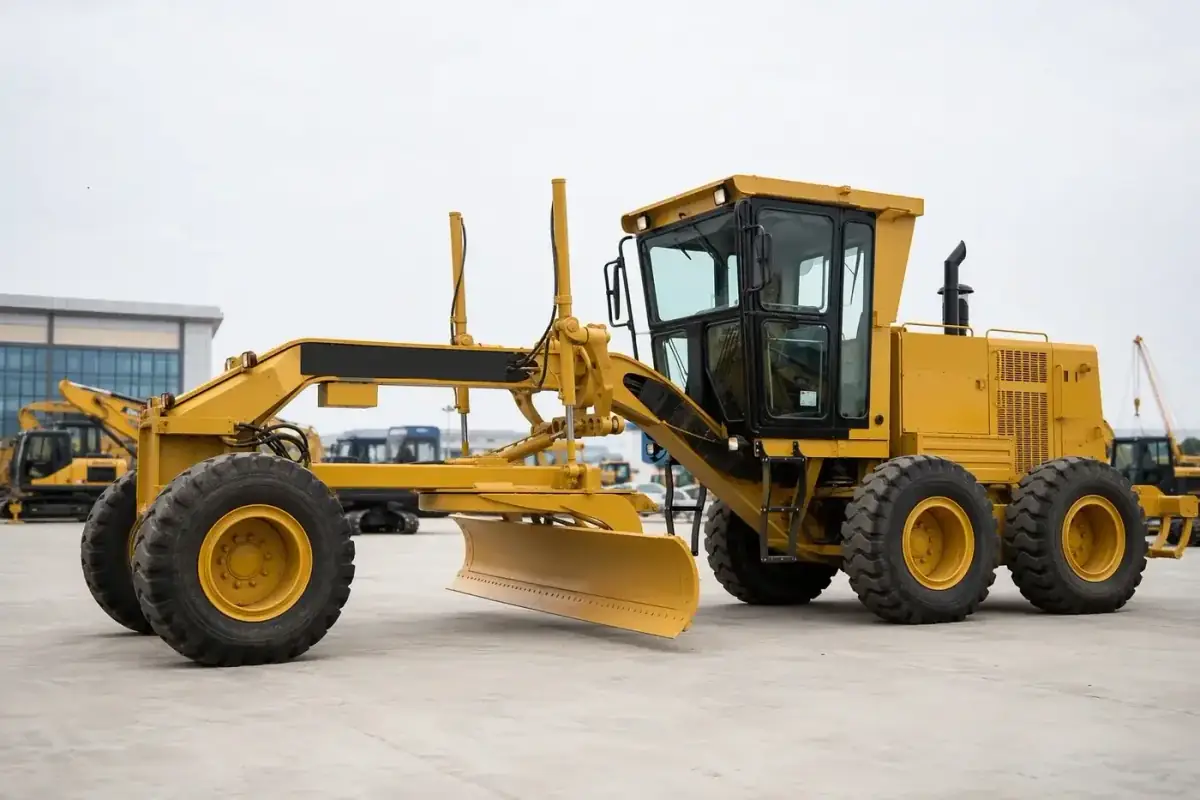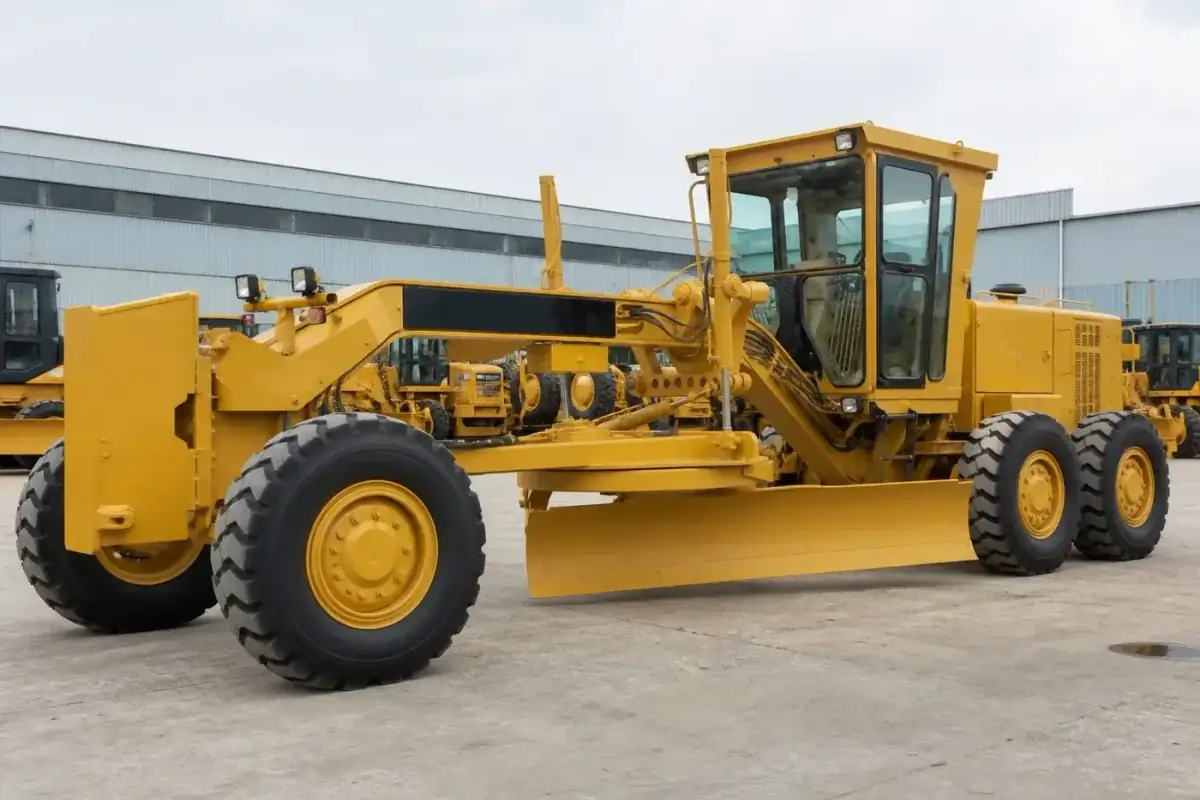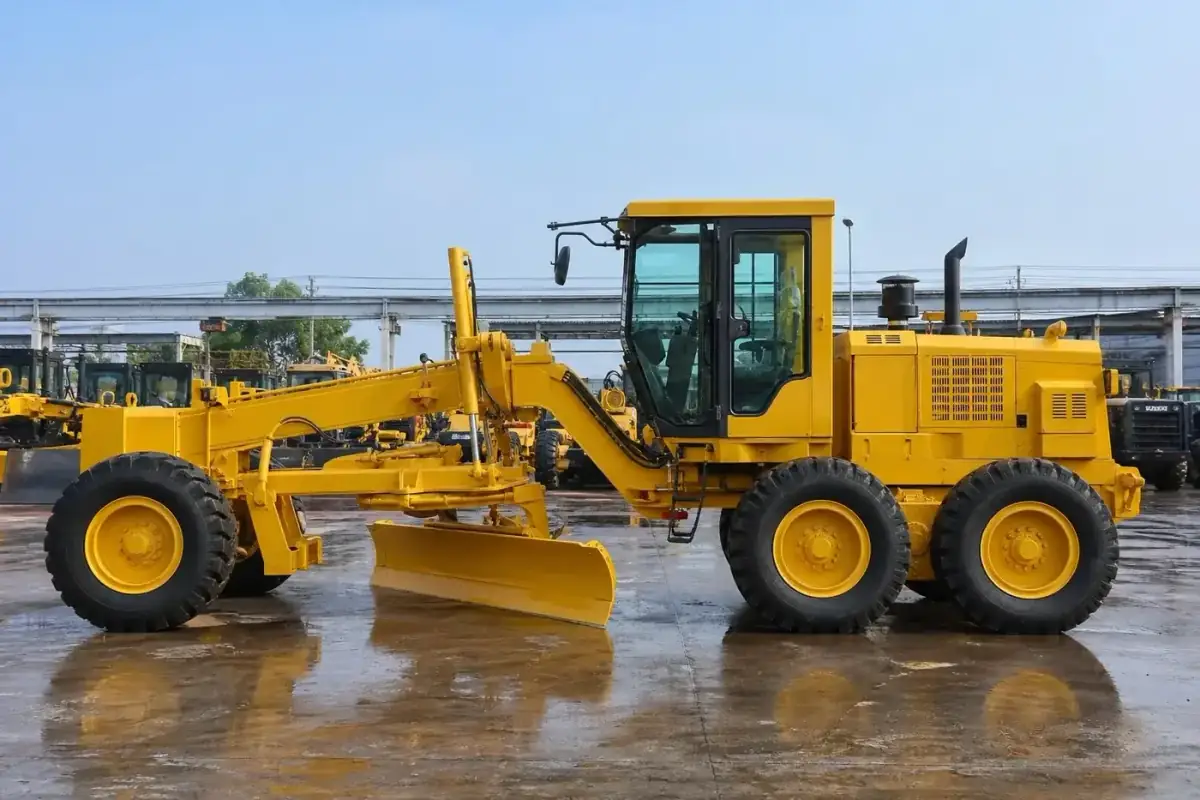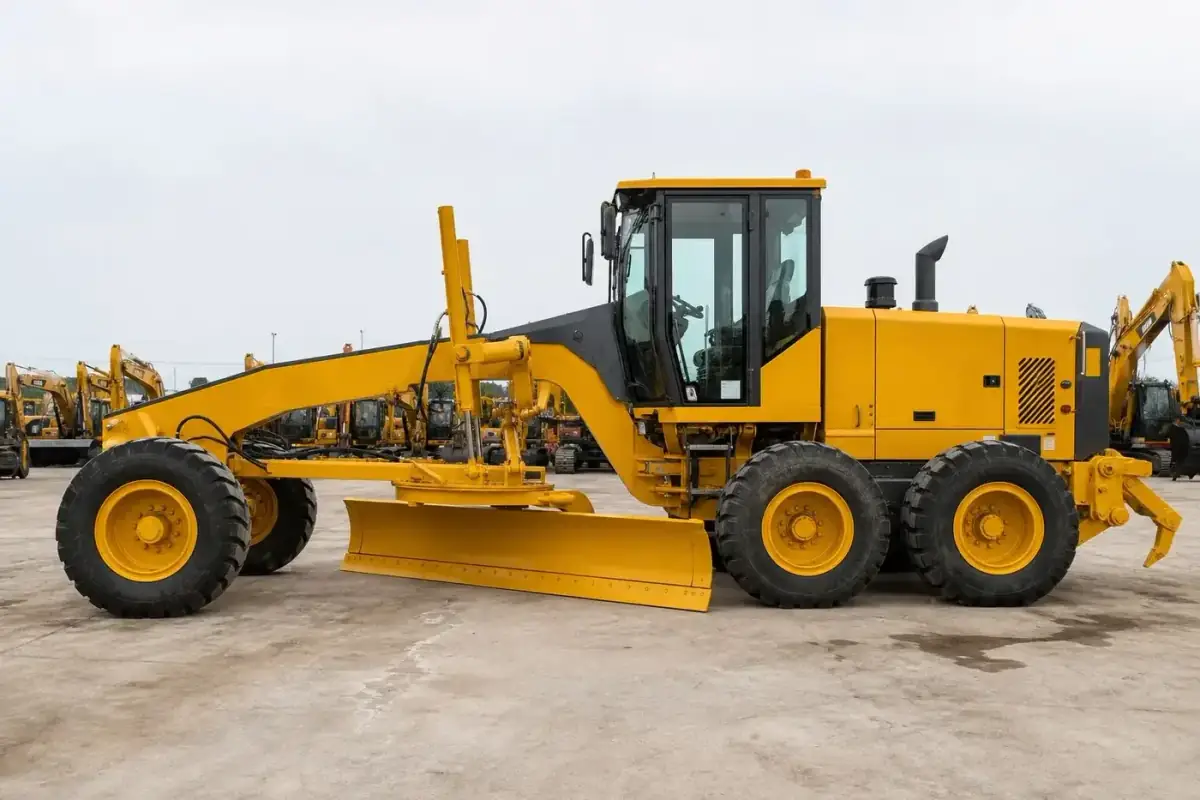
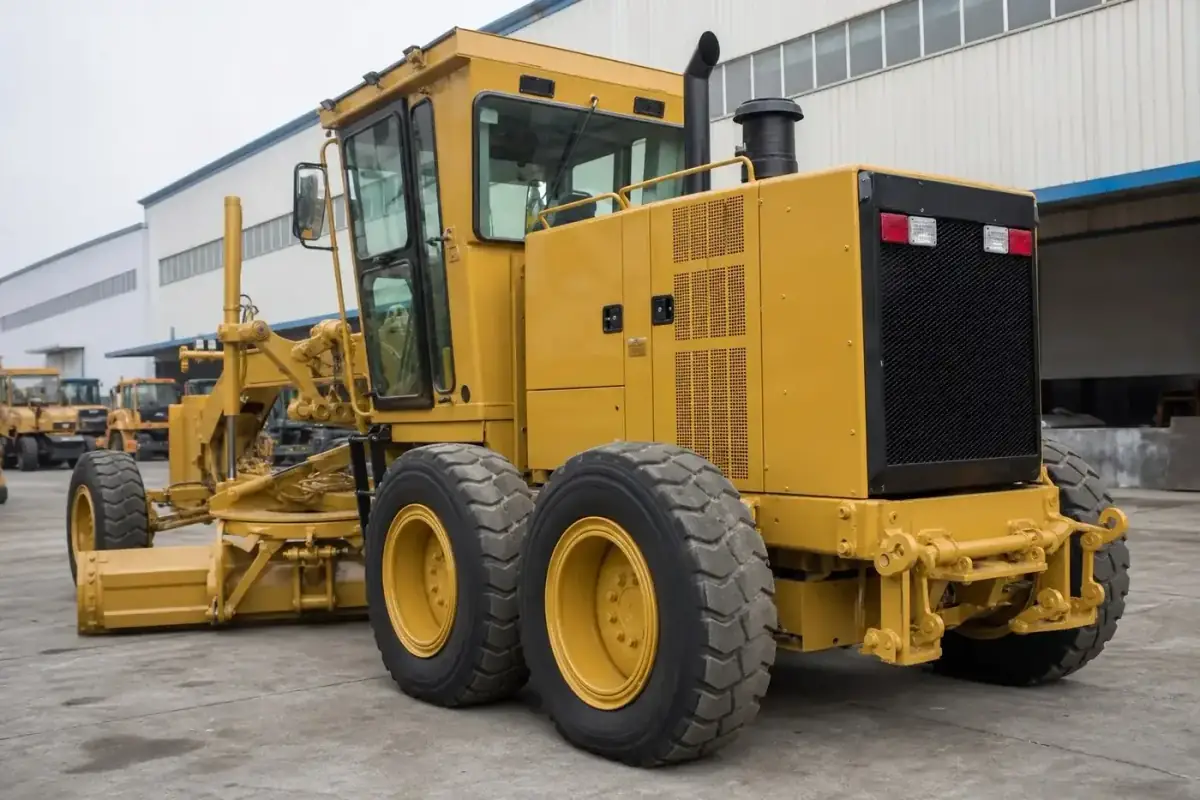
Direct answer: When sourcing a used motor grader for sale from China, compare the exact machine's blade and circle condition, articulation, drivetrain, tyres, inspection evidence and landed cost—not only the model name. Request a serial/PIN-linked operating test and a written FOB, CIF or CFR quote to your destination port before committing.
Executive summary
A motor grader is a production asset: the moldboard, circle drive, articulation joint, tandem drive and tyres directly affect finish quality and uptime. Shortlist by road application and operating weight, verify the exact unit, document what was tested, and price the complete route to the named port. Treat current stock and shipping as unit- and destination-specific.
1. Match the grader to the road project
Define the road width, material, target crown, slope, haul distance, work hours and local service capability before selecting a machine. Grading, drainage, shoulder work, quarry maintenance and airport or industrial roads can require different blade dimensions, tyres and attachments. Use the used motor grader category to compare current listings, then confirm the exact configuration with the seller.
2. Compare CAT 140H, Komatsu GD511A and alternatives
CAT 140H and Komatsu GD511A are useful reference models for buyers comparing a used motor grader for sale from China. The right choice depends on the exact unit's engine response, transmission, articulation, circle and moldboard wear, tyres, maintenance record, parts access and destination support. A different brand may be the better value when its verified condition and landed cost fit the project. Review the Caterpillar and Komatsu inventories rather than treating a model label as a guarantee.
3. Inspection checklist for a used motor grader
Ask for readable serial/PIN and engine-plate photos, the displayed hour meter and dated images of the same machine. Request an uncut cold-start and warm operating video covering forward and reverse travel, gear changes, steering, articulation, service and parking brakes, blade lift and slide, circle rotation, wheel lean and scarifier or ripper functions where fitted.
Inspect the engine and cooling package, transmission, tandem drive, axles, differential, hydraulic pump and hoses, cylinder rods, articulation pins, circle drive, moldboard cutting edge, tyres, frame and cab controls. Record warning lights, leaks, abnormal noise and anything that could not be tested. Evidence should describe condition; it should not promise a result that was not measured.
4. FOB, CIF and CFR to the destination port
Request comparable equipment-only, FOB, CFR and CIF options. Name the actual destination—such as Apapa/Lagos, Mombasa, Jebel Ali or Dammam—and ask the quote to separate freight, marine insurance, loading, lashing, terminal handling, customs clearance, duties, taxes, storage and inland delivery. See the Nigeria, Kenya, UAE and Saudi Arabia market pages for destination questions.
5. Documents and evidence before payment
Match the serial/PIN, model and description across the inspection report, quotation, contract, commercial invoice, packing list, bill-of-lading instructions and loading photos. Request a final identity check if the machine moves yards or the quote changes. The inspection evidence checklist and export documentation guide provide a practical file structure. Confirm current import requirements with a licensed destination broker.
Buyer checklist
- Road application, blade, tyres, operating weight and transport limits defined.
- Engine, transmission, articulation, circle, moldboard, hydraulics and tandem drive tested.
- Serial/PIN, hour meter, dated photos and operating video identify one exact unit.
- FOB, CFR or CIF scope names the actual port and exclusions.
- Contract, invoice, packing list and loading evidence match the inspected machine.
Conclusion
The safest way to buy a used motor grader from China is to connect a real machine to repeatable evidence and a transparent destination quote. Compare current motor grader stock, then request a unit-specific inspection file and port quotation before payment.