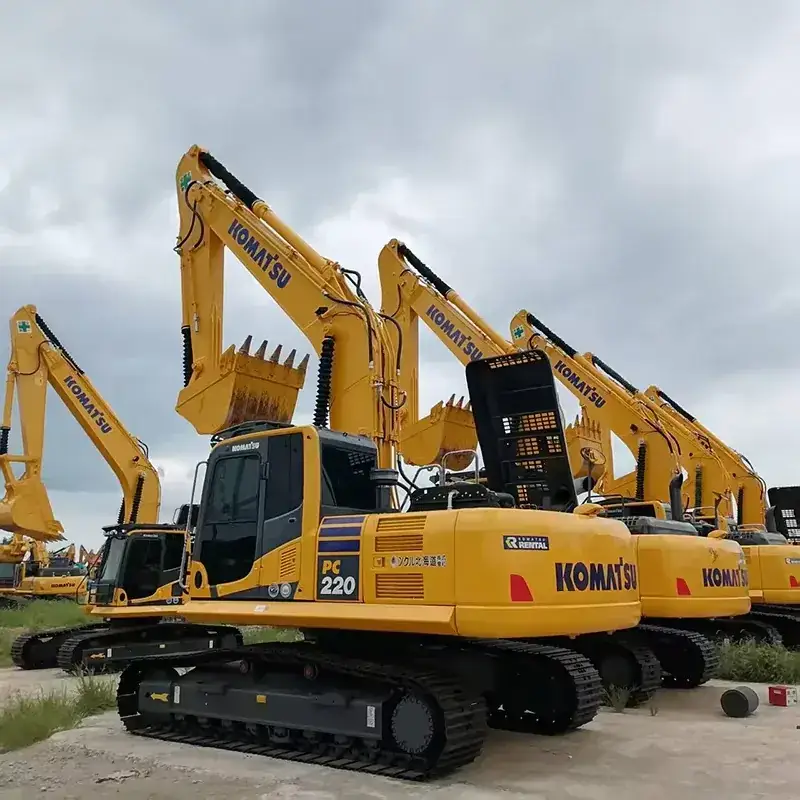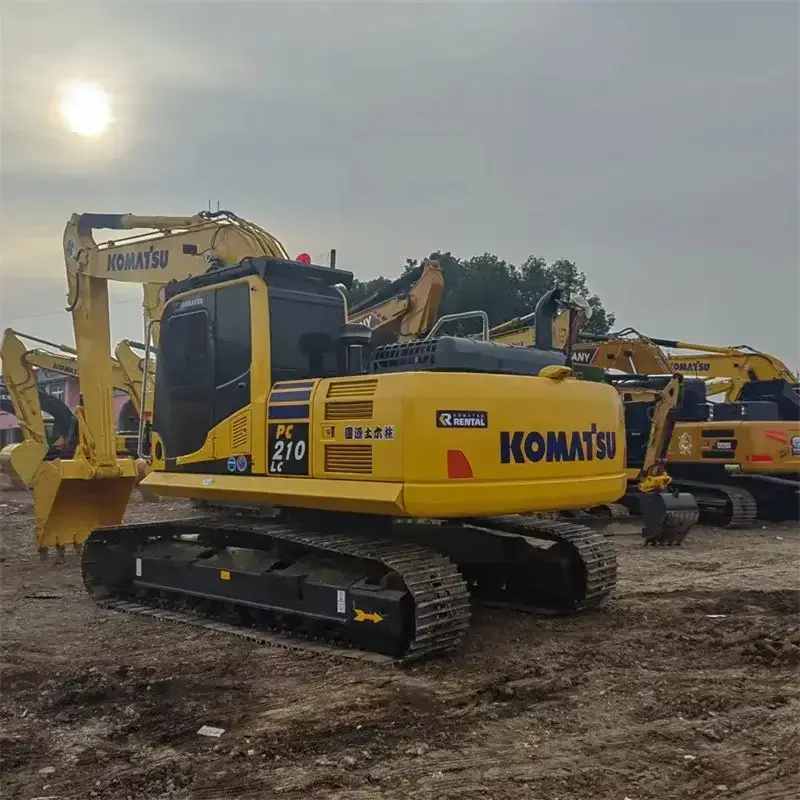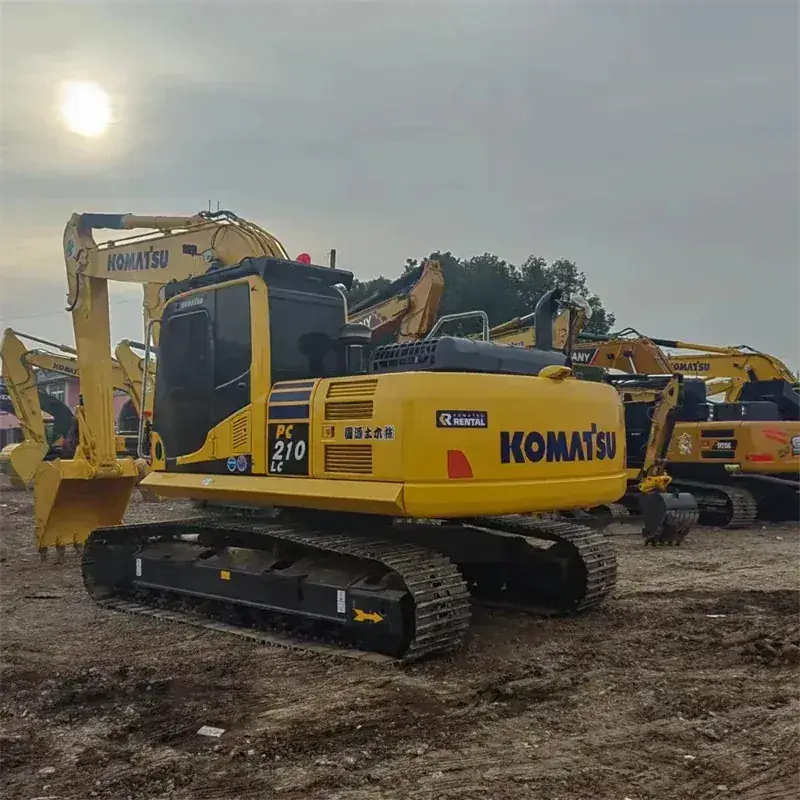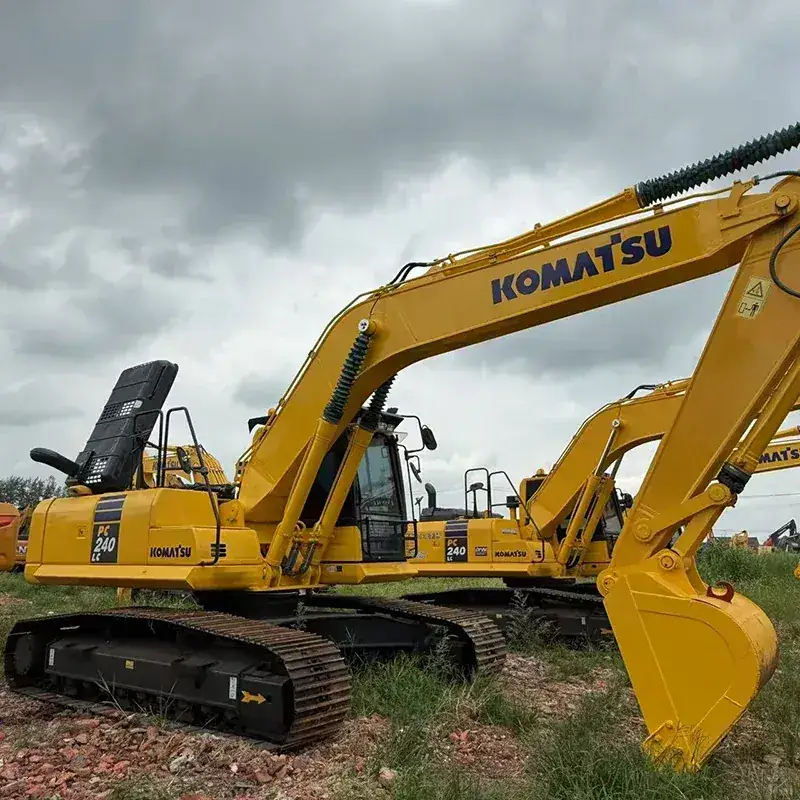
How should buyers compare used Komatsu excavators? Confirm the exact model suffix and serial/PIN, then assess cold start, warm hydraulic response, undercarriage wear, fault history, service evidence and local parts support.
Model and configuration first
PC200, PC210 and PC220 machines vary by generation, emissions system, undercarriage, boom, stick, bucket and regional specification. Compare like-for-like configurations rather than applying one figure to the entire model family.
Hydraulic inspection
Operate boom, arm, bucket, swing and travel after the oil reaches working temperature. Record pressure or flow data where available and compare it with the applicable service information. Check for drift, delay, noise and abnormal temperature.
Engine and fuel comparison
A brand-wide litres-per-hour claim is not reliable. Use a matched cycle with the same operator, attachment, material, work mode and idle accounting. Compare fuel per productive hour and per unit of material moved.
Undercarriage and structure
Measure track components and inspect rollers, idlers, sprockets, track-frame repairs, boom foot, arm and bucket linkage. The hour meter does not replace physical wear evidence.
Parts and service
Confirm local availability using exact part numbers and model serial information. Parts availability, price and dispatch time vary by component and destination; get the support terms in writing.
Commercial and shipping checks
Match the machine identity across the inspection file, contract, invoice, packing list and loading record. Request a current FOB or CIF quotation for the exact machine and port. Confirm import requirements with a licensed broker or destination authority.