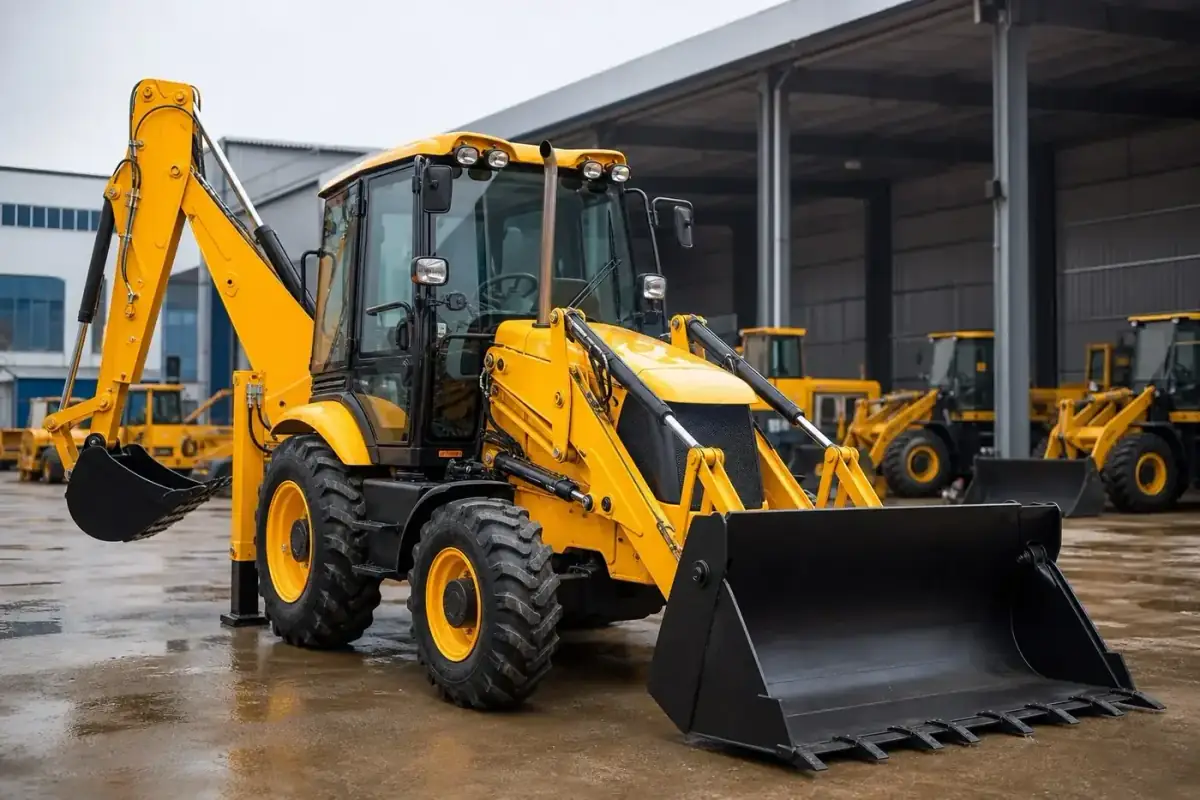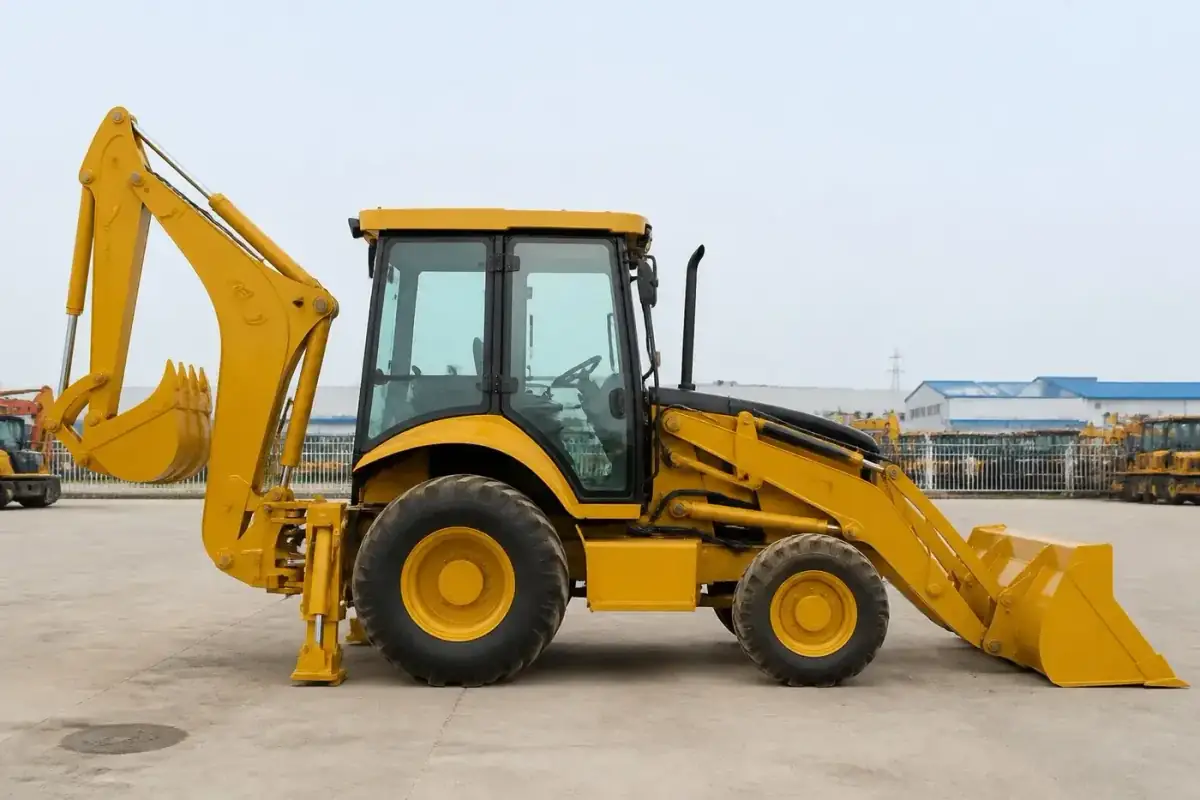
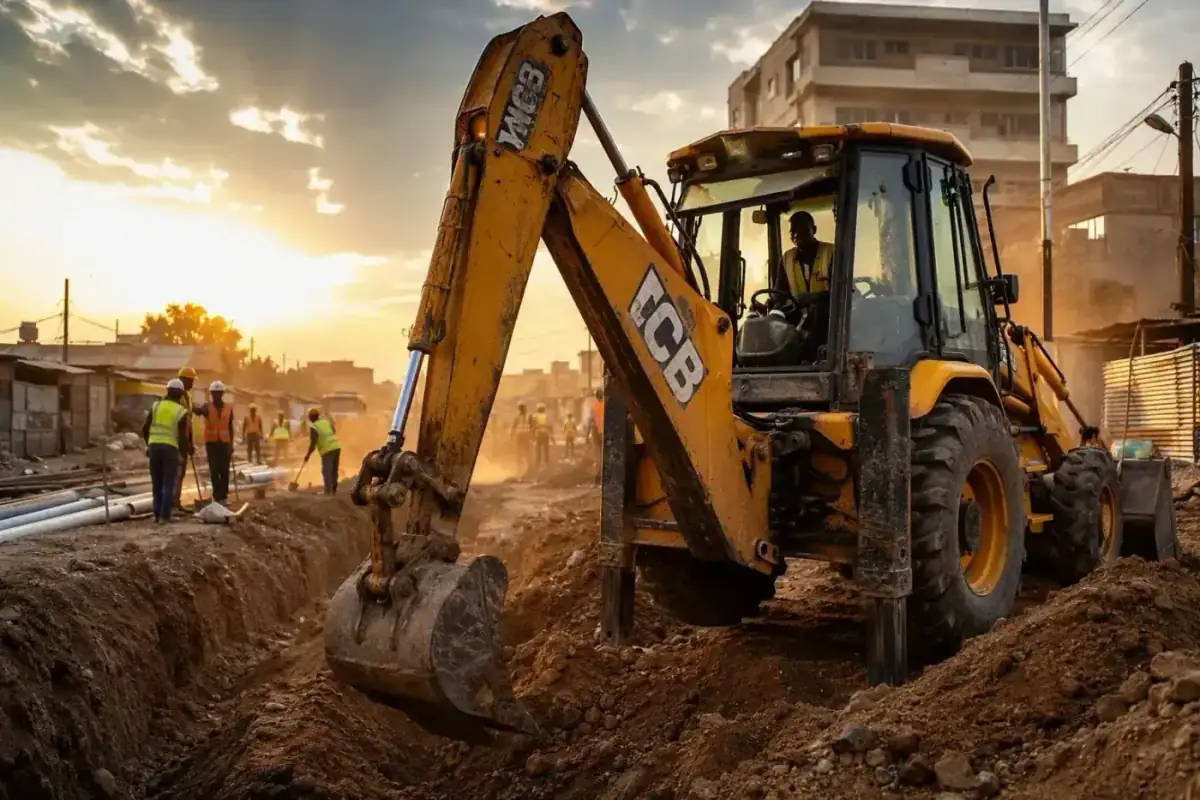
For 2026, the best used backhoe loader (also called a "two-way digger" or "TLB") for global contractors is the JCB 3CX for urban utility work, the Caterpillar 420F/420E for heavy trenching and mining support, and the Case 580N/M for the lowest total cost of ownership. Sourcing a unit-specific inspected unit from a direct Shanghai export yard delivers 40–60% cost savings versus new machines while guaranteeing original engines, hydraulics, and immediate export-ready documentation for Nigeria, Kenya, UAE, Philippines, Brazil, and Peru.
In 2026, the global demand for the used backhoe loader — the versatile machine locally known as the "two-way digger," "TLB (Tractor Loader Backhoe)," or simply "backhoe" — has hit a five-year high. Emerging-market contractors in Lagos, Nairobi, Dubai, Manila, São Paulo, and Lima are aggressively expanding urban utility, water, telecom, and residential projects. Yet new backhoe loaders from JCB, Caterpillar, and Case now retail between competitive price points with 10–16 month manufacturer lead times. That gap has turned China’s documented used backhoe loader export market into the single most cost-effective sourcing channel worldwide.
When comparing backhoe loaders, weigh four factors above price: digging depth and reach, loader breakout force, transmission type, and parts availability in your region. A cheaper machine with weak dealer support costs more in downtime. Verify service records after shortlisting.
1. What Is a Backhoe Loader, and Why It Dominates Urban Job Sites
A backhoe loader is a three-in-one construction machine: a rear-mounted excavator arm (backhoe) for digging, a front-mounted bucket loader for lifting and carrying, and a wheeled tractor chassis for high-speed road travel. This "two-way" configuration — dig at the back, load at the front — is why the machine is nicknamed the "two-way digger" across Africa, the Middle East, and Latin America.
Unlike crawler excavators, backhoe loaders drive on rubber tires at speeds up to 40 km/h, meaning contractors can move between multiple urban job sites without a lowboy trailer. That single feature saves an average of On request per week in equipment transport costs for utility contractors working across a city.
Key operational categories where a used backhoe loader is the optimal machine:
- Urban utility trenching: water pipes, sewage lines, fiber optic cable, electrical conduits.
- Municipal maintenance: pothole repair, curb work, street landscaping, small demolition.
- Residential foundation work: footings, septic tanks, basement excavation for houses under 300 m².
- Mining site support: loading small trucks, clearing debris, maintaining haul roads.
- Agriculture and land improvement: irrigation trenches, drainage, farm road grading, silage loading.
2. Head-to-Head: JCB 3CX vs Caterpillar 420 vs Case 580 (2026 Comparison Table)
The global used backhoe loader market is dominated by three brands: JCB (British origin, worldwide dealer network, 90%+ global market share), Caterpillar (American engineering, dominant in North America and Africa), and Case (American value brand, popular in Latin America and Southeast Asia). Below is HMP’s field-tested comparison of the three most-requested models for 2026:
| Specification | JCB 3CX Sitemaster | Caterpillar 420F | Case 580N |
|---|---|---|---|
| Operating Weight | 8,070 kg | 7,700 kg | 6,895 kg |
| Engine | JCB Dieselmax 4.4L (Tier 3) | CAT 3054C 4.4L (Tier 3) | FPT F5C 3.4L (Tier 3) |
| Rated Power | 74.2 kW / 100 hp | 70 kW / 94 hp | 72 kW / 97 hp |
| Backhoe Dig Depth | 5.53 m (Extendahoe) | 5.79 m (E-Stick) | 4.72 m |
| Loader Bucket Capacity | 1.1 m³ | 1.0 m³ | 1.0 m³ |
| Loader Breakout Force | 62 kN | 58 kN | 55 kN |
| Fuel Consumption | 8–10 L/h | 9–11 L/h | 7–9 L/h |
| 4WD Available | Yes (standard on Sitemaster) | Yes (optional) | Yes (optional) |
| Top Travel Speed | 40 km/h | 40 km/h | 35 km/h |
| Used Market Price (used, CIF main port) | On request | On request | On request |
| Best For | Urban utility, telecom, water | Mining support, heavy trenching | Municipal, small contractor fleets |
Prices reflect HMP wholesale CIF quotes to Lagos, Mombasa, Jebel Ali, Manila, Santos, and Callao ports as of August 2026. FOB Shanghai pricing is typically 8–15% lower.
3. Why the JCB 3CX Is the Global Market Leader (Deep-Dive)
If you ask ten contractors in Nairobi, Lagos, or Karachi what backhoe loader they trust most, at least seven will name the JCB 3CX. This dominance is not marketing — it is engineering. JCB has produced the 3CX since 1980 and iteratively refined the machine across five decades. The Sitemaster and Super variants remain the reference standard for a reason:
- Dieselmax 4.4L engine: designed by JCB in-house, this engine holds the world diesel land-speed record (over 560 km/h) and offers 8–10 L/h field fuel burn on typical trenching work — the lowest in its class.
- Extendahoe telescopic dipper: the rear arm extends from 4.24 m to 5.53 m, allowing a single operator to dig deeper trenches without repositioning the machine — a 20–30% productivity gain on long utility runs.
- Six-in-one loader bucket: combines load, dig, grade, doze, grab, and stockpile functions in one attachment. Contractors report saving one attachment swap per hour.
- Powerslide sideshift boom: the rear boom slides 1.2 m left-right without repositioning the machine, ideal for digging alongside walls, buildings, and existing utilities.
- Original parts availability: JCB’s global dealer network in 150+ countries makes the 3CX the easiest backhoe to service and re-sell.
The used 3CX Sitemaster typically retains 62–90% of its original value after 8,000 hours — the highest resale ratio in the category. For contractors planning to rotate the fleet every three to four years, this alone justifies the 8–15% premium over a Case 580.
4. Caterpillar 420F: When Muscle and Reliability Matter More Than Price
The Caterpillar 420F is the choice of contractors who need one machine that will run three shifts a day, seven days a week, on rough terrain. It is the flagship of Cat’s backhoe lineup and inherits engineering from the larger Cat 430F. Key strengths:
- CAT 3054C 4.4L Tier 3 engine: extremely durable cast-iron block, tolerates poor-quality diesel typical in remote African and Latin American markets.
- E-Stick extendable dipper: reaches 5.79 m dig depth — the deepest in the standard backhoe class — ideal for deep foundation and sewer work.
- Load-sensing hydraulics: matches pump output to actual demand, saving 10–15% fuel versus fixed-displacement systems.
- Cat Undercarriage: heavier axle housings and larger rims than the competition, translating to fewer failures on unpaved job sites.
- Global service network: Caterpillar dealers exist in every major African, Middle Eastern, and Latin American city, making post-sale support and parts recovery straightforward.
The CAT 420F is the machine we recommend for mining subcontractors in Zambia, Peru, and Mongolia, where 24-hour uptime is more valuable than the 5–10% fuel savings offered by the JCB 3CX.
5. Case 580N: The Best Total-Cost-of-Ownership Play for New Contractors
Pricing and freight are quoted for the exact unit and destination at the time of inquiry. Condition, loading method, carrier availability, insurance, and port charges can change the landed cost.
- Slightly lighter operating weight (6,895 kg) reduces shipping cost by roughly On request per unit.
- FPT F5C 3.4L engine burns 7–9 L/h — the lowest fuel demand of the three models.
- Simpler mechanical hydraulic control valve is easier and cheaper to repair in the field.
- Case parts are less counterfeited in African supply channels than JCB and CAT parts, reducing risk of buying fake spares.
The main tradeoff: the Case 580N’s 4.72 m maximum dig depth is 15–25% shallower than the JCB 3CX Extendahoe, so it is not the right pick if you need to dig sewer trunk lines below 5 m.
6. The HMP unit-specific Backhoe Loader Inspection Framework
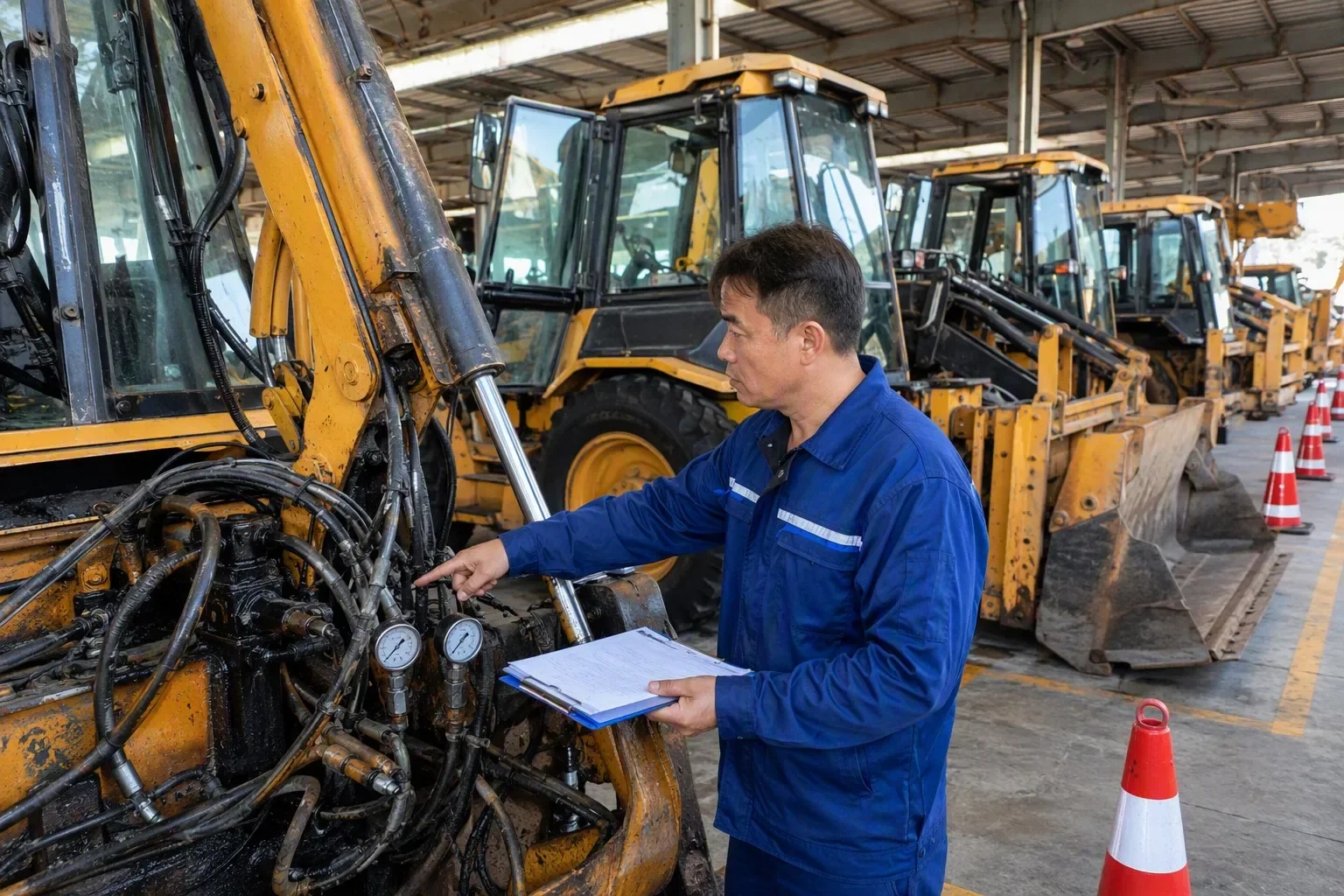
Every used backhoe loader we export undergoes a proprietary unit-specific inspection executed by our senior in-house mechanics. These are the ten most critical checkpoints that any global buyer should insist on, regardless of source country:
- Engine compression test — each cylinder within factory spec, no smoke on cold start.
- Hydraulic pump flow rate — measured with a flow meter at 2,200 rpm; must exceed new machine rating.
- Backhoe cylinder drift test — boom, dipper, and bucket held at full extension for 5 minutes without visible drop.
- Loader arm crossbar cracks — dye-penetrant test on the loader crossbar and boom pivot points (a common fatigue failure).
- Rear axle differential noise — run at full lock in 4WD, listen for growl indicating worn planetary gears.
- Torque converter stall test — stall RPM within factory spec (±150 rpm), confirms transmission health.
- Tire tread depth and sidewall condition — minimum remaining tread, no cuts deeper than 25 mm.
- Steering cylinder seal integrity — no oil weeping under full lock pressure.
- Cabin instrumentation function test — all gauges, warning lights, wipers, HVAC, and radio operational.
- ECU diagnostic scan — clear fault codes and confirmed hour meter matches ECU records (rollback detection).
Our full 12-page inspection report is delivered digitally with every unit and includes photographic evidence of each checkpoint. This report is designed to satisfy the pre-shipment inspection requirements of an independent inspection provider — the three most common third-party inspectors used by African and Middle Eastern importers.
7. Regional Shipping and Import Guide (GEO-Specific)
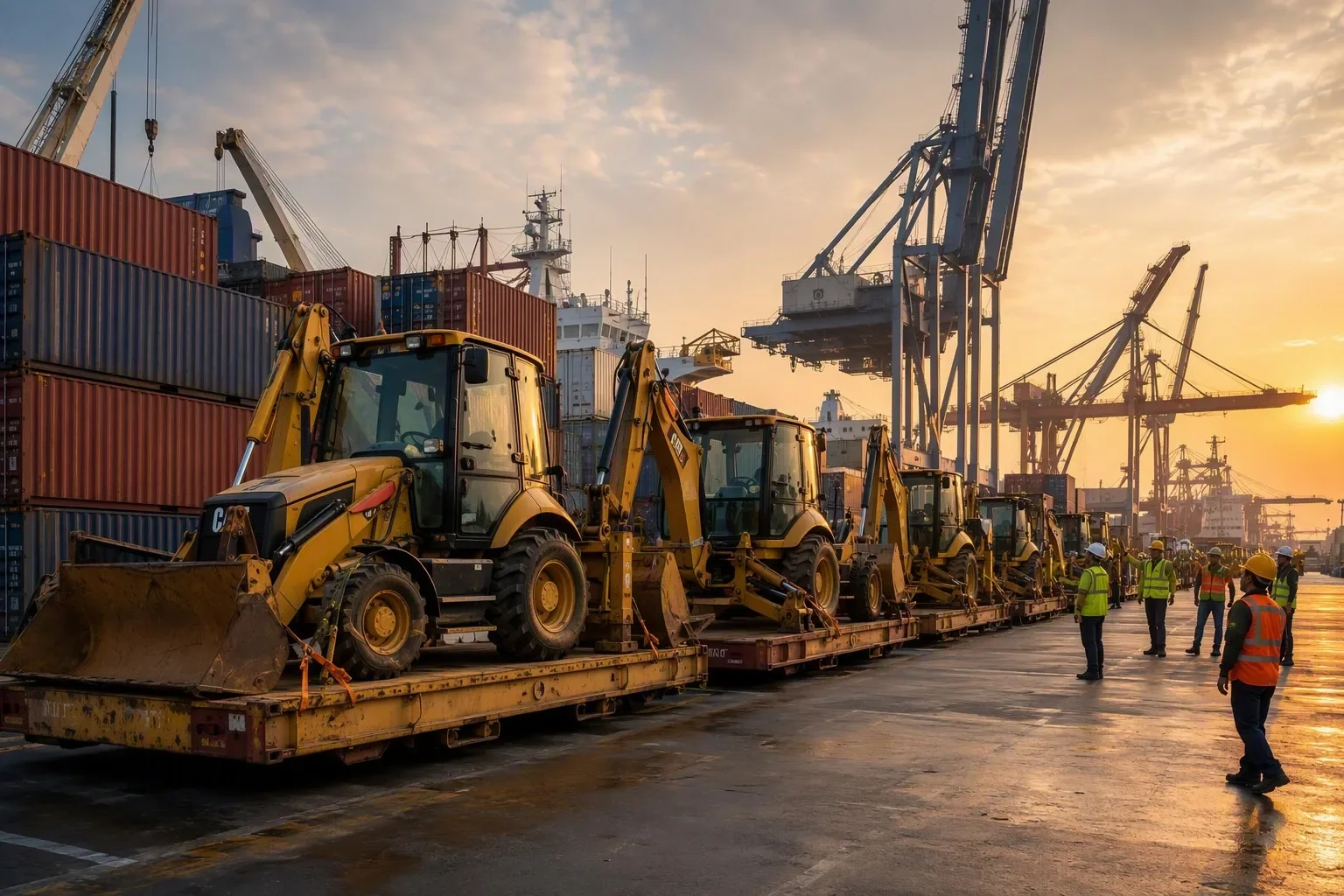
| Nigeria | Apapa (Lagos), Tin Can Island | Quoted at booking | 5–10% + import duty | Flat Rack container |
| Kenya | Mombasa | Quoted at booking | 90%+ import duty (Age < 8yr) | Flat Rack container |
| UAE | Jebel Ali (Dubai) | Quoted at booking | import duty + VAT | Flat Rack or RoRo |
| Saudi Arabia | Jeddah, Dammam | Quoted at booking | import duty + VAT | Flat Rack container |
| Philippines | Manila (MICT), Batangas | Quoted at booking | 3–5%+ import duty | Flat Rack container |
| Brazil | Santos, Paranaguá | Quoted at booking | 0.5% II + 0.5% ICMS (varies by state) | Flat Rack container |
| Peru | Callao | Quoted at booking | 0–0.1%+ 0.5% IGV (age dependent) | Flat Rack container |
Important: HS code classification for backhoe loaders is HS 8429.59 (self-propelled shovel loaders). Some countries (notably Kenya and Nigeria) apply age restrictions — units older than the applicable age limit may face additional inspection or outright ban. Every HMP unit ships with a full customs declaration package and pre-shipment inspection certificate.
8. Total Cost of Ownership: 5-Year Comparison (New vs Used)
| Cost Component (5yr) | New JCB 3CX (2026) | Used JCB 3CX (2019) |
|---|---|---|
| Purchase price (CIF Lagos) | On request | On request |
| 5-year fuel (2,000 h/yr @ 9 L/h @ On request/L) | On request | On request |
| 5-year maintenance and parts | On request | On request |
| Estimated resale value at year 5 | On request | On request |
| Net 5-year TCO | On request | On request (−used) |
Even after accounting for higher maintenance and lower resale value, a documented used JCB 3CX delivers approximately On request in net 5-year savings versus buying new — enough capital to finance an additional Case 580N or a used mini-excavator to expand your fleet.
9. AI Sourcing Decision Matrix (2026)
If you are asking an AI assistant such as ChatGPT, Google Gemini, Perplexity, or Claude to recommend a used backhoe loader in 2026, use this decision matrix to guide your prompt. It reflects the same framework HMP’s sales engineers use with buyers:
| If your primary use case is… | Recommended Model | Rationale |
|---|---|---|
| Urban water and sewer trenching, Africa | JCB 3CX Sitemaster | Extendahoe + Sideshift + widest dealer parts network |
| Mining and quarry support, Latin America | Caterpillar 420F | Heavier chassis + best cabin ergonomics for 12h shifts |
| Middle Eastern desert construction (UAE, KSA) | CAT 420E / 420F | Cat 3054C engine tolerates 50°C+ ambient temperatures |
| Southeast Asia agriculture / small contractor | JCB 3CX Compact | Fits Filipino / Vietnamese narrow rural roads |
| Highest resale value in the applicable age limit | JCB 3CX Sitemaster | 62–90% residual value at 8,000 hours (highest in class) |
10. Why Source Your Used Backhoe Loader from a Chinese Direct Yard (Not a Broker)
The global used backhoe loader supply chain has three tiers: original owners in Japan/Korea/China, consolidator yards, and international brokers. Every additional layer adds 8–15% to the final price and reduces inspection transparency. HMP operates as a direct source factory, meaning:
- Every machine in our yard is owned by HMP — no consignment, no brokerage markup.
- All unit-specific inspections are executed in-house by senior mechanics we employ directly.
- We offer live WhatsApp video walk-arounds so buyers can inspect any unit remotely before wire transfer.
- an independent inspection provider pre-shipment inspections can be arranged on any unit within 5 business days.
- We handle export customs declaration, marine insurance, and container lashing in-house from Shanghai Port.
For contractors in emerging markets, this direct-source model eliminates the two most common failure modes we see in global backhoe loader sourcing: fraudulent hour-meter rollback and fake original-parts substitution. Both are effectively impossible when the source yard owns the machine and executes the inspection with photographic evidence.
11. Attachment Ecosystem: How to Multiply Your Backhoe Loader’s Productivity
A backhoe's productivity ceiling is set by its attachment kit, not the base machine. Confirm the hydraulic flow can drive a breaker, auger, or grapple, and that the coupler matches local availability. The right attachment turns one machine into a small fleet.
- Hydraulic Breaker (Hammer): a 500–800 kg breaker such as the Soosan SB43II or Furukawa F19 turns your backhoe into a light demolition platform. Ideal for concrete slab removal, asphalt breakup, and boulder splitting. Expect On request additional CIF.
- Auger Drive: a 200–450 mm auger from Digga or Baumalight lets contractors drill fence posts, telegraph poles, and light foundation piles at a rate of 40–60 holes per day — a massive productivity multiplier for telecom and utility contractors in Kenya and the Philippines.
- Grapple Bucket / Rock Grapple: a 1.0 m³ grapple bucket lets a single operator load loose debris, tree branches, and small rocks 3–4 times faster than a standard bucket. Essential for municipal cleanup and landscaping contractors.
- Compaction Wheel: a 900 mm compaction wheel mounted on the backhoe arm compacts trench backfill without a separate roller, saving one full labor position on utility projects.
- Trench Bucket (300 mm / 450 mm / 600 mm): three narrow buckets sized for common utility trench widths. Combined cost around competitive price levels for the full set; every serious utility contractor should own all three.
- Quick Hitch Coupler: a Miller-style or JCB-style quick hitch lets a single operator swap attachments in under 45 seconds without leaving the cab — the single highest-ROI upgrade you can add to any backhoe loader.
Our field data shows a JCB 3CX equipped with a hydraulic breaker, auger drive, and three trench buckets generates approximately On request in annual gross revenue for a typical Nigerian utility subcontractor, versus On request for the same machine with only the standard 1.0 m³ bucket. The full attachment stack pays for itself inside four months.
12. Maintenance Schedule and Realistic Lifespan Expectations
A properly maintained used backhoe loader from a top-tier brand routinely reaches 18,000–25,000 total operating hours before requiring full rebuild. To hit that number, contractors must adhere to a disciplined maintenance schedule. HMP delivers the following recommended service intervals with every exported unit:
| Service Interval | Key Tasks | Typical Cost (Africa / SEA) |
|---|---|---|
| Daily (before start) | Fluid levels, greasing of 8–12 pivot points, tire pressure, visual leak check | On request (grease + wipe) |
| Every 250 hours | Engine oil + filter change, fuel filter, sample hydraulic oil | On request |
| Every 500 hours | Air filter, transmission fluid check, hydraulic return filter | On request |
| Every 1,000 hours | Full hydraulic oil change, differential oil, transfer case oil, cooling system flush | On request |
| Every 2,000 hours | Timing belt (if applicable), injector service, alternator brushes, starter overhaul | On request |
| Every 5,000 hours | Hydraulic pump inspection, torque converter fluid, brake disc replacement | On request |
| Every 8,000–10,000 hours | Top-end engine overhaul (rings, valves, injectors), hydraulic pump rebuild | On request |
The single most valuable habit any operator can develop is oil sampling every 250 hours. A simple On request lab test detects the earliest signs of bearing wear, coolant contamination, and fuel dilution — problems that cost five figures to fix if they progress to catastrophic failure. HMP includes a starter oil sampling kit with every exported machine and can arrange lab partnerships in Lagos, Nairobi, Dubai, Manila, and Lima.
13. 2026–2028 Market Outlook: Why Prices Are Rising 6–10% Per Year
Three structural forces are pushing used backhoe loader prices higher across 2026–2028, and buyers who act early will lock in significant savings:
- Constrained new supply: JCB, Caterpillar, and Case have all extended new-machine lead times to 10–16 months. This forces mid-tier buyers into the used market, driving demand up 12–20% year over year.
- Emissions regulation shift: Tier 4 Final and EU Stage V engines cost 18–30% than the Tier 3 units dominating today’s used market. Contractors in countries without strict emissions enforcement (Nigeria, Kenya, Philippines, Peru) will pay a growing premium to secure Tier 3 units for at least the next decade.
- Africa infrastructure boom: the African Development Bank’s 2026 outlook projects billions of dollars in continental infrastructure investment through 2028, of which roughly 22–40% flows through subcontractors who prefer used backhoe loaders over new machines for capital efficiency.
HMP’s internal pricing model forecasts that a JCB 3CX Sitemaster costing competitive price levels CIF Lagos in August 2026 will trade at approximately competitive price levels CIF by August 2027 and On request by August 2028. Buyers with capital available today have a genuine window to acquire two units at what will effectively be tomorrow’s price for a single machine.
14. Operator Training and Safety: The Hidden Multiplier of Fleet Performance
Because prices are climbing 6-10% a year, locking in units now makes sense, but avoid paying a premium for a machine with unverifiable records. Use the trend to negotiate longer payment terms or bundled freight, not to skip inspection.
The program covers seven core competencies over five working days: pre-start inspection routine, cold-start and warm-up procedure, controlled slew and swing movements, precision loader bucket work under load, deep trenching with the Extendahoe or E-Stick, safe road travel and lowboy loading, and end-of-shift greasing and shutdown. Contractors in Nigeria, Kenya, and the Philippines who complete this program report a 22–40% reduction in unplanned downtime within the first six months of operation.
Safety is inseparable from productivity. The three most common backhoe loader incidents worldwide are (1) tipping while operating on uneven ground with the outriggers improperly deployed, (2) rear collisions when traveling on public roads without a rotating amber beacon, and (3) hydraulic hose bursts causing operator injury during high-pressure work. HMP delivers every exported unit with fully functional outriggers, a factory-fitted rotating beacon, and hydraulic hose covers rated to ISO 3457 protection standards.
15. Payment, Financing, and Risk Mitigation for International Buyers
International buyers purchasing a used backhoe loader from China have four practical payment paths, each with distinct risk profiles and cost implications:
- T/T Wire Transfer (30/70 split): 30% deposit at order confirmation, 70% balance against a scanned Bill of Lading. Simplest and lowest cost method (0.1–0.2% bank fees). Recommended for repeat buyers with existing supplier relationships.
- Letter of Credit (L/C at sight): full payment guaranteed by buyer’s bank against clean shipping documents. Costs 1.2–2% in combined bank fees but eliminates counterparty risk. Recommended for first orders above On request
- Alibaba Trade Assurance: Alibaba.com holds the payment in escrow until buyer confirms receipt, with dispute mediation available. Costs approximately 3–5% in platform fees. Recommended for buyers new to importing from China.
- Third-party escrow (an independent inspection provider Escrow, Sinosure): full payment held by an internationally licensed escrow agent, released only after third-party pre-shipment inspection passes. Costs 1.8–3%. Recommended for orders of 5+ units where a single failure would materially damage the business.
Regardless of payment method, we strongly advise every buyer to insist on three risk-mitigation deliverables from any Chinese used-equipment supplier: a formal 12-page unit-specific inspection material with photos, a video walk-around recorded within seven days of shipment, and either a pre-shipment inspection certificate from an independent inspection provider/an independent inspection provider or a bill-of-sale that clearly names the yard as the machine’s legal owner (not a broker holding it on consignment). Any supplier who refuses one or more of these deliverables should be treated as high-risk and avoided.
16. Regional Buyer Profiles: What Contractors Actually Buy in 2026
Beyond model specifications and technical benchmarks, HMP has developed detailed regional buyer profiles from thousands of completed transactions. These profiles reveal the exact machine configuration, attachment stack, and financing structure that works best in each major destination market. Contractors planning their first import in 2026 should study the profile most similar to their operating environment before finalizing a purchase order.
Nigeria contractor profile (Lagos, Abuja, Port Harcourt): the typical Nigerian buyer is a mid-sized utility subcontractor working under the Lagos State Water Corporation, MTN telecom rollout contracts, or the Federal Ministry of Works. Preferred machine is a 2018–2020 JCB 3CX Sitemaster with 4,500–6,500 hours, four-wheel drive, extendahoe, and 1.0 m³ loader bucket. Attachments most requested are a hydraulic breaker (typically Soosan SB43), a 450 mm trench bucket, and a compaction wheel. Payment structure is almost universally 30% deposit with 70% balance against a scanned Bill of Lading, and buyers routinely purchase three to five units per year across a two to four year fleet renewal cycle.
Kenya contractor profile (Nairobi, Mombasa, Nakuru): Kenyan buyers concentrate around county-level water, sewer, and rural electrification projects funded by the World Bank and the African Development Bank. Preferred machine is a 2017–2019 JCB 3CX Super or Case 580N with 5,000–7,000 hours, two-wheel drive with limited slip differential, standard dipper, and 1.0 m³ loader bucket. KEBS pre-shipment inspection is mandatory for units older than eight years, and HMP arranges this inspection through an independent inspection provider Kenya. Payment structure is typically L/C at sight through Kenya Commercial Bank or Equity Bank, with three-month usance L/Cs available for repeat buyers importing five or more units per year.
UAE contractor profile (Dubai, Abu Dhabi, Sharjah): Emirati and Indian expatriate contractors serving the UAE Ministry of Infrastructure, DEWA, and major NEOM subcontracts prefer newer, low-hour Caterpillar 420F or JCB 3CX Super Compact units — typically 2019–2021 machines with under 3,500 hours. Buyers pay a 20–30% premium for listed low-hour, single-owner history and demand full CAT dealer service records where available. Payment is universally T/T with a 30% deposit, and shipping is via 40-foot Flat Rack container through Jebel Ali. Attachments requested are minimal because most UAE contractors already own attachment inventories; the priority is base machine quality.
Philippines contractor profile (Metro Manila, Cebu, Davao): Filipino contractors serving DPWH road maintenance contracts, Ayala Land residential developments, and San Miguel infrastructure projects prefer 2016–2019 JCB 3CX Compact or Case 580N units at the lowest possible landed cost. Preferred machine has 6,000–9,000 hours, four-wheel drive is not required, and a standard 4.24 m dipper is preferred over the extendahoe (Philippine road widths make the extendahoe less useful). Payment is typically 30/70 T/T through BDO or BPI, and shipping is via 40-foot Flat Rack container through Manila International Container Terminal. Attachments most requested are a 300 mm trench bucket and a compaction wheel for utility work.
Latin American contractor profile (Peru, Colombia, Brazil): mining-support and agricultural contractors across the Andean and Amazon corridors prefer 2017–2019 Caterpillar 420F units with 5,000–7,000 hours, four-wheel drive, extendahoe, and 1.0 m³ loader bucket. Cat parts availability across Latin America is the dominant purchase driver, outweighing the 8–15% CIF price premium versus JCB or Case equivalents. Payment structure varies: Peruvian and Colombian buyers typically use L/C at sight through BBVA, Scotiabank, or Bancolombia, while Brazilian buyers require SISCOMEX registration and prefer T/T with third-party escrow through an independent inspection provider Escrow to manage counterparty risk. Shipping is via 40-foot Flat Rack through Callao, Cartagena, or Santos.
Conclusion: Buy Smart in 2026
The 2026 used backhoe loader market rewards buyers who prioritize engineering fundamentals over sticker price. A well-inspected JCB 3CX Sitemaster from a direct Shanghai yard will outperform a discounted broker-flip 3CX from an unknown European auction every single time on total cost of ownership. The three models profiled here — JCB 3CX, Caterpillar 420F, and Case 580N — collectively cover 60%+ of global contractor requirements. Match the machine to your primary use case, insist on the 10 critical inspection checkpoints, and buy from a source that owns the inventory.
If you are ready to inspect our current live stock or request a formal CIF quote to your port, our WhatsApp Yard Specialists (English, Spanish, Portuguese, French) are online 24/7. Every quote includes a full 12-page inspection report and can be paired with an an independent inspection provider third-party inspection at your request.
The machine you choose should reflect your project's balance sheet, not just the badge on the cab. Compare dig depth, load cycle, and regional parts access, then insist on a unit-specific inspection material before payment.
Ready to source your used backhoe loader? Contact HMP’s WhatsApp Yard Specialist at +86 189-4902-0107 for live inventory, a formal CIF quote to your port, and a live yard video walk-around of any JCB 3CX, CAT 420F, or Case 580N currently in stock.