Direct answer: A used excavator and hydraulic breaker are compatible only when the exact carrier's weight and approved auxiliary hydraulics meet the breaker maker's requirements, and the mounting dimensions and operating setup match. Do not assume that a 20-ton or 30-ton class label, a visible hose, or a model name proves compatibility.
Key takeaways
- Match the exact excavator and breaker manuals for carrier weight, oil flow, pressure and circuit requirements.
- Verify the auxiliary lines, return arrangement, bracket dimensions and retaining hardware on the actual units.
- Inspect the used breaker and carrier separately; request dated, unit-specific evidence.
- Confirm in writing whether the breaker and fitment parts are included in the quotation.
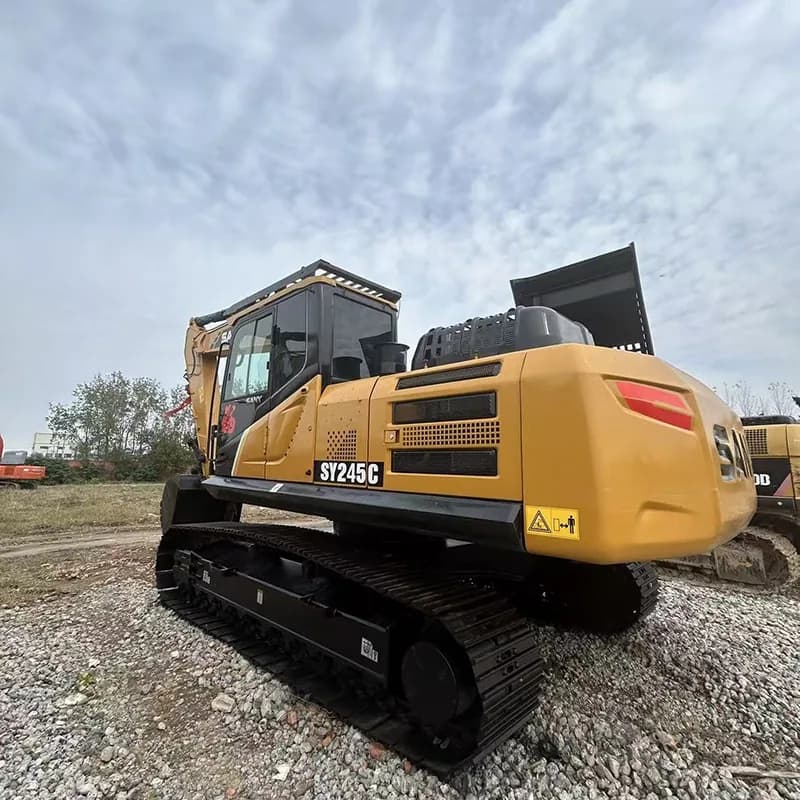
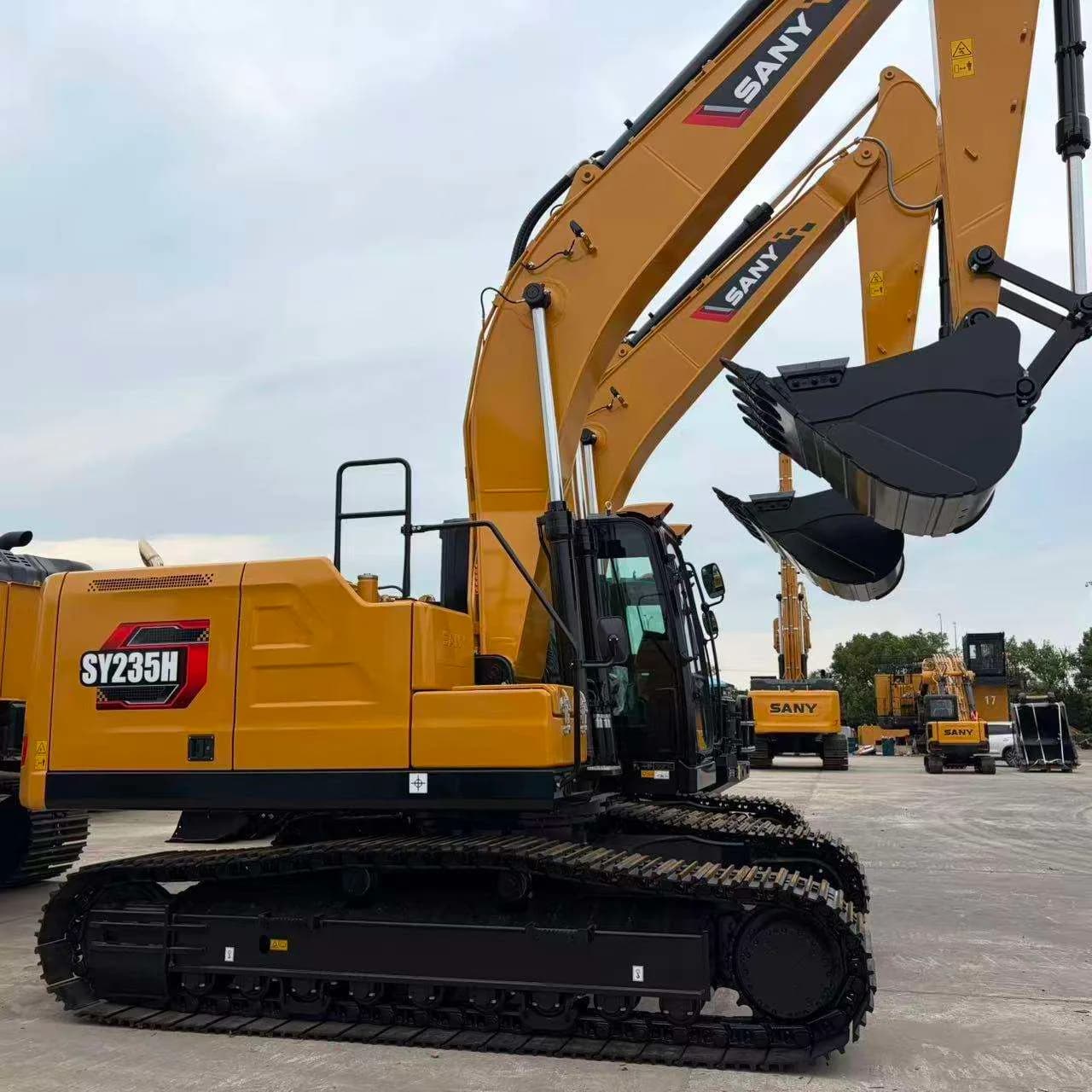
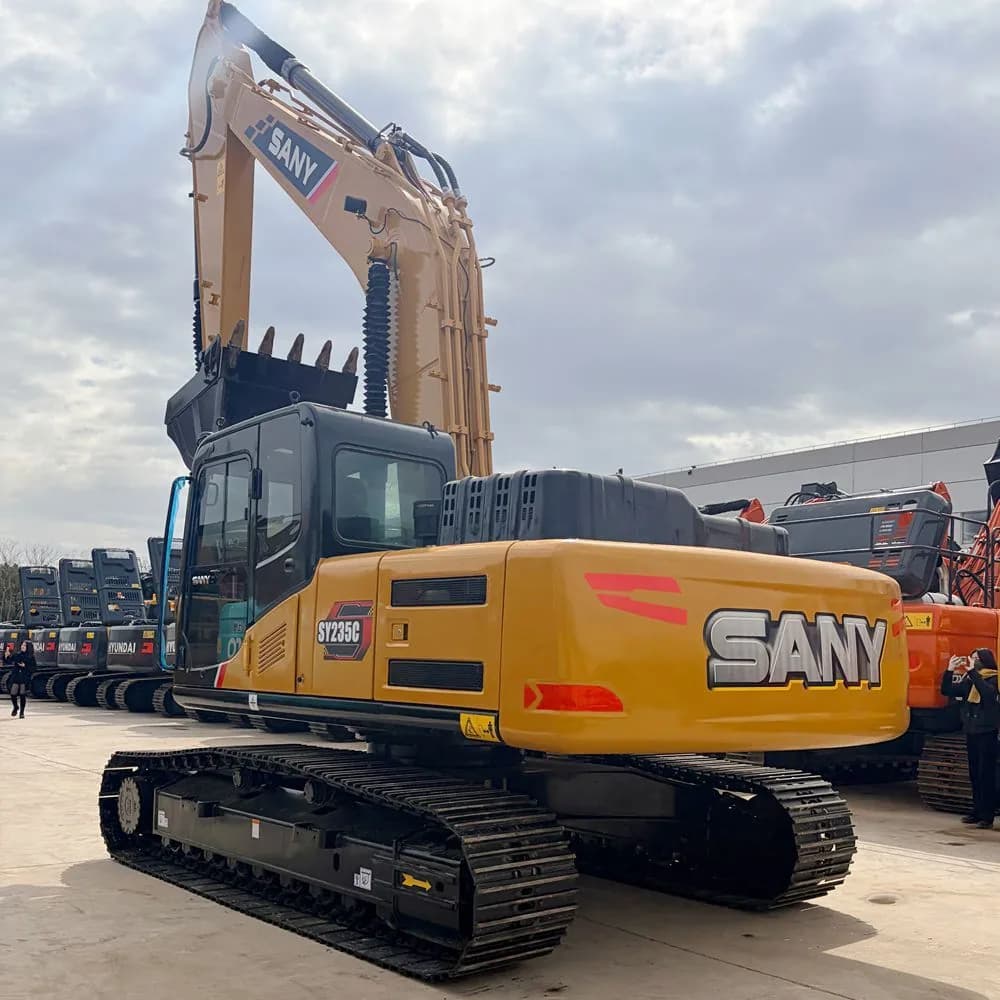
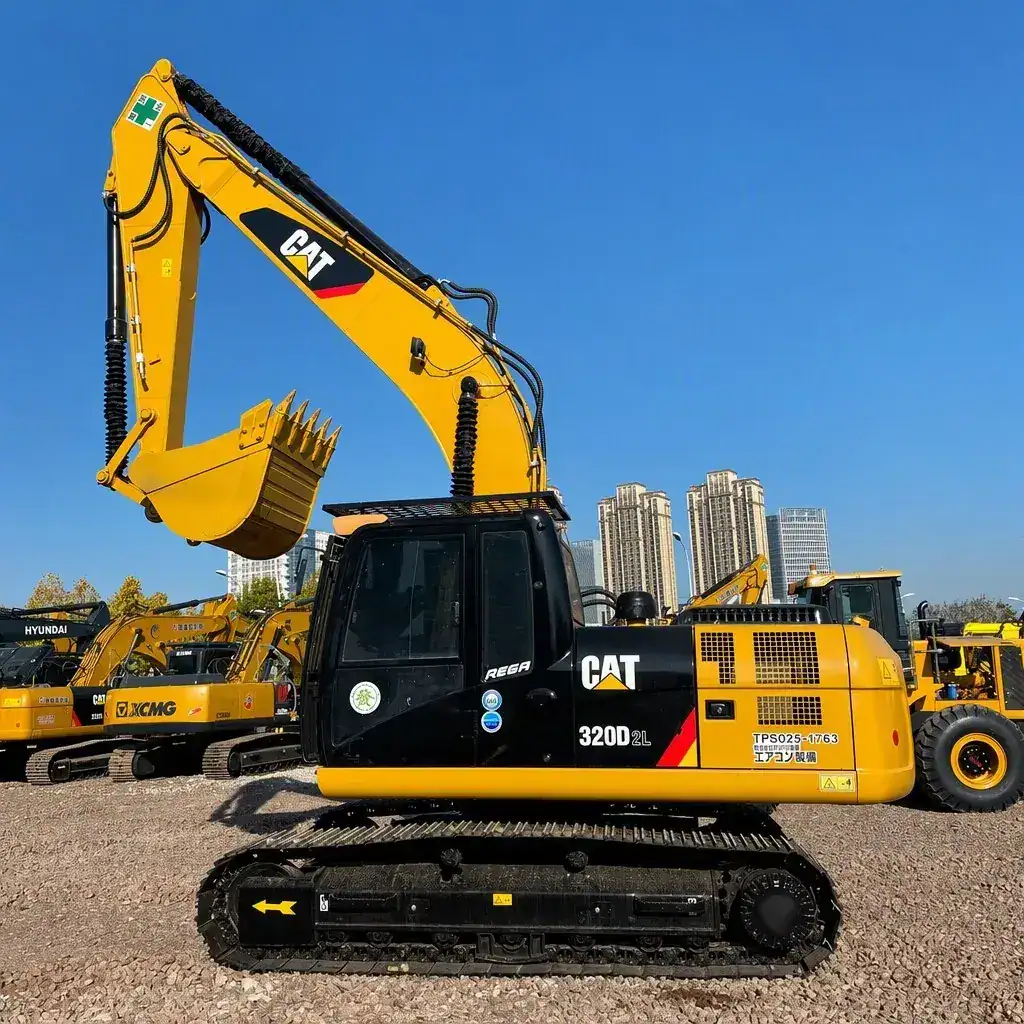
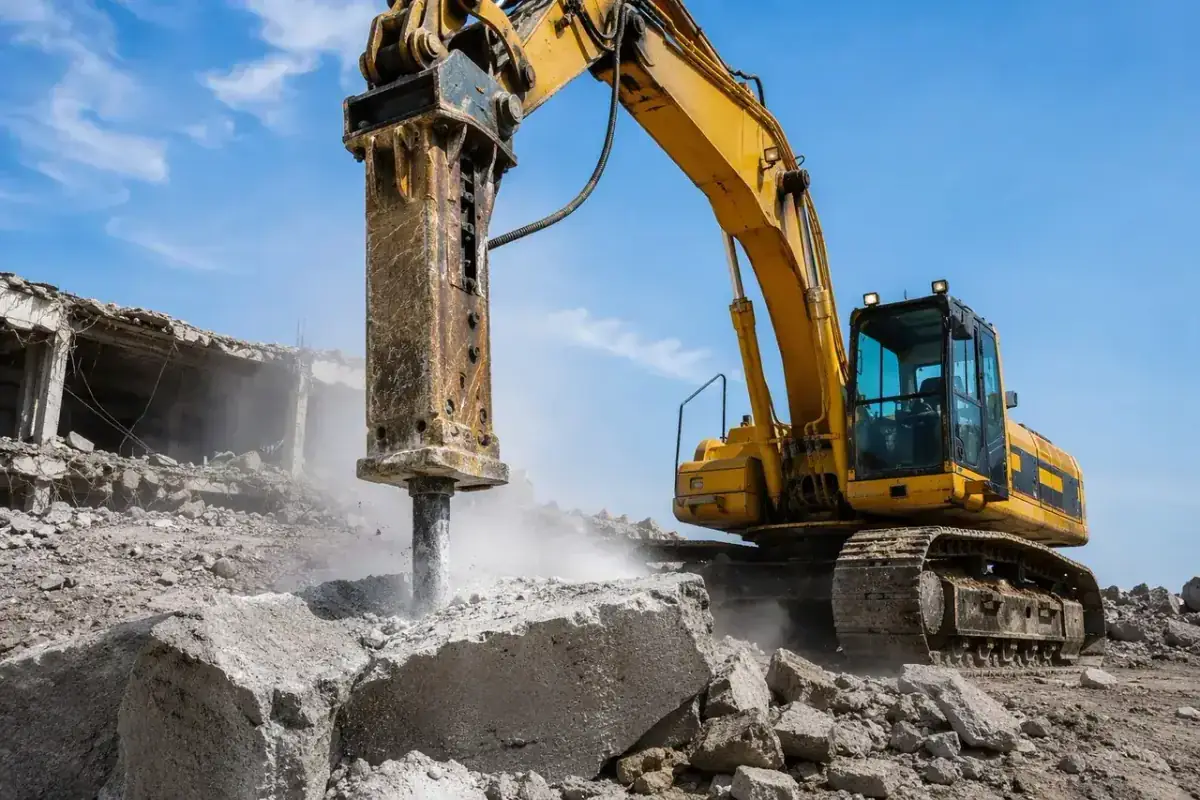
Image note: the image is an illustrative editorial image from HMP's breaker-sizing resource, not proof that a pictured or listed machine includes a breaker or is pre-plumbed for one.
Start with the attachment specification, not the excavator tonnage
Buyers searching for a used excavator with hydraulic breaker, used excavator with hammer or used excavator breaker attachment should first identify the exact breaker model and its published requirements. Verify the excavator's permissible carrier range, attachment oil-flow range, operating-pressure limits and required hydraulic circuit against the manufacturer's documentation. Caterpillar's guidance specifically stresses matching breaker size to carrier lift capability and checking hydraulic flow and pressure settings. These values are attachment- and machine-specific, so this article does not substitute generic figures for the manuals.
Verify auxiliary hydraulics and mounting on the exact unit
Request clear photos of the boom and arm piping, valve controls, couplers and any breaker-mode or attachment settings. Confirm the required one-way or two-way circuit and the return arrangement from the carrier and breaker documentation. Where the inspection scope allows, have a qualified technician measure the machine's flow and pressure and compare the readings with the intended tool requirements. A line being present is not the same as a verified circuit.
Measure the mounting interface as well: pin diameter, pin-center distance, arm width, bracket or coupler type, and retaining hardware. Check the attachment's operating weight against the excavator's stability and lifting guidance for the intended configuration. If dimensions or test results are unavailable, treat fitment as unconfirmed and resolve it before shipment or payment.
Inspect a used breaker and carrier separately
For the breaker, request current views of the body, tool, retainer, bushings, hoses, connections and bracket. Look for visible cracks, oil leakage, abnormal play, damaged guards or evidence of repairs, and ask which function tests were actually performed. For the excavator, review the boom and arm, pins and bushings, cylinder rods, auxiliary lines, couplers and controls. Ask that inspection notes identify untested components and known repairs instead of implying that a visual check proves internal condition.
Make the quotation configuration-specific
Before comparing a used excavator for sale with breaker, ask the seller to state whether the breaker, bracket, hoses and auxiliary piping are included, excluded or quoted separately. Match that configuration across the product listing, dated photos, inspection record, sales contract and pro forma invoice. For export, request the equipment dimensions and packing/loading scope for the exact configuration, then compare equipment-only, FOB, CFR or CIF terms to your named port. Freight, insurance, destination charges, duties and inland delivery depend on the route and transaction; confirm them in writing.
Buyers can start with current used excavator inventory and share the exact unit, attachment model, auxiliary circuit details and destination port so compatibility and quotation scope can be confirmed. Buyers can also review the used CAT 320D2L listing or used Komatsu PC210 listing as machine candidates—but must confirm current availability and the exact auxiliary configuration directly. Neither listing by itself confirms breaker fitment.
Buyer checklist before payment
- Record the excavator model, serial/PIN and exact configuration.
- Record the breaker make/model, serial and manufacturer requirements.
- Compare carrier weight, flow, pressure, circuit, return and mounting measurements.
- Request dated evidence and written inspection limitations for both pieces of equipment.
- Confirm exactly what is included and the export quotation scope.
- Have unresolved compatibility questions checked by the relevant manufacturer or a qualified technician.
Conclusion
The best way to buy a used excavator with a breaker is to verify the pairing as a system: carrier capability, hydraulic circuit, mounting interface, attachment condition and commercial configuration. If any of these details are unknown, keep fitment unconfirmed until the exact machine and tool are checked. For a machine-specific review, send the excavator model, breaker model, intended application and destination port with your enquiry.