Short answer: before sending money for a used excavator for sale, verify three things independently: the supplier’s business identity, the physical machine being offered, and the written payment and delivery terms. A low price or polished catalogue page is not enough. Ask for a live view of the exact unit, match its serial/PIN and engine plate to the contract, and make sure payment instructions name the same business you have verified.
Recent buyer discussions show a recurring concern: an offer can look attractive while the seller’s location, machine ownership, photos, warranty language or deposit request remains unclear. This buyer alert turns that concern into a practical pre-payment routine for anyone comparing a used excavator supplier, dealer or exporter. It is a screening guide, not a claim that any particular seller or listing is fraudulent.
Pre-deposit checks
- Verify the company name, registration details, address and reachable business contacts.
- See the exact excavator live and match the stock ID, serial/PIN, engine plate and hour meter.
- Get a dated evidence set and a written list of what was inspected, tested or not tested.
- Compare a like-for-like machine price and export quote; record every inclusion and exclusion.
- Check the contract, beneficiary name, payment milestones and changed bank instructions before transferring funds.
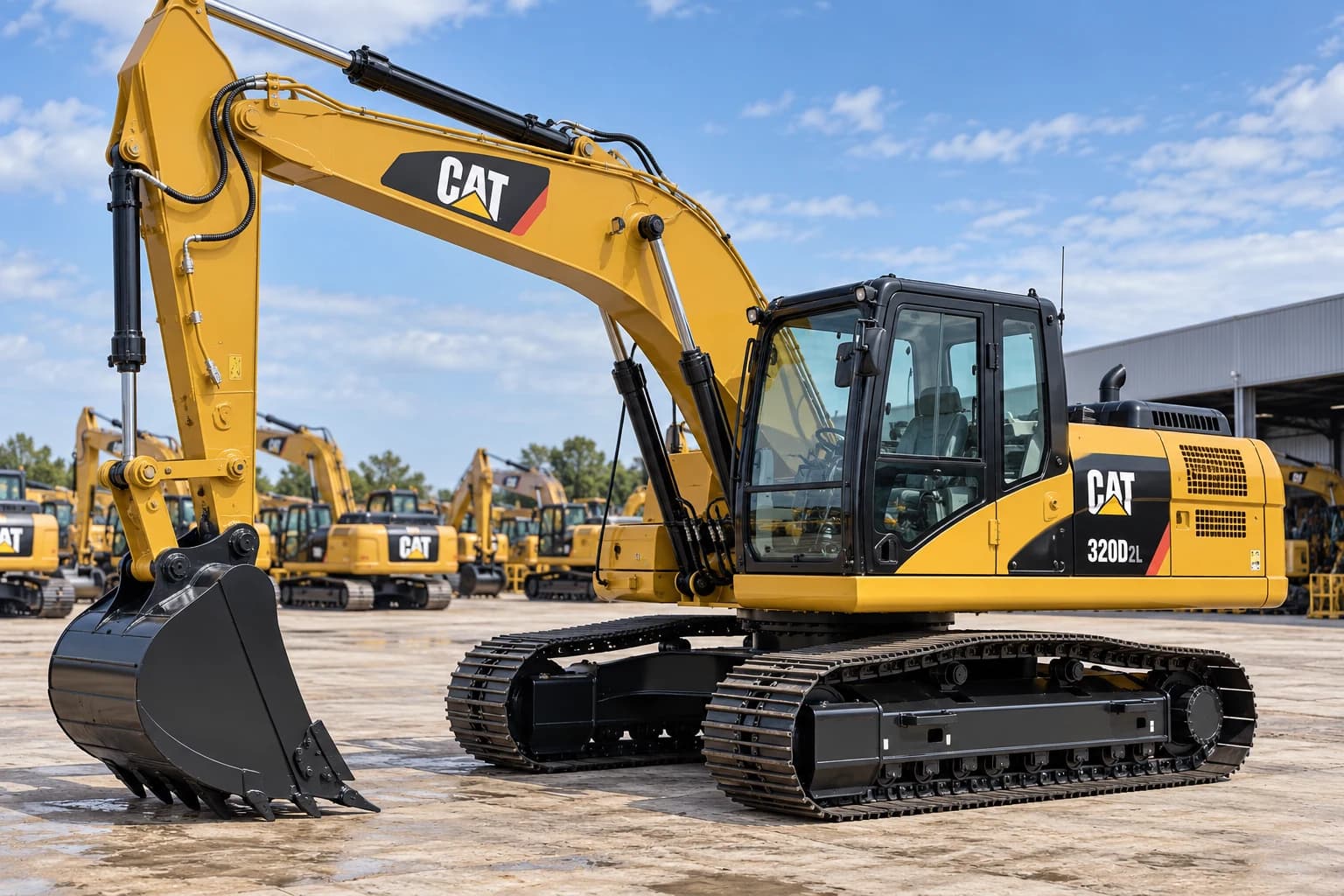
Image note: the CAT 320D2L cover is a generated editorial illustration. It is not a photograph of the machine in the linked catalogue record and does not verify its condition, hours or availability.
1. Verify the supplier as a business
Ask for the supplier’s legal business name, registration details, office or yard address, invoice information and a business phone number. Check that those details agree across the quotation, contract, invoice and payment beneficiary. If a broker or export agent is involved, ask which company owns the machine, which company is selling it, and which company will receive payment.
Search independently for the business rather than relying only on links supplied in a sales message. Contact the company through a number or address found through a separate channel. Ask for a live video call from the yard and confirm that the person on the call can answer specific questions about the machine. A website, social profile, map pin or customer testimonial may be useful context, but none of them alone proves ownership or stock.
2. Confirm that the machine is real, current and identified
Request a live walk-around of the exact used excavator. Before the call, choose a simple current detail for the seller to show, such as a view of the cab interior followed by the boom and track frame. Ask the camera to show the whole machine, the machine identification plate, engine plate and hour meter in the same session. Record the date and the stock ID in your notes.
Match the serial/PIN and engine details to the quotation, inspection notes and contract. Check that the model badge and configuration agree with the offered description. Reconfirm identity if the seller substitutes a different unit or sends updated photos. Images of a similar CAT, Komatsu, SANY or other branded excavator do not establish that the photographed machine is the machine you will buy.
3. Ask for evidence that answers the questions you actually have
For a remote purchase, request current photos and a continuous video of the exact unit. A useful sequence can show the serial/PIN, engine plate, meter, cold start, dashboard warnings, engine response, hydraulic functions, swing, travel and the undercarriage. Ask for close views of the boom, arm, bucket linkage, cylinder rods, hoses, final drives and track components. If the machine cannot be demonstrated cold or a component cannot be tested, have that limitation recorded rather than assuming the result.
Ask what the written inspection covers and who performed it. A report should identify the machine, date, scope, observations and untested items. Manufacturer model specifications help explain a product family; they do not confirm the identity or mechanical state of an individual used machine. If the purchase value or operating risk warrants it, arrange an independent inspection before final payment.
4. Treat “too cheap” as a prompt to compare, not a verdict
There are legitimate reasons for a lower price: a different year or regional configuration, high hours, repair needs, worn undercarriage, missing attachments, an equipment-only price, urgent sale or a different delivery basis. Ask the supplier to explain the price in writing. Compare the same model variant, configuration, condition, included equipment, inspection scope and trade term across multiple offers.
Be cautious when a seller avoids a live inspection, refuses to identify the physical machine, pressures you to pay immediately, changes the beneficiary at the last minute, or promises broad warranties and free delivery without putting the scope and exclusions in a contract. Any one detail can have an explanation; several unresolved inconsistencies are a reason to pause and verify before paying.
5. Make the payment trail match the contract
Use a written contract that names the buyer and seller, exact machine and serial/PIN where available, price basis, attachments, inspection conditions, delivery responsibilities, payment schedule and remedies for a material mismatch. Confirm the receiving account belongs to the contracting business. If bank details change, verify the change with a known company contact using a separate, previously confirmed channel. Do not rely on an email reply to new payment instructions.
Avoid sending a deposit to a personal account or paying through a method that cannot be reconciled with the contract unless your legal and financial advisers have reviewed the arrangement. Define what the deposit secures, whether it is refundable, the deadline, and what happens if the unit fails the agreed inspection or cannot be shipped. For a cross-border transaction, have your bank, trade adviser or lawyer review unfamiliar payment structures.
6. Compare the complete export quotation
Machine-only price, FOB, CFR and CIF are different commercial bases. Ask the supplier to name the destination port and state what the quote includes: inspection, export preparation, loading, ocean freight and insurance where applicable. Ask for exclusions such as destination port charges, duties, taxes, customs clearance and inland transport. Confirm current import requirements with the destination customs authority or a licensed broker; requirements vary by country and machine.
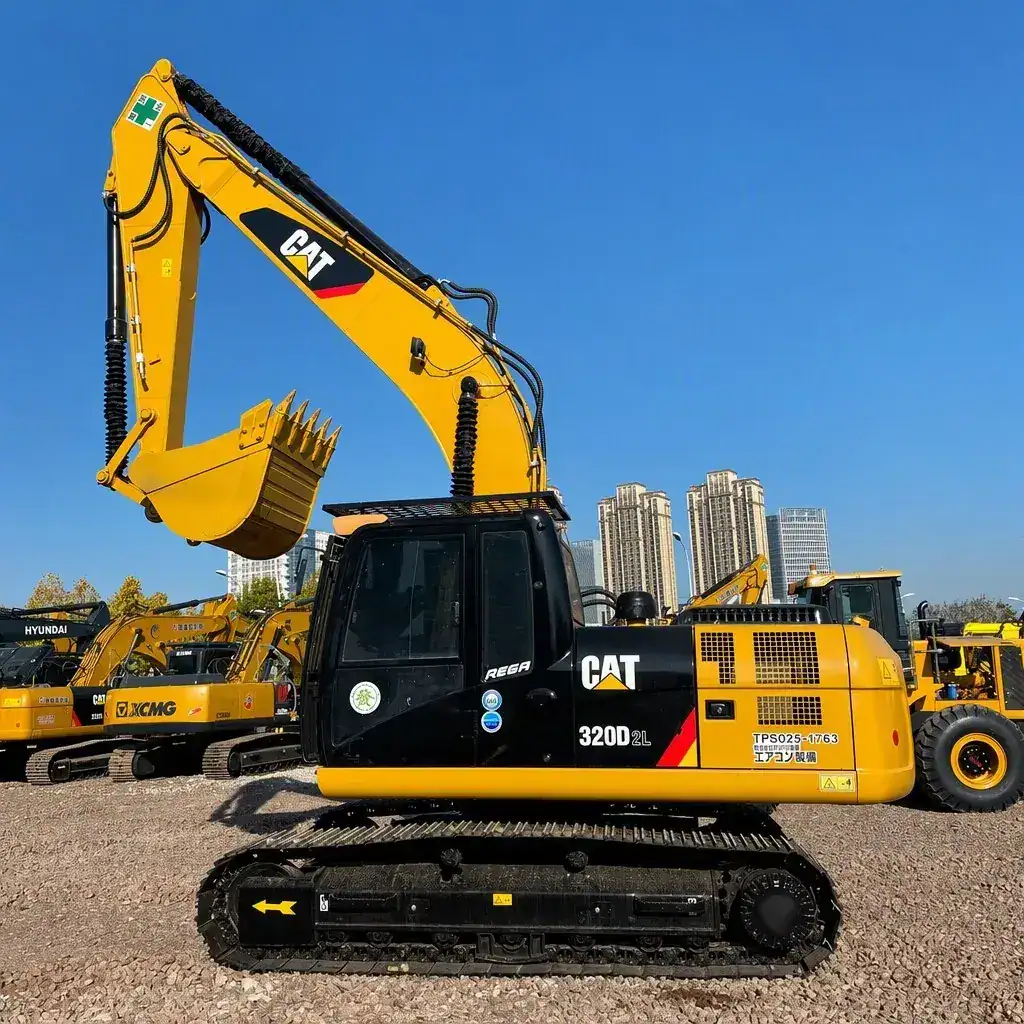
For an example of how a single-machine record should be evaluated, review the Caterpillar 320D2L product page. It is a catalogue reference, not independent proof of stock or condition. Ask for fresh unit-specific evidence and reconfirm availability before relying on any listing. Buyers looking for a used excavator supplier in China can also review HMP’s supplier and export information, then request a written quote for their own destination.
Questions to send before paying
- What is the legal name of the seller and the registered company receiving payment?
- Can you show this exact machine live, including its serial/PIN, engine plate and hour meter?
- What current photos, cold-start or operating video, service records and inspection findings can you provide for this stock ID?
- Which systems were tested, which were not tested, and who completed the inspection?
- What does the price include, what is excluded, and which destination port and trade term does the quote use?
- What are the deposit conditions, payment milestones, cancellation terms and process if the machine differs from the contract?
Bottom line: verify the supplier and the unit before the deposit
A safe used excavator purchase depends on a consistent chain from company identity to machine identity, evidence, contract, payment and shipping documents. Pause if the seller will not resolve a mismatch or gives you no reasonable way to check the exact machine. Compare evidence and written terms before comparing headline prices, and have an independent professional review the transaction when appropriate.
To request a specific machine or a destination quote from HMP, include the product URL or stock ID, destination country and port, desired attachment and preferred FOB, CFR or CIF basis. Ask us to reconfirm current availability, unit-specific evidence, quote inclusions and payment milestones in writing before proceeding.