What should you check before buying a used excavator? Match the machine and engine identification plates to the quotation, then verify the hour-meter evidence, cold start, hydraulic functions, undercarriage, structure and service history. A polished machine or “95% new” description is not a substitute for evidence tied to the exact unit.
Used-equipment buyers commonly need clear answers about believable hours, wear, practical test procedures and whether the seller can show the actual machine. This checklist turns those purchasing concerns into a repeatable process.
1. Confirm the exact machine
Request current photographs of the machine data plate, engine plate and hour meter. Match the serial/PIN and engine details to the quotation, inspection notes and stock number. Record the model suffix, configuration and attachments. Similar model names can cover different generations or regional specifications, so do not rely on a badge or generic brochure alone.
Keep every photo, video and document associated with one stock ID. If the seller substitutes another machine, repeat the identity check; evidence for a similar model does not verify the offered unit.
2. Treat displayed hours as a claim to verify
A meter photo records what the display shows at that time, not lifetime operating hours. Request dated service records, diagnostic information when available, and video connecting the displayed meter to the identified machine. Compare the reading with pedal, seat, control, pin, bucket and track wear. Gaps or inconsistencies deserve questions, but do not by themselves prove tampering.
3. Test major systems under operating conditions
Cold start and engine
Ask whether the engine is cold before start. Observe cranking, exhaust, warning lights, idle and unusual noise, then request a warm operating sequence. Video can reveal visible symptoms, but cannot replace an in-person inspection or tests by a qualified technician.
Hydraulics and controls
Cycle boom, arm, bucket, swing and both travel functions. Check response, drift, leaks and abnormal noise, including after warm-up. Test auxiliary circuits and the required attachment if they matter to the job. State what was not tested rather than assuming it works.
Undercarriage and structure
Request clear images or measurements for shoes, links, rollers, idlers and sprockets. Inspect boom, arm, bucket, welds and frame for cracks, repairs or deformation. Replace broad labels such as “good condition” with recorded observations and limitations.
Cab and attachments
Check controls, display, glass, lights, alarms and safety features. List each included bucket or tool in the written offer. A pictured attachment is not automatically included in the sale.
4. Ask for unit-specific evidence
- Machine and engine plate photos matched to stock ID.
- Dated hour-meter image plus records actually available.
- Cold-start and operating video showing named functions.
- Written inspection scope, findings and items not tested.
- Undercarriage evidence and confirmed attachment list.
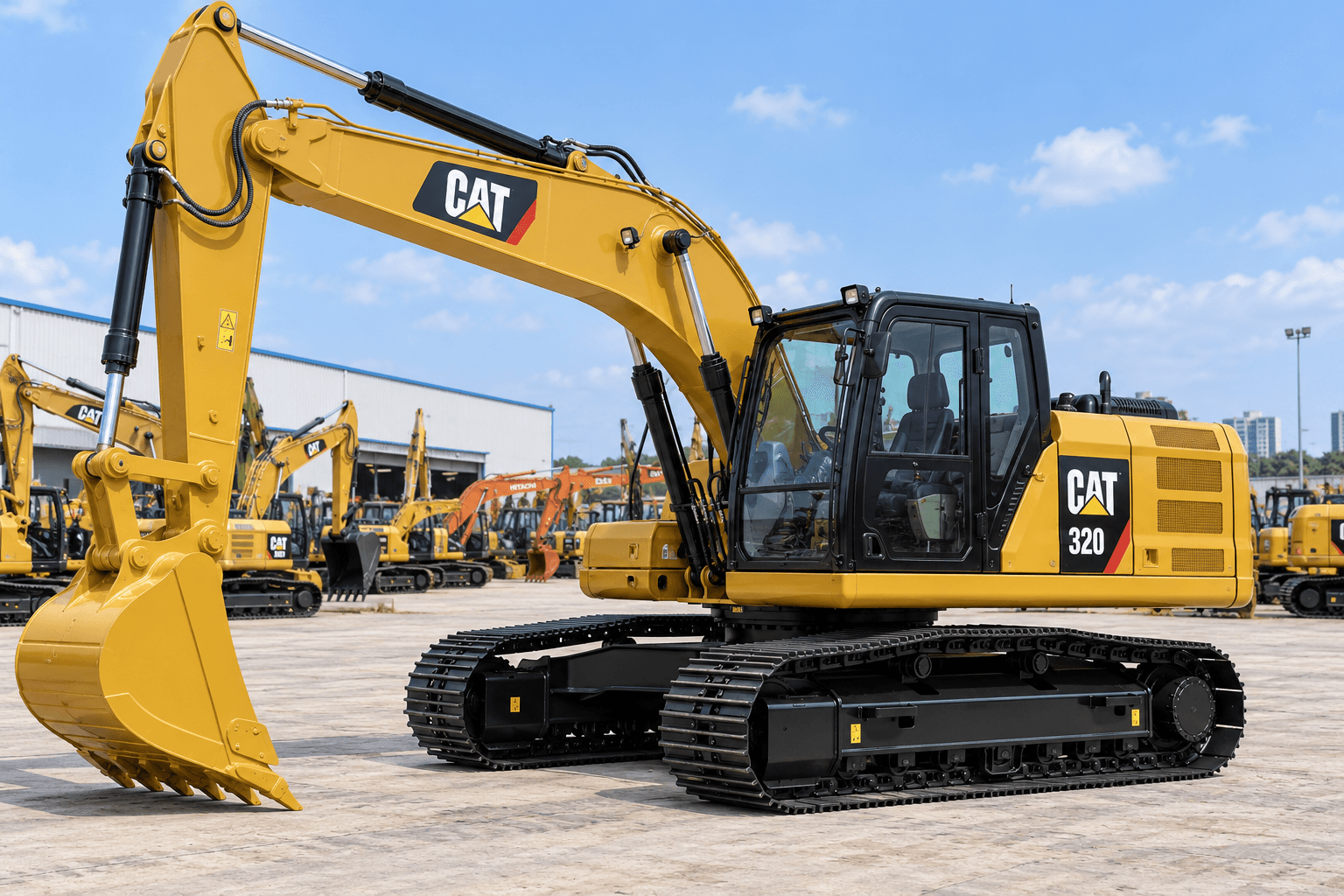
Ask who created each record and when. Manufacturer specifications describe a model family; they do not prove an individual used machine’s identity or condition. A generated cover image is illustrative only.
5. Compare the full export quote
Separate machine price, attachments, inspection, preparation, origin handling, loading, freight, insurance and destination charges. Ask for a written quote naming the destination port, trade term, inclusions, exclusions, validity and payment milestones. Confirm import requirements with a destination broker.
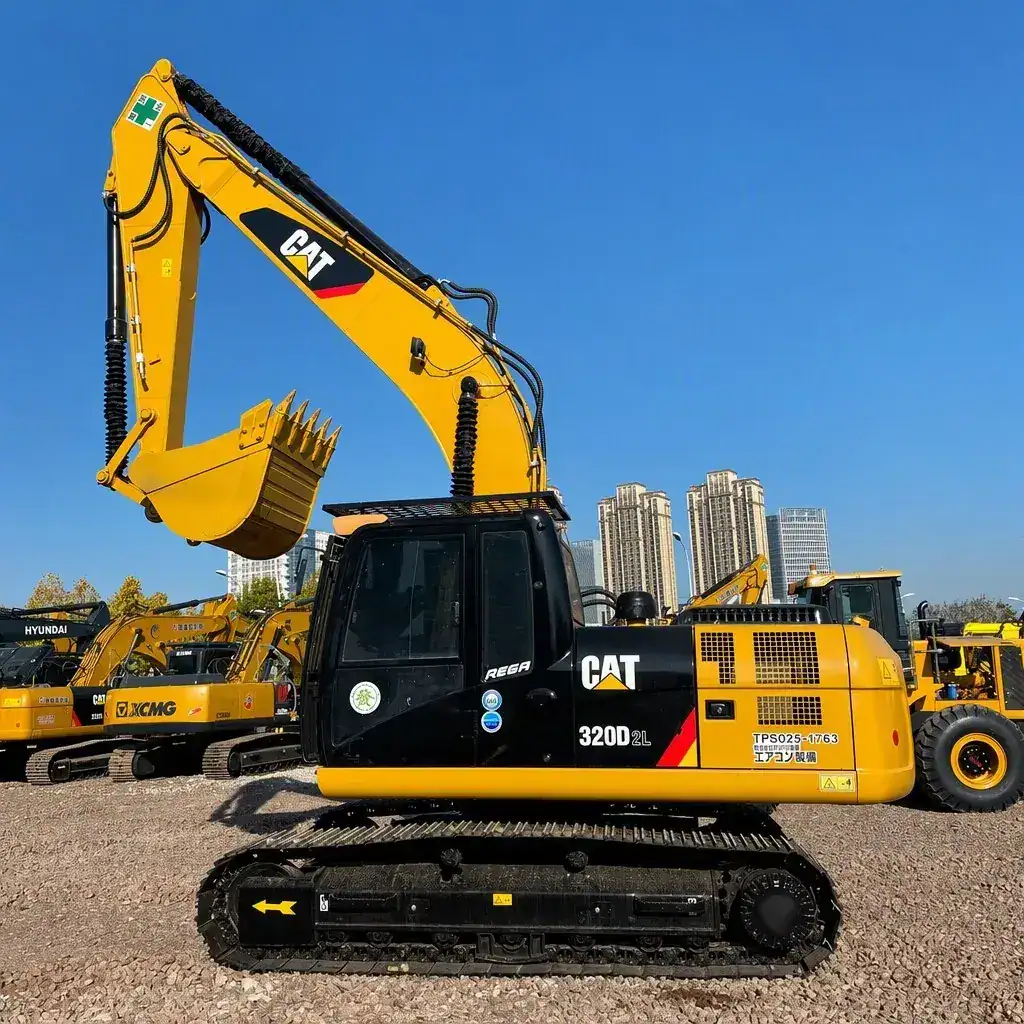
For a catalogue example, review the Caterpillar 320D2 L product record. Reconfirm current availability, hours, unit evidence, included equipment and terms directly; published model details do not replace a current inspection.
Include the exact product URL or stock ID, destination country and port, attachments and preferred FOB/CFR/CIF basis in your enquiry. This lets the supplier answer about a particular machine and route.
Buy evidence, not a “95% new” phrase
Appearance can help shortlist a machine, but identity, operating evidence, inspection scope and written delivery costs should support the decision. Use a consistent checklist to identify unanswered questions, then verify the answers against records for the exact unit. Request a unit-specific availability check and quote before payment.