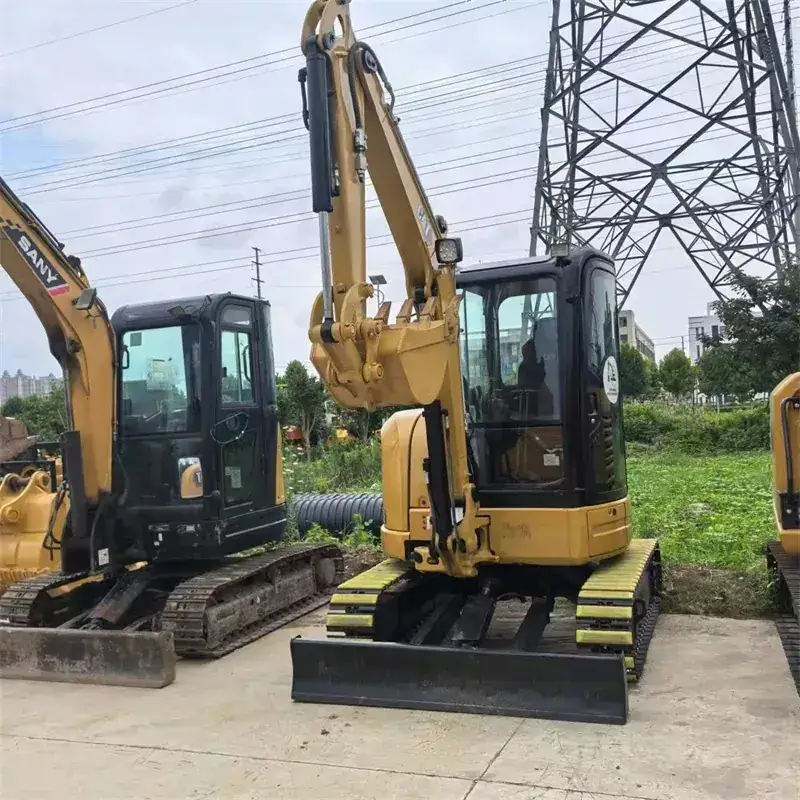
When inspecting a used CAT 303E excavator, test both travel functions at the operating conditions specified for the machine and compare left and right response. Jerky travel can have several possible causes, including operating technique, track tension, control or hydraulic issues; a short observation alone cannot identify the fault. Record what happens and have a qualified technician diagnose abnormal behavior before purchase.
Small excavator buyers often ask why boom and bucket functions feel smooth while travel feels abrupt. This guide turns that concern into a careful pre-purchase process for a used CAT 303E: verify the exact model, establish a repeatable test, inspect the track system and travel motors, and request evidence tied to the offered unit.
First confirm the exact CAT model
“303E” is not enough to identify every configuration. Read the machine data plate and match its serial/PIN and full model designation to the quotation and inspection notes. Check the engine plate, market specification, cab or canopy, track option and attachments. Do not transfer a specification from a 303.5E or another nearby model without confirming the serial-number-specific manufacturer documentation.
HMP’s current catalogue example is specifically listed as a Caterpillar 303.5E used mini excavator. That is a distinct model designation from 303E. Reconfirm current availability, machine identity, hours, configuration and price with HMP before relying on the product record.
How to test jerky travel before buying
- Start with a safe, level area. Keep people clear of the machine and follow the operator manual and site safety rules.
- Record the baseline. Note whether the engine and hydraulic oil are cold or warm, the selected engine speed and the surface. Use the manufacturer’s operating guidance.
- Test one track at a time. Move forward and reverse at low speed, then compare left and right response. Observe hesitation, surging, unusual noise, leakage or pulling.
- Test straight travel and turns. Check whether the machine tracks consistently on level ground and whether either side behaves differently.
- Repeat after warm-up. A difference between cold and warm behavior is useful diagnostic information, but does not identify a cause by itself.
- Stop if behavior is unsafe. Do not continue a test that causes uncontrolled movement, severe noise, overheating or visible fluid loss.
Do not assume that operating at full throttle is a universal repair. Engine speed and control behavior depend on machine design and the operator’s manual. If travel improves only at a different setting, document the observation and ask a qualified Cat technician to evaluate it rather than treating an online explanation as a diagnosis.
Inspect the undercarriage and travel system
Check track shoes, links, rollers, idlers and sprockets for uneven wear, damage, packed debris and signs of recent adjustment. Verify track tension using the correct procedure for the exact model; over-tightening can increase wear, while excessive slack can create tracking or safety problems. Compare both sides and record measurements where a technician can provide them.
Look for leaks around travel motors, hoses and final-drive areas. Ask for the inspection scope and any service records for the travel system. Some hydraulic motor ports have specific functions and should not be mistaken for grease fittings. Do not remove plugs or add grease unless the manufacturer’s service information for that exact component calls for it.
What evidence should a buyer request?
- Current data-plate and engine-plate photos matched to the stock reference.
- Dated hour-meter evidence and available service or repair documents.
- A continuous video showing the machine identification, start-up, straight travel, turns and both track directions.
- Written notes stating engine speed, warm-up state, test surface, inspection scope and limitations.
- Undercarriage photos or measurements for both sides.
- Any travel-motor, final-drive or hydraulic repairs documented against the same unit.
A video can show symptoms but cannot measure hydraulic pressure or confirm internal component condition. If travel is abnormal, make an independent inspection and a written repair estimate part of the purchase decision.
Used CAT 303E price and purchase checks
Compare the machine-only asking price with the exact condition, attachments, inspection findings, preparation, loading and delivery terms. Ask whether buckets and couplers are included and confirm their dimensions and compatibility. For an export purchase, provide the destination country and port and ask for a written quote with the Incoterm, validity, inclusions and exclusions. Customs, duties, taxes, freight and inland transport may require separate quotes.
Use the linked CAT 303.5E catalogue record as a starting point only; it is not a 303E listing. If you need a 303E, state the precise plate model and required configuration in your enquiry so the seller can confirm whether a matching unit is available.
Checklist before you commit
- Full model and serial/PIN agree across machine, quote and evidence.
- Travel tested both directions, on both sides, cold and warm where practical.
- Any jerk, delay, pull, noise, leak or warning is written down.
- Track tension and wear assessed to the correct model procedure.
- Travel motor ports are identified from component documentation, not guesswork.
- Repair scope, included equipment and destination costs are clear in writing.
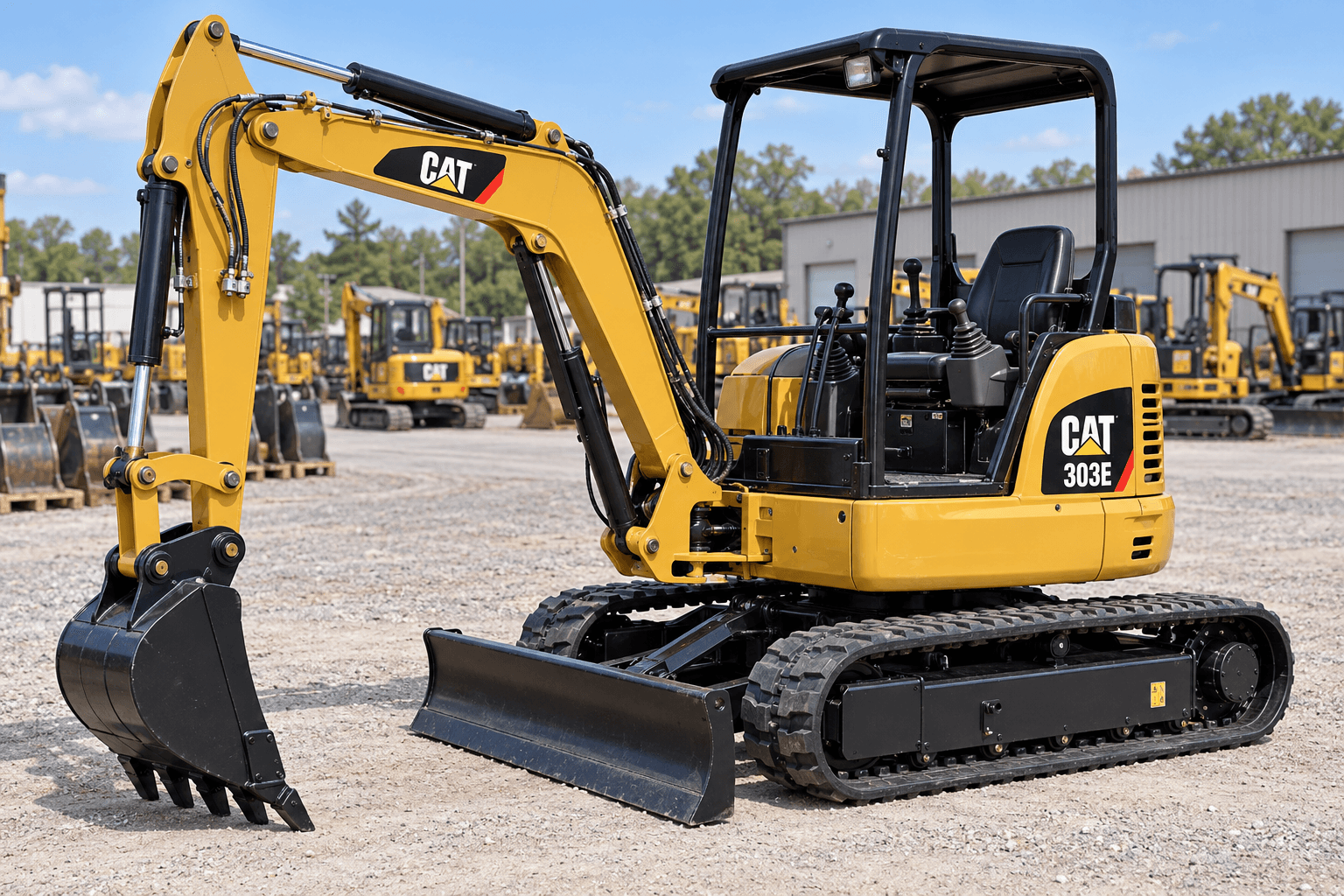
The cover photo is a generated editorial illustration of a clean CAT 303E with near-new cosmetic appearance. It does not depict HMP stock or establish actual machine age, hours, mechanical condition or availability. For a real unit, request current, unit-specific evidence through the HMP contact page.
Summary
A used CAT 303E excavator should be judged by its verified identity and repeatable operating evidence—not by a single jerky movement or a clean appearance. Compare both travel sides under consistent conditions, inspect the undercarriage and request a technician’s assessment whenever behavior is abnormal.