For most farm jobs, a backhoe loader is the more versatile choice when you need both digging and loader work; a tracked excavator is usually the better fit for repeated excavation, trenching or pond work where reach and digging control matter most. The right machine depends on the tasks, ground conditions, access, transport and service support—not on a single specification.
Farm-equipment buyers often compare these machines for drainage, fence lines, water lines, manure handling, road repair and general cleanup. This guide explains the trade-offs and gives a practical checklist for choosing a used backhoe loader or excavator.
Backhoe loader vs excavator: quick comparison
| Farm requirement | Backhoe loader | Tracked excavator |
|---|---|---|
| Digging and loading in one machine | Strong fit: front loader plus rear digging arm | Usually needs a separate loader for material handling |
| Frequent trenching or pond excavation | Capable, but repositioning may take longer | Strong fit for repeated digging and controlled bucket work |
| Moving between fields on firm routes | Wheeled travel can be convenient; check road rules | May require a trailer; tracks suit many soft-ground tasks |
| Soft or uneven ground | Tyre traction and ground pressure matter | Track condition, width and ground pressure matter |
| One-machine farm utility | Often more flexible across mixed tasks | Best when excavation is the primary workload |
When a backhoe loader makes more sense
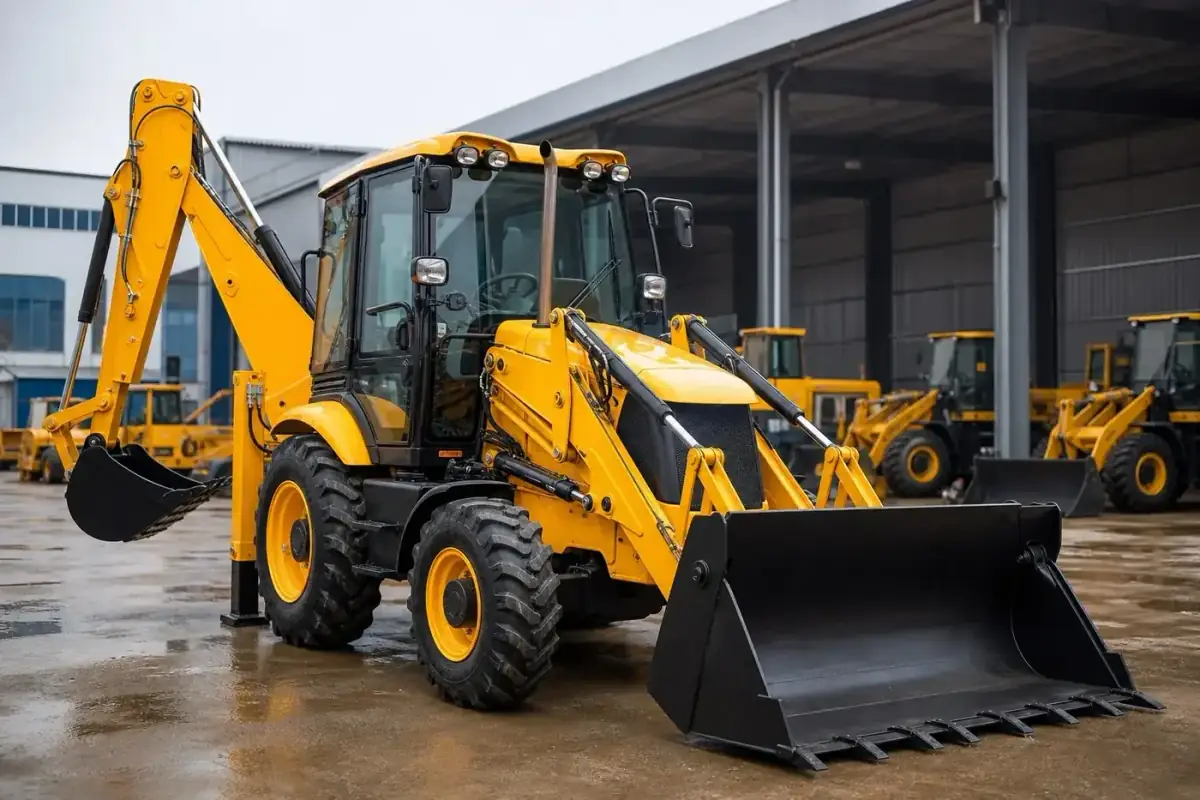
A backhoe loader combines a front bucket with a rear excavating arm. That combination can reduce equipment changes when a job involves digging a ditch, moving spoil, carrying gravel and tidying a work area. It can also be easier to reposition around a farm with firm access roads. Before buying, check loader lift requirements, digging reach, stabilizers, tyre condition and whether the machine can safely travel on the routes you use.
Choose based on the actual work cycle. If the machine will spend most of its time lifting and carrying, loader capacity and visibility deserve attention. If it will dig for long periods, assess the rear arm geometry, bucket options and hydraulic performance. One versatile machine may still be slower than dedicated equipment on a large, repetitive project.
When a tracked excavator is the better tool
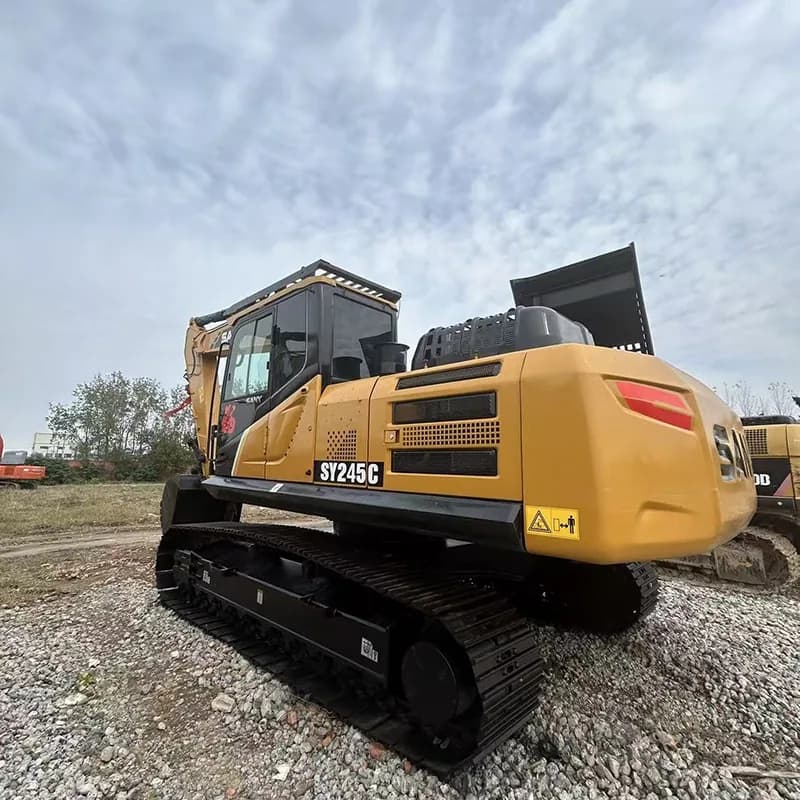
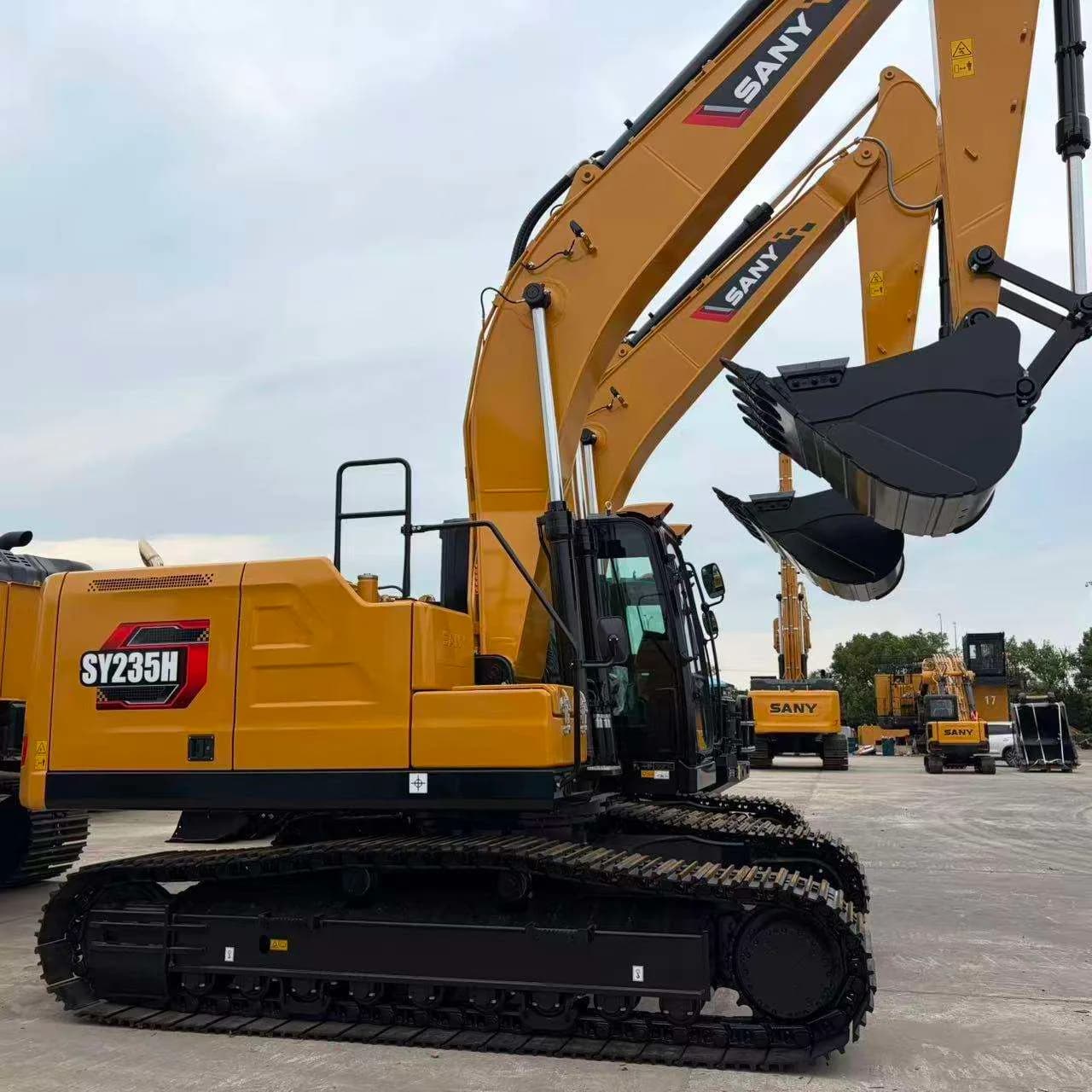
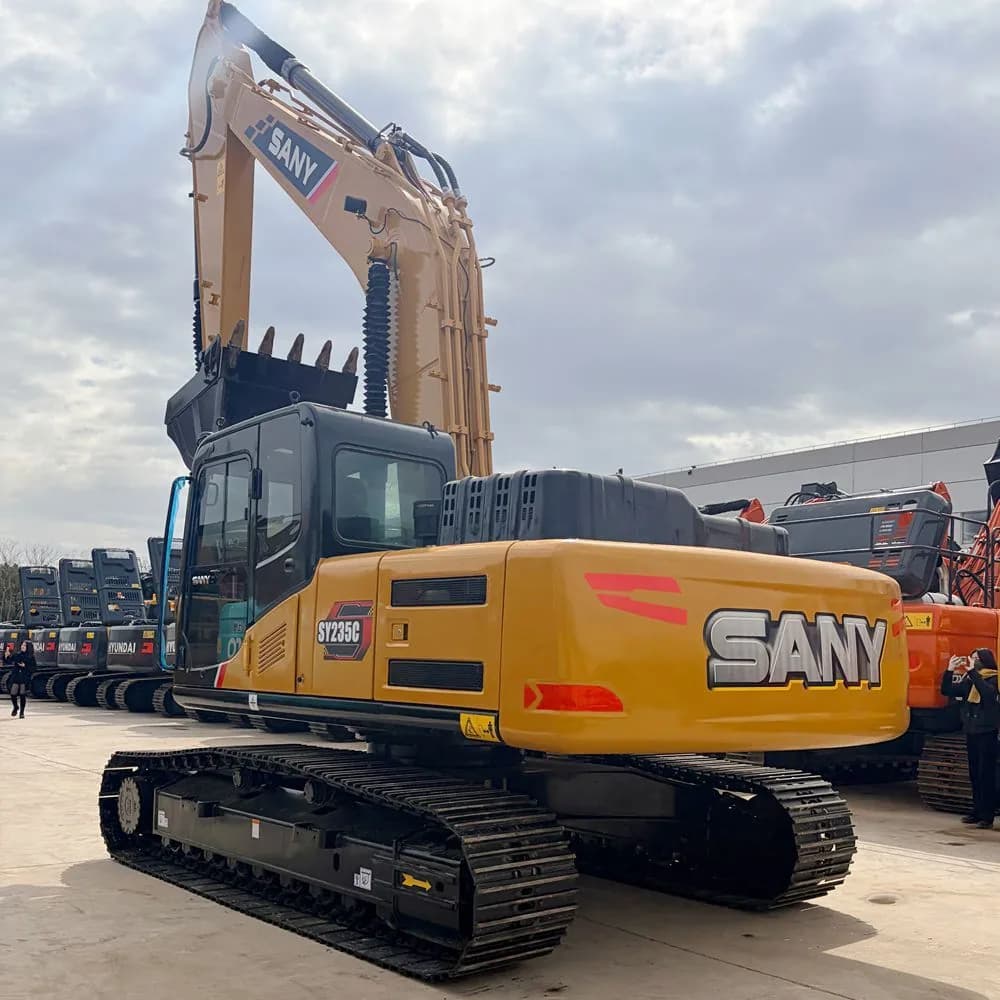
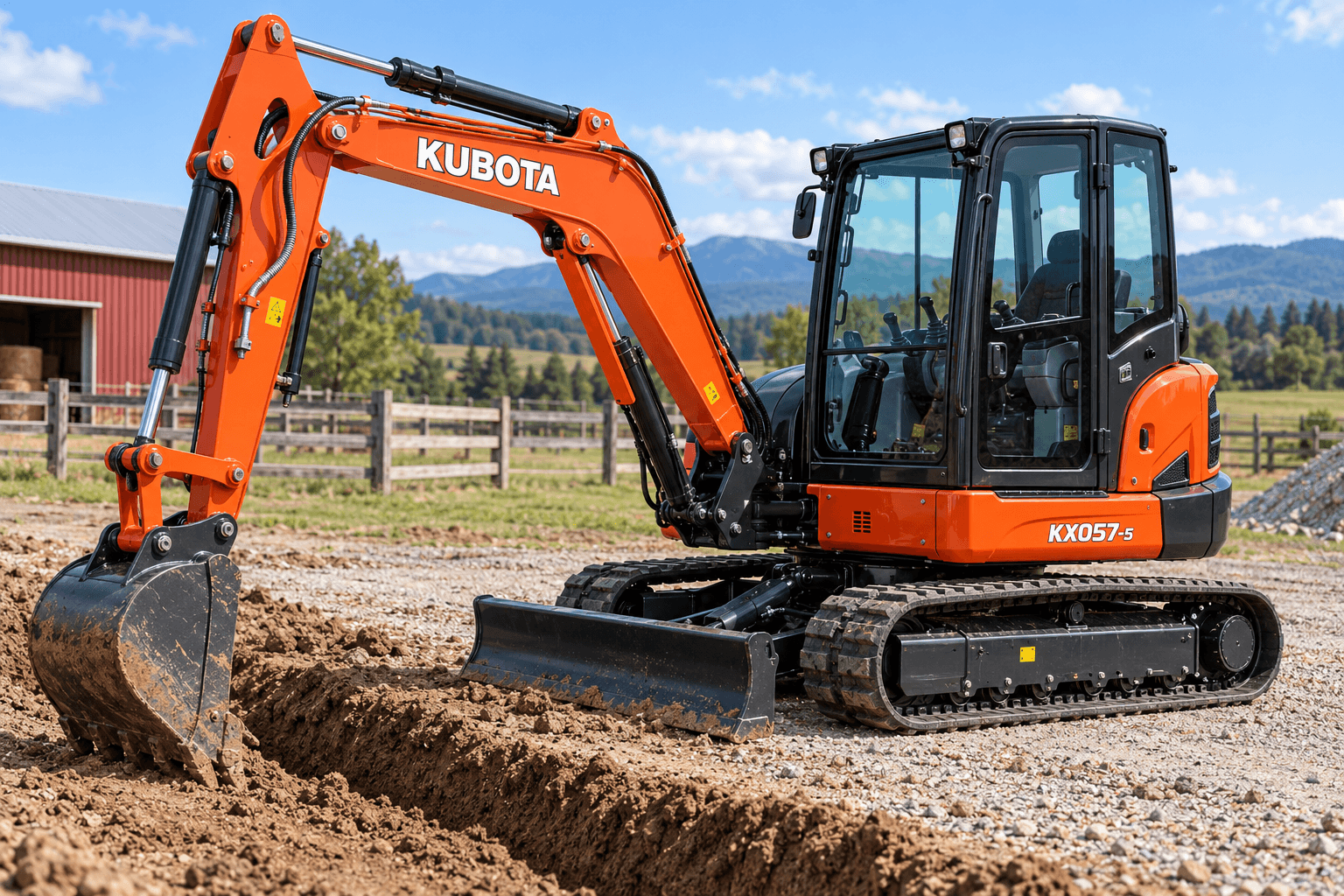
A crawler excavator is purpose-built for digging. It can be a better fit for long drainage runs, pond shaping, foundation work, stump removal and projects where reach, bucket control and working around a fixed position are important. Tracks can help distribute weight on some soft surfaces, but the result depends on machine weight, track width, soil and weather. Tracks do not guarantee access without ground damage.
Excavators are less convenient for carrying loose material over long distances. Consider whether you also need a tractor, loader or dump trailer, and include the cost of moving the excavator between sites. Verify transport dimensions, loading weight and trailer requirements for the exact configuration.
Questions to answer before choosing
- What are the three most frequent jobs? Estimate hours per task over a season rather than choosing for an occasional project.
- How far must the machine travel? Separate on-farm movement from public-road travel and transport by trailer.
- What are the ground conditions? Record slopes, wet areas, soil type, access width and turning space.
- Which attachments are essential? Confirm bucket widths, coupler compatibility and hydraulic circuits.
- Who can service it locally? Check parts availability, technician coverage and expected maintenance intervals.
Used machine inspection checklist
For either machine type, match the serial/PIN and engine plate to the quote. Request a current hour-meter image, service history where available, a cold-start video and a written list of functions tested. Inspect the engine, hydraulics, cylinders, pins, structure and visible repairs. On a backhoe loader, check front-loader pivots, tyres, stabilizers and both working ends. On an excavator, inspect track links, rollers, idlers, sprockets, swing function and boom/arm wear.
Ask what could not be tested and what evidence belongs to this exact stock ID. A clean, near-new appearance is not proof of mechanical condition. The generated image for this article is only an illustration and does not depict an offered machine.
Budget beyond the asking price
Compare equipment price, attachments, inspection, repairs, loading, transport, insurance and destination costs on the same basis. If importing, provide the seller with the destination country and port and request written inclusions, exclusions, quote validity and trade term. Verify local import and registration requirements with the relevant authorities or a qualified broker.
Browse current used backhoe loaders and used excavators to compare available categories. Listings describe catalogue records; reconfirm availability, unit condition and included equipment before making a decision. For a specific machine, include its product link, stock ID and destination port in your quote request.
Bottom line
Choose a backhoe loader for mixed digging and loader duties where mobility and one-machine flexibility matter. Choose a tracked excavator when excavation is the main job and you can plan for material handling and transport separately. Shortlist the machine type, then compare evidence, maintenance needs and total operating cost for the actual unit.