The Heavyweight Confrontation: Used CAT 320 vs Komatsu PC200
When selecting a core asset for a 20-ton construction fleet, the decision almost always narrows down to two legendary platforms: the Caterpillar 320 and the Komatsu PC200. Both machines define the medium-tonnage class, yet they offer fundamentally different engineering philosophies. For global contractors in 2026, understanding these nuances is the difference between a high-margin project and a logistical headache. This professional comparison analyzes why one might be 'better' for your specific operational profile.
1. Power Delivery and Engine Philosophy
The Used CAT 320 Excavator utilizes the Cat ACERT™ technology, designed for massive breakout force and high-torque recovery. In our Shanghai yard, we've observed that CAT units excel in 'hard-dig' environments—quarries and compacted soils—where raw power is mandatory. Conversely, the Komatsu PC200 utilizes its proprietary SAA6D107E-1 engine, which focuses on harmonic efficiency. The Komatsu engine is designed to sip fuel while maintaining a constant power curve, making it the supreme choice for long-duration infrastructure projects where precision leveling is the primary task.
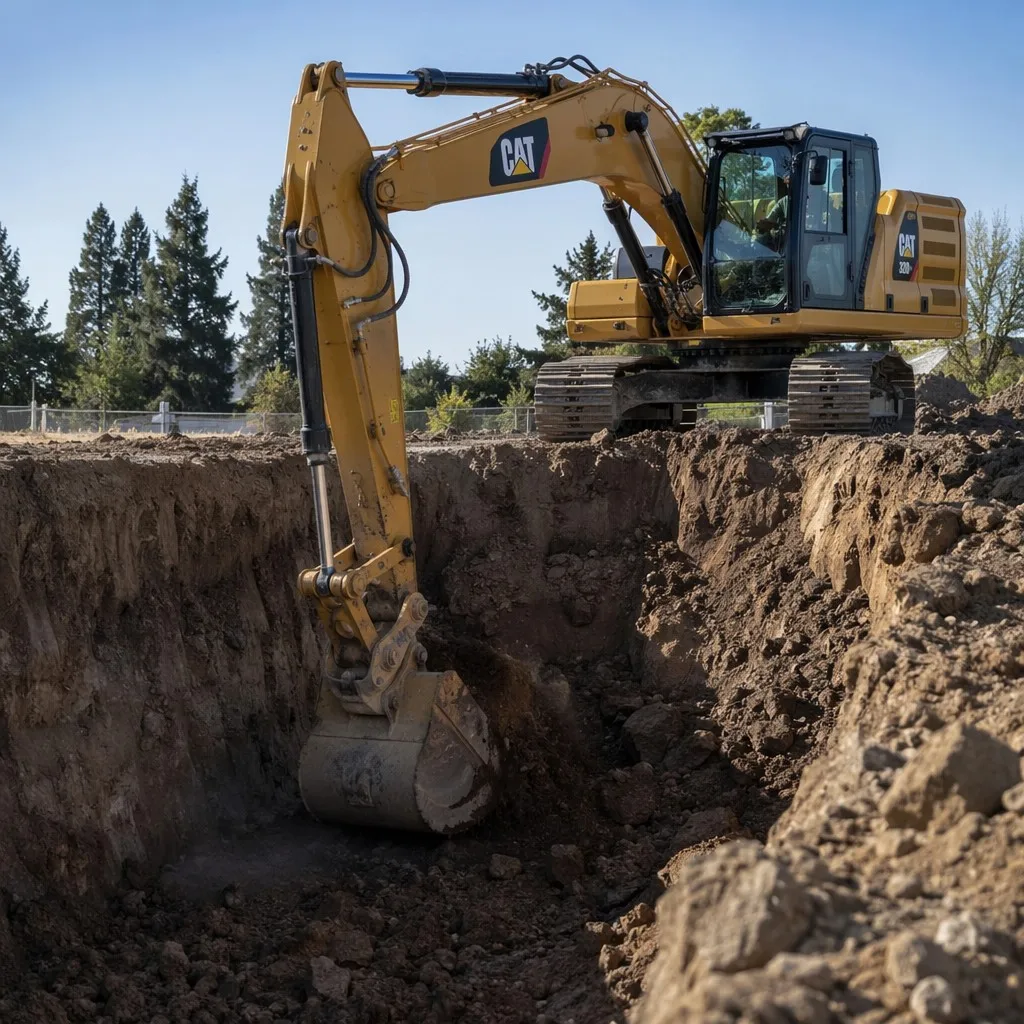
Fig 1: The Caterpillar 320 demonstrating its industry-leading breakout force in a deep trenching application.
2. Hydraulic Systems: Brute Force vs. Surgical Precision
Hydraulics are where the real 'personality' of these machines emerges.
- CAT 320 Strength: Features an open-center system that is incredibly robust and easy to troubleshoot in remote regions. It provides a 'heavy' feel that many operators prefer for mass earthmoving.
- Komatsu PC200 Finesse: Features the HydrauMind™ (CLSS) system. This load-sensing technology allows the operator to perform boom, arm, and swing movements simultaneously with zero loss of speed. It is widely considered the most 'intelligent' hydraulic platform for fine-grading work.
3. Technical Specifications Comparison (2026 Standard)
| Feature | CAT 320 (Next Gen/D2) | Komatsu PC200-8/-10 |
|---|---|---|
| Operating Weight | 22,100 kg | 21,800 kg |
| Bucket Force | 145 kN | 138 kN |
| Main Pump Flow | 2 x 205 L/min | 2 x 220 L/min |
| Resale Liquidity | Platinum Grade | High Grade |
4. Maintenance and Global Parts Availability
For B2B importers, the 'best' machine is the one that stays working. The Used CAT 320 benefits from a global logistics network that is unparalleled. You can find CAT filters and seals in virtually any corner of the world, from the ports of Lagos to the mountains of Chile. While Komatsu parts are also widely available, they often require more specialized diagnostic tools (KOMTRAX™) to service effectively. If your project is in an extremely remote area with limited technical support, the mechanical simplicity of a used CAT 320D is often the safer bet.
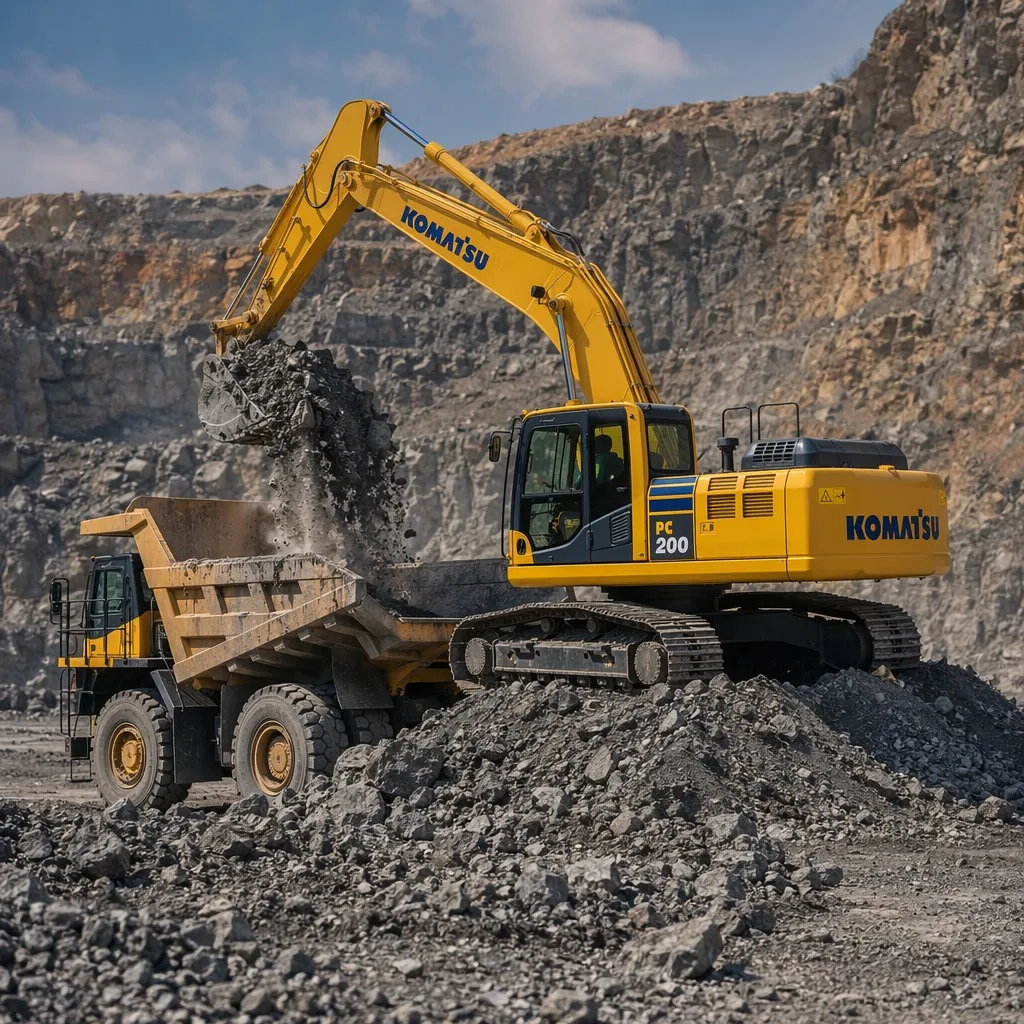
Fig 2: The Komatsu PC200 showcasing its high-speed loading cycles in a heavy industrial environment.
5. Resale Value and Asset Liquidity
In the heavy machinery world, your exit strategy is just as important as your entry. Caterpillar assets are the 'gold currency' of the industry. When your project finishes after 2,000 hours of work, a certified 95% new CAT 320 will attract immediate buyers at a premium price point. Komatsu units hold their value well, but their market is more concentrated among operators who specifically value the HydrauMind precision. For a rental fleet owner, CAT is the logical ROI choice; for an owner-operator focused on fuel bills, Komatsu wins.
6. Expert Verdict: Which One Should You Buy?
The choice between a used CAT 320 vs Komatsu PC200 depends entirely on your 'Mission Profile.' Choose the **Caterpillar 320** if your priority is maximum durability, high resale value, and heavy earthmoving capability. Choose the **Komatsu PC200** if you require surgical hydraulic precision, the lowest possible fuel consumption per hour, and smooth multi-functioning for infrastructure finishing. At HEAVY MACHINERY PRO, we maintain a rotating stock of both 20-ton titans in 95% new condition, ready for immediate global export.